With the midterm elections approaching, several Republican candidates are putting new distance between themselves and President Donald Trump on some of the issues dominating the campaign.
The shift comes as Americans contend with rising fuel and food costs, the continuing war with Iran and declining approval ratings for the president.
It is showing up most clearly in Republican campaigns that previously aligned themselves closely with Trump.
In Michigan, Republican Senate candidate Mike Rogers has called for the Iran war to end quickly after previously defending military action against Iran.
In Iowa, Republican Senate candidate Ashley Hinson has likewise called for an immediate end to the conflict, arguing that Iowans shouldn't continue absorbing higher prices associated with the war.
And in Florida, Republican gubernatorial candidate Byron Donalds' campaign website no longer prominently emphasizes Trump's endorsement in the manner it previously did.
None of those developments by itself demonstrates a wholesale Republican break with Trump.
Together, however, they illustrate the increasingly complicated political environment Republicans face heading into November.
The Numbers Have Changed
Several recent national polls show Republicans facing a difficult political environment.
An NPR/PBS News/Marist survey conducted September 14–15 found registered voters preferring Democratic congressional candidates over Republicans by 53% to 41%.
The same poll found Trump's job approval below 40%.
A Reuters/Ipsos survey released this week measured Trump's approval at 32% and found Democrats with an eight-point advantage when respondents were asked which party they would support for Congress.
Another survey, conducted by Economist/YouGov September 18–21, found 52% of likely voters supporting the Democratic congressional candidate in their district and 38% supporting the Republican.
Generic congressional polling does not determine individual House or Senate races, and national polling cannot account for the political composition of every district.
But taken together, the surveys show a national political environment substantially different from the one Republicans would prefer heading into the final weeks of the campaign.
Then There Are Fuel Prices
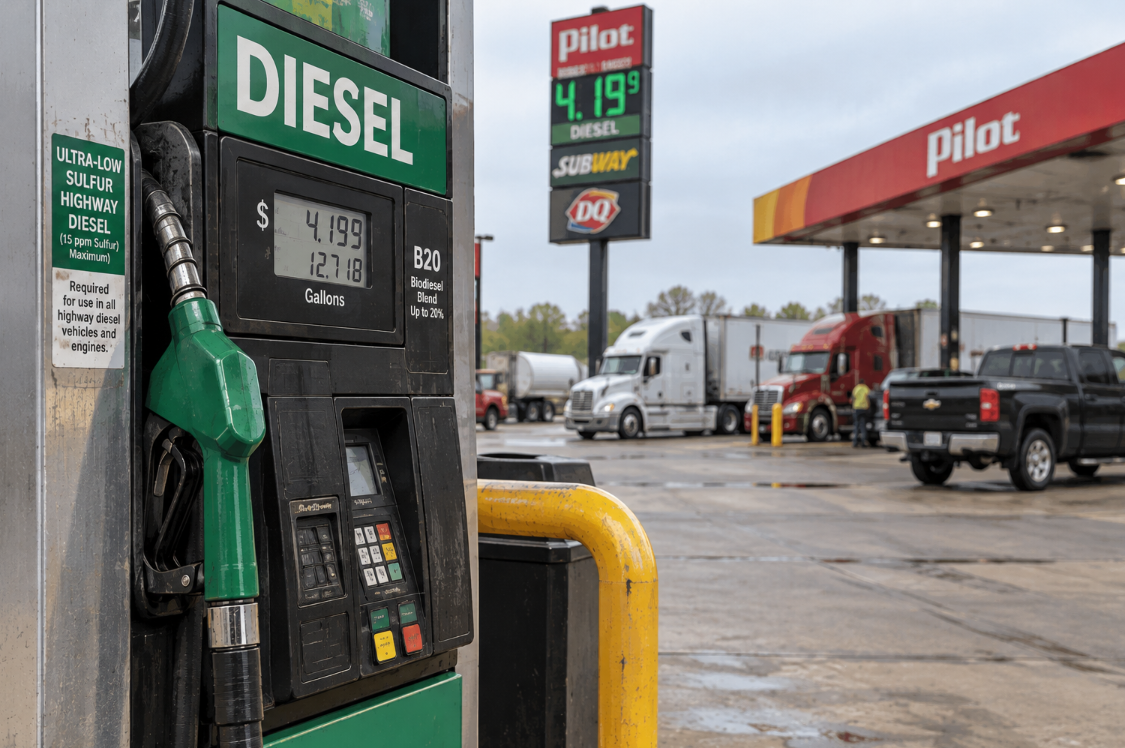
One potential source of Republican anxiety is impossible to miss at America's gas stations.
Diesel prices have risen sharply.
That matters far beyond truck owners.
Diesel powers much of the country's commercial transportation system as well as agricultural and construction equipment. Higher diesel costs can work their way through supply chains, affecting the cost of moving food and consumer products around the country.
Columnist John Stoehr argues that diesel may be particularly important politically because its effects are concentrated among truckers, farmers, construction workers and other voters who have formed an important part of Trump's political coalition.
That's an interpretation rather than a demonstrated explanation for Republican candidates' behavior.
But Republican candidates themselves are increasingly talking about fuel and other consumer prices.
Iran Becomes a Republican Problem
The continuing war with Iran has complicated the issue further.
Some Republicans who previously supported the administration's military policy are now calling for the conflict to end.
Rogers said this week that the war “needs to end, and end quickly.”
Hinson said Iowans shouldn't have to bear higher costs at gas stations and grocery stores because of the conflict.
Those comments are particularly notable because both candidates had previously supported significant elements of Trump's Iran policy.
The economic consequences of the conflict are now becoming part of their campaigns.
Trump Still Wants Republicans Running With Him
Trump, meanwhile, has shown little interest in disappearing from the midterm campaign.
He has actively campaigned for Republican candidates and encouraged the party to make his presidency central to its argument to voters.
At the Republican midterm convention in Dallas, Trump also promoted a proposed $5,000 payment to Americans if Republicans retain congressional power.
But even that proposal has exposed some distance between Trump and Republican candidates.
The Associated Press reported that many Republican candidates in competitive races have largely avoided making the proposed payment a centerpiece of their campaigns.
House Speaker Mike Johnson has also acknowledged that such payments would require congressional approval.
Republicans Still Have Advantages
The polling does not mean the congressional outcome is predetermined.
Republicans enter the final stretch with substantial financial resources, favorable terrain in several Senate contests and a House map shaped partly by Republican-led redistricting.
Republican campaign officials argue that their candidates remain competitive and that Democratic candidates and policies remain unpopular with many voters.
Individual congressional races can also behave very differently from national polling.
That is particularly important in the Senate, where control is determined by a relatively small number of state-level contests rather than the nationwide popular vote.
A Different Republican Message
What has clearly changed is the willingness of some Republicans to publicly disagree with Trump.
Candidates who once had strong incentives to emphasize their relationship with the president are increasingly emphasizing their own positions on war, fuel prices and the economy.
Whether diesel prices specifically explain that shift is impossible to establish from the available evidence.
What can be measured is the political environment surrounding it.
Trump's approval ratings have fallen.
Several national surveys show Democrats ahead on the generic congressional ballot.
Fuel prices and the cost of living remain prominent voter concerns.
And some Republican candidates are responding by putting visible distance between themselves and policies associated with their own party's president.
With the midterms approaching, Republicans are confronting a familiar political dilemma:
They need voters who remain strongly supportive of Trump.
They also need voters who aren't.