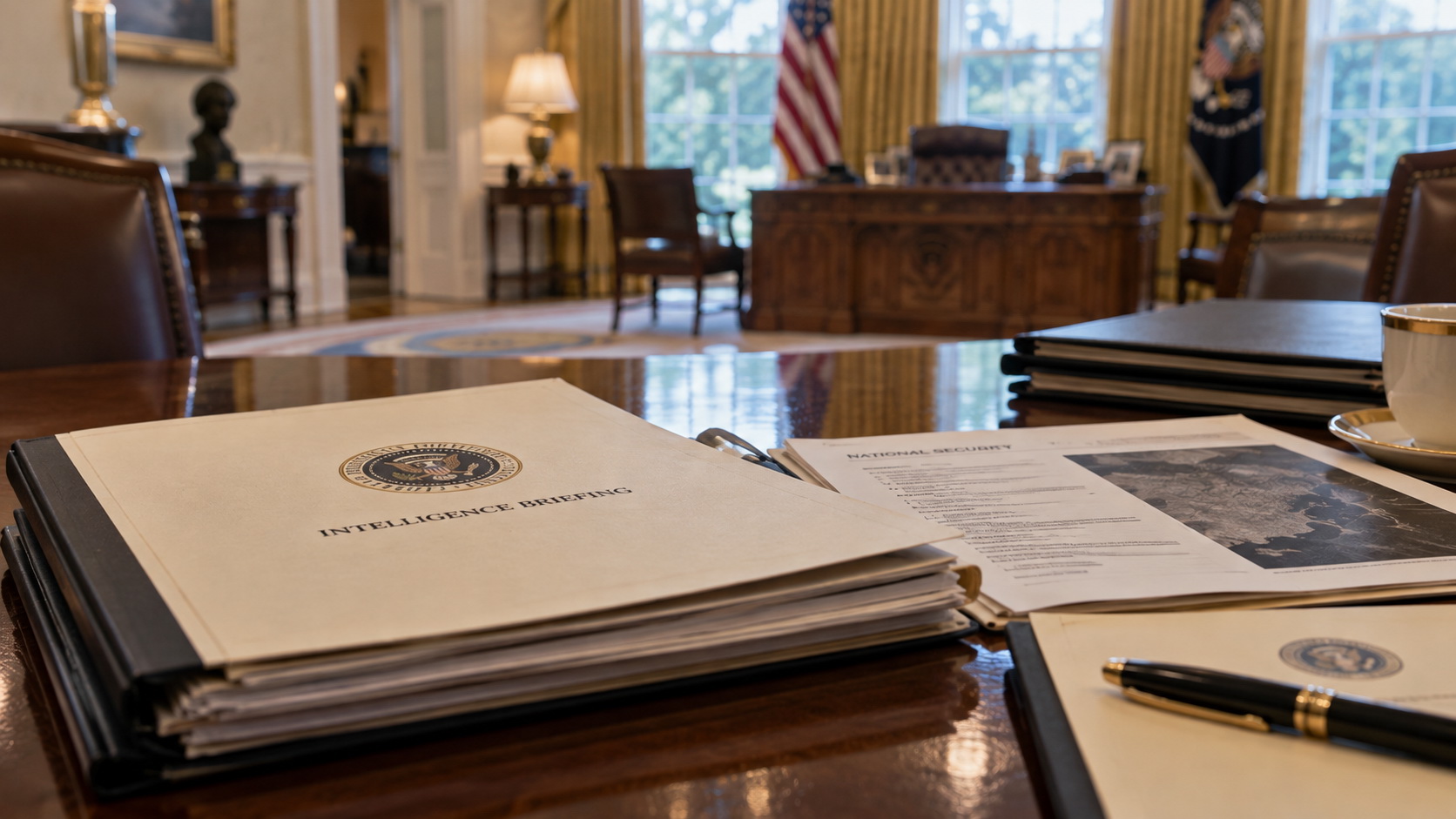
Five days after President Donald Trump welcomed senior Russian officials into the Oval Office, reports emerged that the president had shared highly sensitive intelligence concerning an ISIS terrorist threat during their private conversation.
The disclosure immediately raised questions about the handling of classified information and the potential consequences for intelligence-sharing relationships with American partners.
The meeting itself had already attracted unusual attention.
Trump had met Russian Foreign Minister Sergey Lavrov and Russian Ambassador Sergey Kislyak on May 10 — just one day after firing FBI Director James Comey while the FBI was investigating Russian interference in the 2016 election.
Now the substance of that meeting was becoming a controversy of its own.
A Highly Sensitive Intelligence Report
The Washington Post reported on May 15 that Trump had discussed highly classified intelligence concerning an ISIS threat during his conversation with Lavrov and Kislyak.
According to the reporting, the intelligence had been supplied to the United States by an intelligence-sharing partner and was considered particularly sensitive.
The concern wasn't simply that classified information had been discussed.
Intelligence relationships depend heavily on governments controlling information they provide to one another. If sensitive intelligence supplied by one country is passed to another without permission, officials can become reluctant to share similar information in the future.
Reports said Trump's discussion included details that potentially could have helped identify where the intelligence originated.
The White House Pushes Back
The administration quickly disputed aspects of the story.
National Security Adviser H.R. McMaster, who had attended the Oval Office meeting, appeared outside the White House and declared that the story “as reported” was false.
McMaster emphasized that Trump had not discussed intelligence sources or methods.
He also said Trump had not disclosed military operations that weren't already publicly known.
Secretary of State Rex Tillerson and other administration officials similarly defended the president's conversation.
The White House's response therefore focused heavily on what Trump had not revealed.
But that didn't completely settle the central question of whether sensitive intelligence itself had been discussed.
Then Trump Responds
The following morning, Trump addressed the controversy himself.
He said he had wanted to share information with Russia concerning terrorism and airline safety.
Trump also said he had the “absolute right” to do so.
He explained that his reasons included humanitarian concerns and a desire to encourage Russia to intensify its fight against ISIS and terrorism.
That was an important distinction.
The administration was no longer simply arguing about whether information had been exchanged. The president was defending his authority to share it.
And on the fundamental legal question, presidents possess extraordinarily broad authority over classified national-security information.
Because the classification system operates through presidential authority, a sitting president generally has the power to disclose or declassify information that would remain classified if disclosed by most other government officials.
That meant the controversy was not primarily about whether Trump had the same authority as an ordinary government employee.
He didn't.
As president, he had much broader power.
The more complicated question concerned whether sharing the information was prudent and whether doing so could affect intelligence relationships with American partners.
Why Intelligence Sharing Matters
Modern American intelligence operations rely extensively on cooperation with foreign governments.
Countries exchange information about terrorist organizations, military activity, cyber threats and other national-security concerns.
Those relationships depend partly on confidence that particularly sensitive information will be protected.
The May 15 reports therefore raised concerns extending beyond the specific ISIS intelligence discussed in the Oval Office.
If an intelligence partner believed information it provided to Washington might subsequently be shared more broadly, it could potentially become more cautious about what it provided in the future.
Administration officials maintained that Trump's conversation had been appropriate.
McMaster subsequently described the discussion as “wholly appropriate” and said Trump had not known the intelligence's original source when he discussed the threat.
Another Controversy in an Extraordinary Week
The timing made the story particularly significant.
Trump's administration was already dealing with the consequences of Comey's dismissal.
Then came the Oval Office meeting with Lavrov and Kislyak.
Then came Trump's suggestion that there might be recordings of his conversations with Comey.
And now came reports that highly sensitive intelligence had been discussed with the Russian officials.
The events were unfolding within days of one another:
May 9: Trump fires FBI Director James Comey.
May 10: Trump meets Lavrov and Kislyak in the Oval Office.
May 12: Trump raises the possibility that recordings of his conversations with Comey might exist.
May 15: Reports emerge that Trump disclosed highly sensitive intelligence during the Russian meeting.
And Washington was not finished.
Two days later, Deputy Attorney General Rod Rosenstein would appoint former FBI Director Robert Mueller as special counsel to oversee the investigation into Russian interference in the 2016 election and related matters.
The May 2017 controversies surrounding Russia had moved from campaign contacts and an FBI investigation into questions about the president's own conduct inside the White House.
And this time, the central issue wasn't whether Trump possessed the authority to share information.
It was what information had been shared, how sensitive it was, and what consequences that disclosure might have for the intelligence relationships on which the United States depended.
Category: National Security / Foreign Policy
Tags: Donald Trump, Russia, Sergey Lavrov, Sergey Kislyak, Classified Intelligence, ISIS, H.R. McMaster, Intelligence Community, Oval Office, 2017