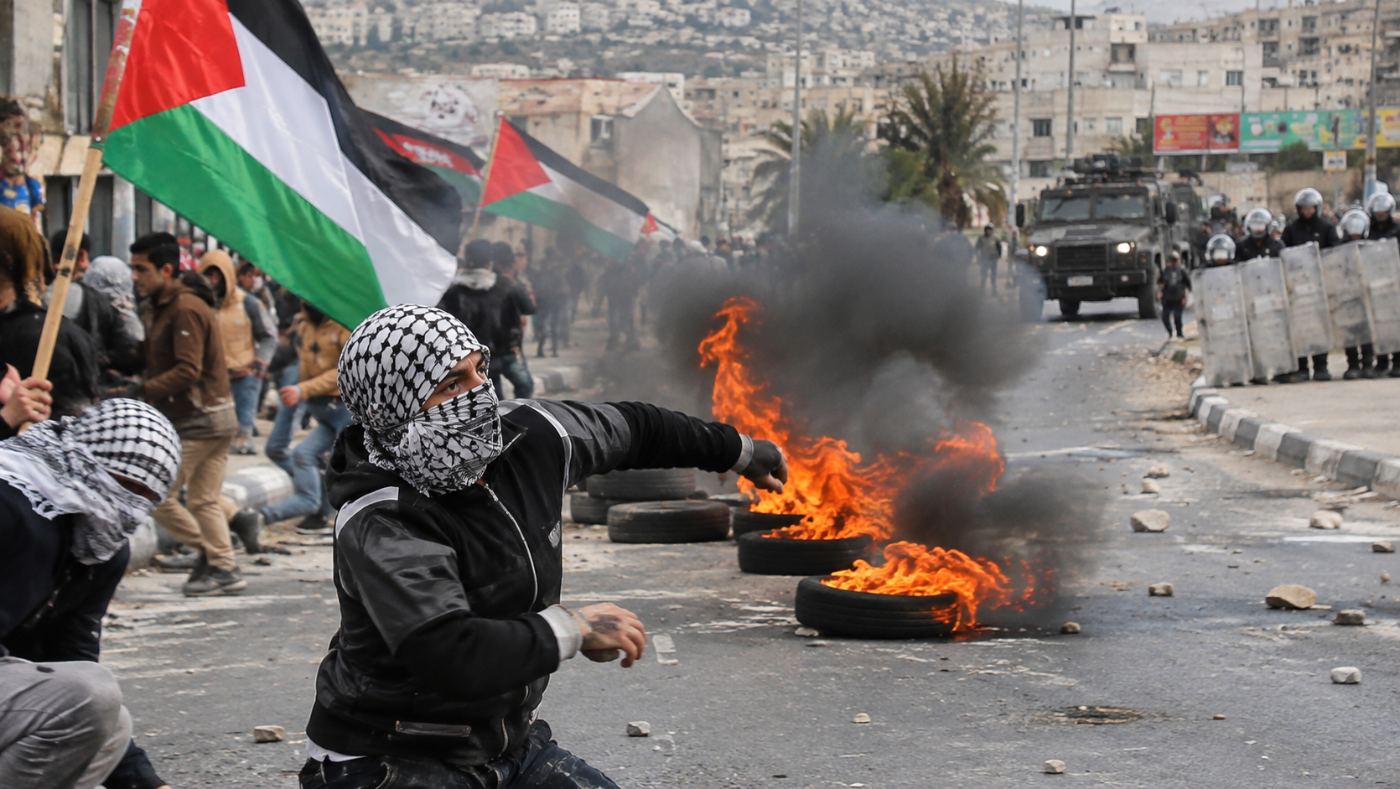
Just 24 hours after President Donald Trump announced that the United States would recognize Jerusalem as Israel's capital, protests erupted across Palestinian territories and parts of the Middle East, exposing the immediate diplomatic and security consequences of his controversial decision.
On December 7, 2017, thousands of demonstrators took to the streets in the West Bank, East Jerusalem, and Gaza Strip. Some demonstrations escalated into violent confrontations with Israeli security forces.
The unrest followed Trump's decision to abandon decades of American diplomatic practice concerning Jerusalem, a city claimed by both Israelis and Palestinians.
Streets Fill With Protesters
In Ramallah, Bethlehem, Hebron, and East Jerusalem, demonstrators gathered to condemn the American announcement.
Protesters burned American flags, displayed images of Trump, and demanded that Washington reverse its decision.
Israeli security forces responded to some demonstrations with tear gas, stun grenades, and other crowd-control measures as protesters threw stones and burned tires.
The Palestine Red Crescent reported more than 100 injuries during Thursday's confrontations.
In Bethlehem, clashes unfolded near streets decorated for the approaching Christmas holiday.
The Palestinian Authority called for a general strike, closing businesses and disrupting schools throughout Palestinian communities.
What Trump had presented as a diplomatic breakthrough was immediately followed by widespread anger and unrest.
America's Allies Condemn the Decision
The backlash extended beyond Palestinian territories.
Governments across the Middle East and Europe criticized Trump's announcement, warning that it threatened efforts to negotiate peace between Israelis and Palestinians.
Turkey's President Recep Tayyip Erdoğan warned that the decision could ignite further regional instability.
Jordan, a longstanding American partner with a special religious role in Jerusalem, strongly opposed the change.
European leaders also reiterated that Jerusalem's final status should be determined through negotiations rather than unilateral declarations.
Palestinian President Mahmoud Abbas argued that Washington could no longer serve as an impartial mediator in the peace process.
The controversy placed the United States at odds with numerous traditional diplomatic partners.
Israel Celebrates While Tensions Rise
Israeli Prime Minister Benjamin Netanyahu welcomed Trump's decision, describing it as historic recognition of Israel's capital.
Supporters argued that Jerusalem had long served as Israel's seat of government and that American recognition acknowledged an existing reality.
Trump also maintained that the United States was not determining the city's final boundaries, which would remain subject to negotiations.
Nevertheless, Palestinian leaders viewed the announcement as undermining their claim to East Jerusalem as the capital of a future Palestinian state.
The disagreement reflected the unresolved territorial and political disputes at the center of the Israeli-Palestinian conflict.
American Diplomats Prepare for Further Unrest
The State Department restricted travel for American government personnel in Jerusalem and the West Bank and warned citizens to avoid demonstrations.
Israeli authorities reinforced security deployments as officials anticipated additional protests.
Meanwhile, Hamas leader Ismail Haniyeh called for a new Palestinian uprising against Israel, further heightening concerns about escalating violence.
The United Nations Security Council prepared to hold an emergency meeting on the Jerusalem announcement the following day.
The international reaction demonstrated that the consequences extended well beyond the location of an American embassy.
A Diplomatic Decision With Immediate Consequences
Trump defended the policy shift as an overdue acknowledgment of reality and argued that previous American approaches had failed to produce peace.
Critics countered that recognizing Jerusalem without a negotiated agreement weakened American credibility and risked further destabilizing the region.
The December 7 demonstrations provided immediate evidence of the controversy's intensity, although the underlying Israeli-Palestinian conflict long predated Trump's presidency.
One day after Trump's announcement, American diplomats faced new security concerns, traditional allies publicly challenged Washington's position, and protesters filled streets across Palestinian territories. The events demonstrated the immediate international consequences of a decision Trump had presented as a step toward peace.