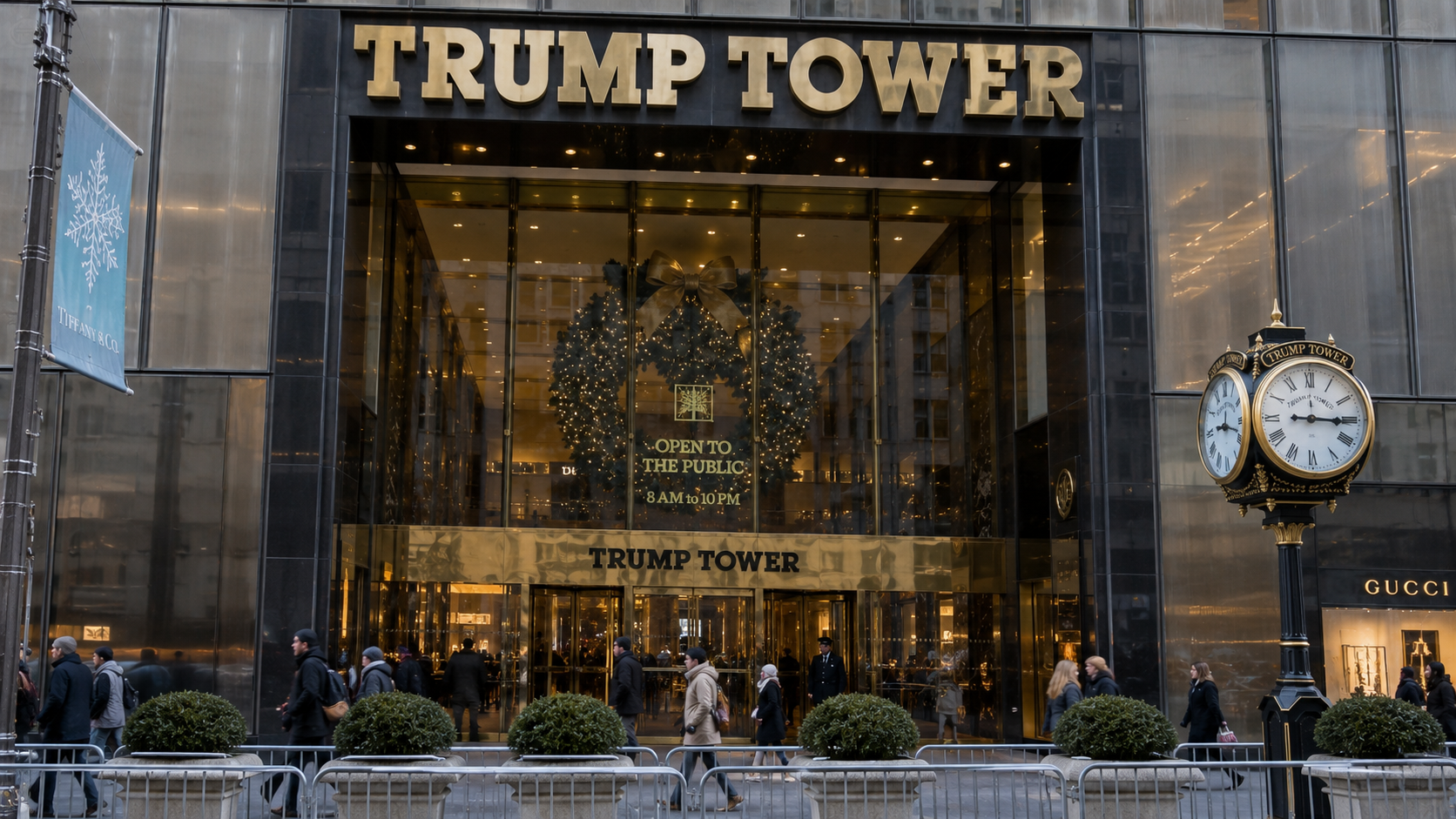
Donald Trump was preparing to become president of the United States.
He was also the owner of a sprawling private business empire.
Hotels. Golf courses. Office buildings. Licensing agreements. Real estate projects. Business relationships extending across the United States and around the world.
And as Inauguration Day approached, Washington was confronting a question it had never faced on this scale:
Where would President Trump end and businessman Trump begin?
A Presidency Unlike Any Before It
Presidents have been wealthy before.
Some owned businesses or substantial investments before entering office.
But Trump's situation was different in both scale and complexity.
The Trump Organization operated an international collection of businesses associated directly with Trump's name. Its interests included properties and commercial relationships that could potentially intersect with governments, regulators, banks and foreign interests.
Trump's election meant decisions made by the federal government could potentially affect businesses he continued to own.
At the same time, people doing business with those companies would know that their ultimate owner was about to become president of the United States.
That created an ethics problem that couldn't easily be solved by simply promising not to participate in day-to-day management.
"The Law's Totally on My Side"
Trump argued that his situation was legally permissible.
Speaking to The New York Times in November, he correctly pointed to an unusual feature of federal conflict-of-interest law: the president is exempt from the principal criminal conflict-of-interest statute applying to executive-branch employees.
Trump summarized his position more broadly:
"The law's totally on my side, meaning, the president can't have a conflict of interest."
Legally, the presidency is indeed treated differently.
Ethically, the question was considerably more complicated.
The issue wasn't simply whether Trump could legally continue owning his businesses.
It was whether Americans could determine when presidential decisions affected the president's own financial interests.
Turning the Company Over to His Children Didn't Solve It
Trump initially indicated that his children would manage the Trump Organization while he served as president.
But transferring management isn't the same thing as transferring ownership.
If Trump continued to own the company, its financial success could still benefit him regardless of whether his children handled daily operations.
That distinction was central to the emerging controversy.
A traditional blind trust is designed to separate a government official from knowledge and control of the assets that could create conflicts.
Putting a collection of highly recognizable Trump-branded properties under the management of Trump's own children would not make those assets blind.
Trump would still know what he owned.
The public would still know what he owned.
And anyone seeking to influence the new administration would know what he owned.
Foreign Business Created Another Problem
Trump's international interests made the situation even more complicated.
The president conducts American foreign policy.
Trump Organization businesses had relationships and interests extending into foreign countries.
That raised questions about whether foreign governments, companies or politically connected individuals could patronize Trump businesses while simultaneously seeking favorable treatment from the United States.
Even the appearance of such a relationship could become significant.
If a foreign government spent substantial amounts of money at a Trump property, was it simply conducting ordinary business?
Or was it attempting to gain favor with the president?
And how could the public tell the difference?
Those questions would soon bring increased attention to the Constitution's Foreign Emoluments Clause and eventually produce years of litigation.
The Government's Own Ethics Office Was Concerned
The controversy wasn't limited to Trump's political opponents.
The federal government's ethics system itself was grappling with the unusual situation.
The Office of Government Ethics had traditionally encouraged presidents to separate themselves from financial interests that could create conflicts or even the appearance of conflicts.
The underlying principle was straightforward:
Government decisions should be made in the public interest, and citizens should be able to trust that an official's personal finances aren't influencing those decisions.
For most government officials, conflicts can be addressed through mechanisms such as divestiture, recusal or qualified trusts.
The presidency presents a unique difficulty.
A president cannot realistically recuse himself from every matter involving banking, taxation, real estate, foreign governments, federal property or economic policy.
Those subjects are part of the job.
That made genuine financial separation particularly important.
One Address Illustrated the Problem
There was perhaps no better illustration than Trump's new hotel in Washington.
The Trump International Hotel operated inside the historic Old Post Office building.
The building belonged to the federal government.
Trump's company leased it from the federal government.
Trump was about to become the head of the executive branch of that same federal government.
The arrangement presented a remarkable situation:
A company owned by the president would effectively be doing business with the government the president controlled.
At the same time, the hotel could attract diplomats, political organizations, corporations and others with interests before the administration.
It was a conflict-of-interest debate condensed into a single building.
The Question Trump Couldn't Simply Tweet Away
Throughout the transition, Trump emphasized that he would remove himself from management of his companies.
But critics and ethics specialists argued that management wasn't the fundamental issue.
Ownership was.
As long as Trump continued to financially benefit from the Trump Organization, presidential decisions could potentially intersect with his personal financial interests.
That didn't mean every decision benefiting a Trump property would necessarily be corrupt.
It meant the possibility would exist — and the public would repeatedly be forced to ask the question.
For an incoming administration already promising to "drain the swamp," it presented an extraordinary contradiction.
Donald Trump had campaigned against a political system he portrayed as riddled with insiders and conflicts of interest.
Now he was preparing to enter the White House while continuing to own a business empire bearing his name.
Before Trump had served a single day as president, America was already confronting a question that would follow his administration for years:
Was the president acting in the interests of the United States — or could his own business interests also benefit?