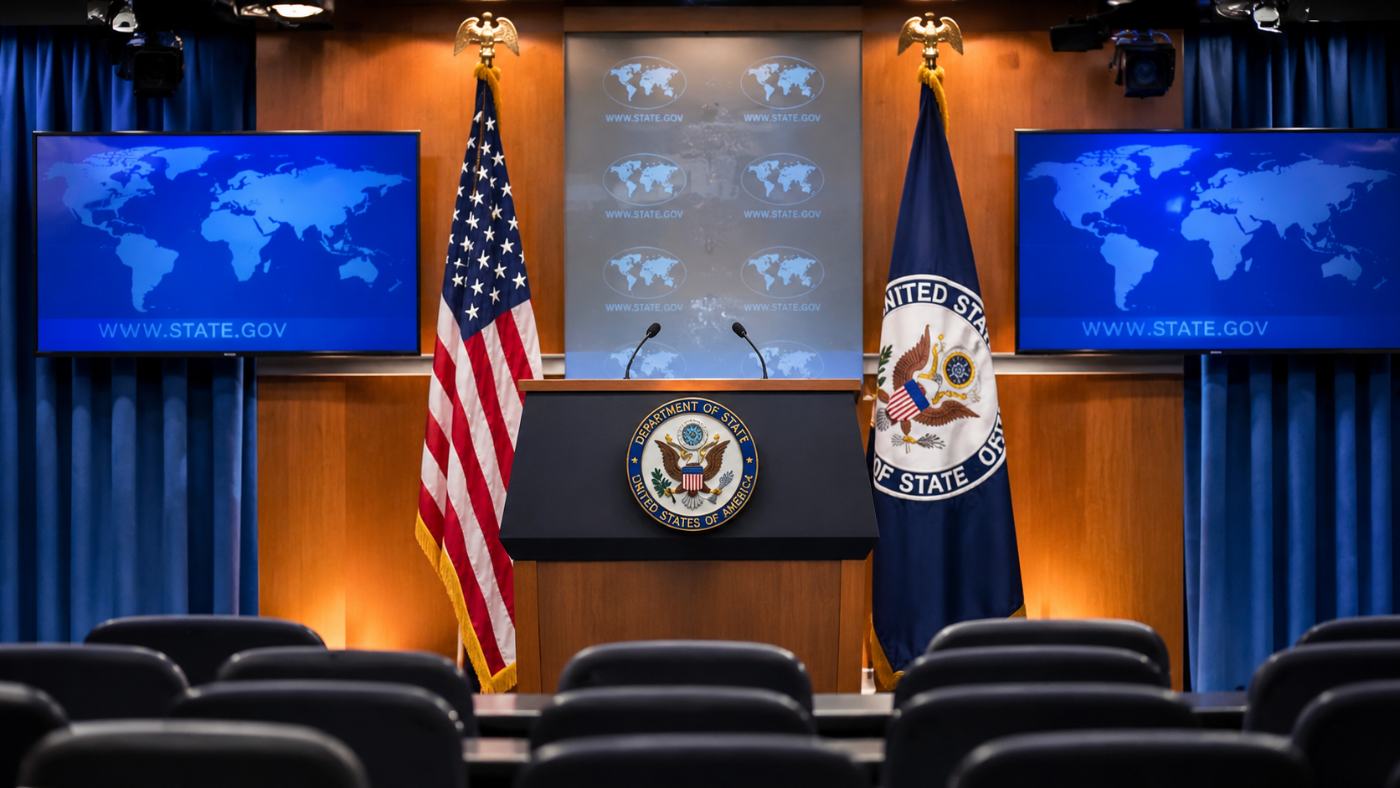
Secretary of State Mike Pompeo is facing growing scrutiny after publicly suggesting that President Donald Trump will remain in office for another four years, despite Joe Biden's projected victory in the presidential election.
The controversy erupted Tuesday when Pompeo was asked whether the State Department was preparing to cooperate with Biden's transition team.
"There will be a smooth transition to a second Trump administration," Pompeo responded, smiling as he delivered the remark.
His statement immediately raised questions about whether the nation's chief diplomat was joking, expressing loyalty to Trump, or signaling that the administration would continue refusing to recognize the election results.
By Wednesday, the controversy had expanded beyond political rhetoric, with reports that the State Department was withholding official diplomatic communications intended for President-elect Biden.
World Leaders Recognize Biden While Pompeo Refuses
Major American news organizations projected Biden's victory on November 7, after Pennsylvania's electoral votes placed him above the 270 required to win the presidency.
Since then, numerous world leaders have congratulated Biden, including British Prime Minister Boris Johnson, French President Emmanuel Macron, German Chancellor Angela Merkel, and Canadian Prime Minister Justin Trudeau.
Yet the State Department, responsible for managing American diplomatic relations, has not formally facilitated the incoming administration's communications with foreign governments.
The Washington Post reported Wednesday that congratulatory messages sent through official diplomatic channels were being collected but not forwarded to Biden's team.
According to the newspaper, Pompeo also instructed politically appointed ambassadors not to forward congratulations through official channels.
The unusual situation has left career diplomats uncertain about how to handle communications involving the projected winner of the presidential election.
Pompeo Defends Trump's Election Challenges
During Tuesday's news conference, Pompeo insisted that the election process was not finished and that outstanding votes and legal challenges must be addressed.
He compared the situation to the disputed 2000 presidential election, when the outcome between George W. Bush and Al Gore remained unresolved for weeks.
However, Biden currently holds substantial leads in several battleground states, and Trump's campaign has not presented evidence establishing widespread fraud capable of reversing the projected outcome.
Pompeo also dismissed a reporter's question about whether the administration's refusal to acknowledge Biden undermined America's credibility when promoting democratic elections overseas.
Later Tuesday, Pompeo defended his position by emphasizing that votes were still being counted and that constitutional procedures would determine the next president.
The Transition Remains Blocked
The controversy comes as the General Services Administration continues withholding the formal authorization necessary to begin the presidential transition.
Without that authorization, Biden's team cannot receive the full federal funding, agency access, and official briefings normally available to an incoming administration.
Former government officials have warned that delays could complicate national security preparations and the federal response to the coronavirus pandemic.
Biden's advisers are attempting to continue transition planning by consulting former officials and outside experts.
America's Diplomatic Credibility Under Scrutiny
Pompeo's remarks carry particular significance because the State Department routinely advocates peaceful democratic transitions and respect for election results in other countries.
Critics argue that refusing to acknowledge the projected winner creates an uncomfortable contradiction between America's diplomatic message abroad and the administration's conduct at home.
Pompeo maintains that the constitutional process must run its course.
As of November 11, the United States faces an extraordinary situation: foreign leaders are preparing to work with Biden, while the nation's own diplomatic leadership continues operating without formally recognizing his projected victory.