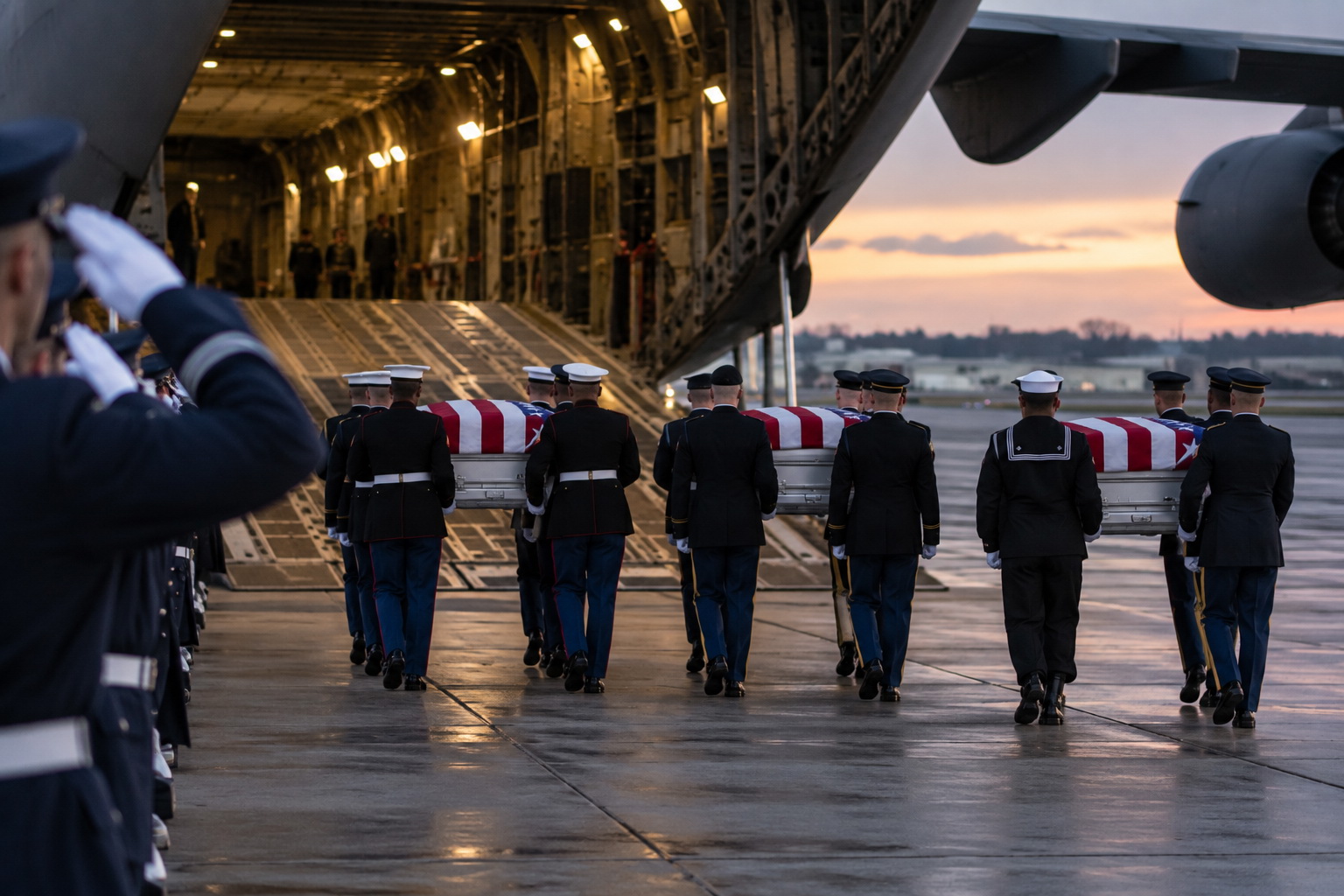
The human cost of America's war with Iran has grown again.
But there was no Pentagon news conference.
No detailed announcement.
No explanation of what happened.
Instead, another 37 wounded American service members quietly appeared in the Defense Department's public casualty database, according to a review by The Washington Post.
The newly recorded casualties include 29 Navy sailors and eight Marines.
Their addition brings the Pentagon's publicly recorded number of U.S. troops wounded since hostilities with Iran began to 861.
What remains unclear is how those 37 Americans were wounded, when they were wounded, or why their injuries were added to the public accounting only now.
The Pentagon did not provide the newspaper with an explanation.
And once again, Americans are learning that the military cost of the Iran conflict is greater than previously disclosed.
37 More Wounded Americans
The additional casualties appeared in the Defense Casualty Analysis System, or DCAS, the Pentagon's public database used to account for military personnel killed and wounded in conflicts and overseas operations.
The increase consists of:
29 sailors.
Eight Marines.
That is 37 additional wounded service members.
A Navy official said all 29 sailors had returned to duty after their injuries.
But neither the nature of their injuries nor the circumstances surrounding them were publicly disclosed.
The Pentagon database itself does not explain when or how the 37 service members were wounded.
There is another unanswered question.
Military officials have not publicly announced a recent attack on American forces or another incident that would readily explain the sudden addition of 37 casualties.
The Pentagon did not respond to the Post's requests for comment.
The Navy and Marine Corps referred questions to U.S. Central Command.
CENTCOM declined to comment.
The Number Is Now 861
The new additions bring the Pentagon's publicly recorded wounded total from the Iran conflict to 861 American service members.
That number has risen dramatically over the course of the war.
In March, the Pentagon disclosed that roughly 140 American troops had been wounded.
By July, the number had climbed above 400.
By late August, the public count had surpassed 750.
Earlier this month, it reached nearly 800.
Now it stands at 861.
Many of the injuries have involved traumatic brain injuries and concussions, which can take time to diagnose and document.
Pentagon officials have previously said that casualty reporting can lag because symptoms from brain injuries sometimes do not appear immediately.
That provides one possible explanation for delayed additions to the database.
But it does not explain these particular 37 cases.
The Pentagon has not said what happened to them.
A War the Administration Has Resisted Calling a War
The growing casualty count also clashes with the Trump administration's efforts to minimize the continuing nature of the conflict.
President Trump and senior administration officials have repeatedly resisted describing the situation as an ongoing war following periods of ceasefire.
Vice President JD Vance said earlier this month that there was “no active shooting” at that time.
Yet the casualty accounting continues to change.
Hundreds of American service members have now been wounded.
Americans have been killed.
U.S. military operations have stretched across the Middle East.
Iranian missiles and drones have targeted American installations.
And the Pentagon continues adding casualties to the official record.
Whatever terminology the administration prefers, American military personnel and their families are experiencing the consequences.
The Pentagon Split the Casualties Into Different Categories
Even understanding the official casualty numbers has become complicated.
Earlier in the conflict, casualties were recorded under Operation Epic Fury, the administration's name for the military campaign against Iran.
After a ceasefire began in July, the Pentagon created a separate category called “Overseas Operations.”
More than half of the 861 wounded personnel are now categorized under that designation rather than Operation Epic Fury.
The Pentagon said the change was necessary because Operation Epic Fury had formally ended.
But the result is that Americans trying to determine the human cost associated with the Iran conflict must now look across different categories in the military's casualty system.
That accounting method previously generated controversy when four soldiers killed during renewed fighting temporarily disappeared from the Pentagon's Iran-war tally and appeared instead under the new Overseas Operations category.
The Pentagon said earlier irregularities were caused by anomalies and temporary data disruptions rather than an effort to conceal casualties.
Questions About the Dead Have Not Been Resolved Either
The controversy extends beyond wounded troops.
The Pentagon's public database currently records 19 American military deaths connected to hostile and nonhostile activity since the Iran conflict began February 28.
But The Washington Post reported last week that the actual number of American service members who have died in the Middle East during the period of the Iran conflict may be higher than the Pentagon's public tally.
Citing Defense Department officials, the newspaper reported that as many as five military fatalities were not reflected in the public DCAS database.
Importantly, not all of those deaths were necessarily caused directly by Iranian attacks or combat.
They involved American military personnel who died while serving in the region during the conflict.
That distinction matters.
So does the fact that the discrepancy remains unresolved.
Defense Secretary Pete Hegseth strongly disputed the Post's earlier reporting, calling it inaccurate and “disgusting.”
But questions surrounding the Pentagon's casualty accounting have continued.
And now another 37 wounded troops have appeared in the database.
The 19th Publicly Recorded Death
The Pentagon increased its public fatality count from 18 to 19 this week.
The latest addition was an Army officer who suffered a medical emergency on September 18 while traveling to the Middle East.
The military classified the death as nonhostile.
Historically, the Pentagon has included nonhostile deaths in its wartime casualty databases because wars impose risks extending beyond enemy fire.
Service members die in accidents.
Aircraft crash.
Medical emergencies occur.
Training and transportation carry risks.
Mental-health crises can claim lives.
Those deaths are part of the cost borne by military personnel and their families when American forces are deployed to war zones.
That is why accurate casualty accounting matters.
Traumatic Brain Injuries Can Be Deceptive
There is an important caveat surrounding the Pentagon's changing numbers.
Not every increase necessarily represents an effort to conceal information.
Many of the wounds suffered during the Iran conflict have reportedly been traumatic brain injuries.
Those injuries can be difficult to identify immediately.
A service member exposed to a blast may initially appear capable of returning to duty.
Symptoms can develop later.
Medical evaluations can change classifications.
Administrative reporting can lag behind medical treatment.
That means casualty databases frequently change after attacks.
But that explanation does not eliminate the need for transparency.
The Pentagon could explain when casualties are added.
It could explain generally what incident produced them without compromising operational security.
It could provide consistent totals.
In this case, it has not publicly explained the 37 additional wounded troops.
These Are Not Just Numbers
Casualty figures can become abstract remarkably quickly.
861 wounded.
19 dead in the public database.
37 newly added.
29 sailors.
Eight Marines.
But every number represents a person.
A sailor.
A Marine.
A soldier.
An airman.
Someone's spouse.
Someone's parent.
Someone's son or daughter.
Some returned to duty quickly.
Others suffered injuries that may follow them long after the Iran conflict disappears from the headlines.
Traumatic brain injuries in particular can have consequences that aren't obvious when a service member initially walks away from an explosion.
Counting those troops accurately isn't merely an administrative responsibility.
It is part of telling Americans what a war is costing.
Americans Deserve a Clear Accounting
There are legitimate reasons military casualty figures change.
There can be delays in medical diagnoses.
Investigations take time.
Deaths must be classified.
Combat operations evolve.
Databases sometimes lag behind events.
But after months of fighting, the public record surrounding American casualties in the Iran conflict has repeatedly shifted.
Troops have moved between categories.
Casualty totals have jumped.
Questions have emerged about deaths not reflected in the public database.
And now 37 additional wounded Americans have appeared without a public explanation of what happened to them.
The Pentagon may ultimately have entirely legitimate explanations for each discrepancy.
If so, it should provide them.
Because whatever political arguments surround the Iran conflict, the American people should not have to piece together its human cost by repeatedly checking a government database to see whether dozens of wounded troops have suddenly appeared.
The number now stands at 861 wounded American service members.
Twenty-nine more sailors.
Eight more Marines.
Thirty-seven Americans whose injuries were quietly added to the record.
They deserve to be counted.
And the American public deserves to know why.