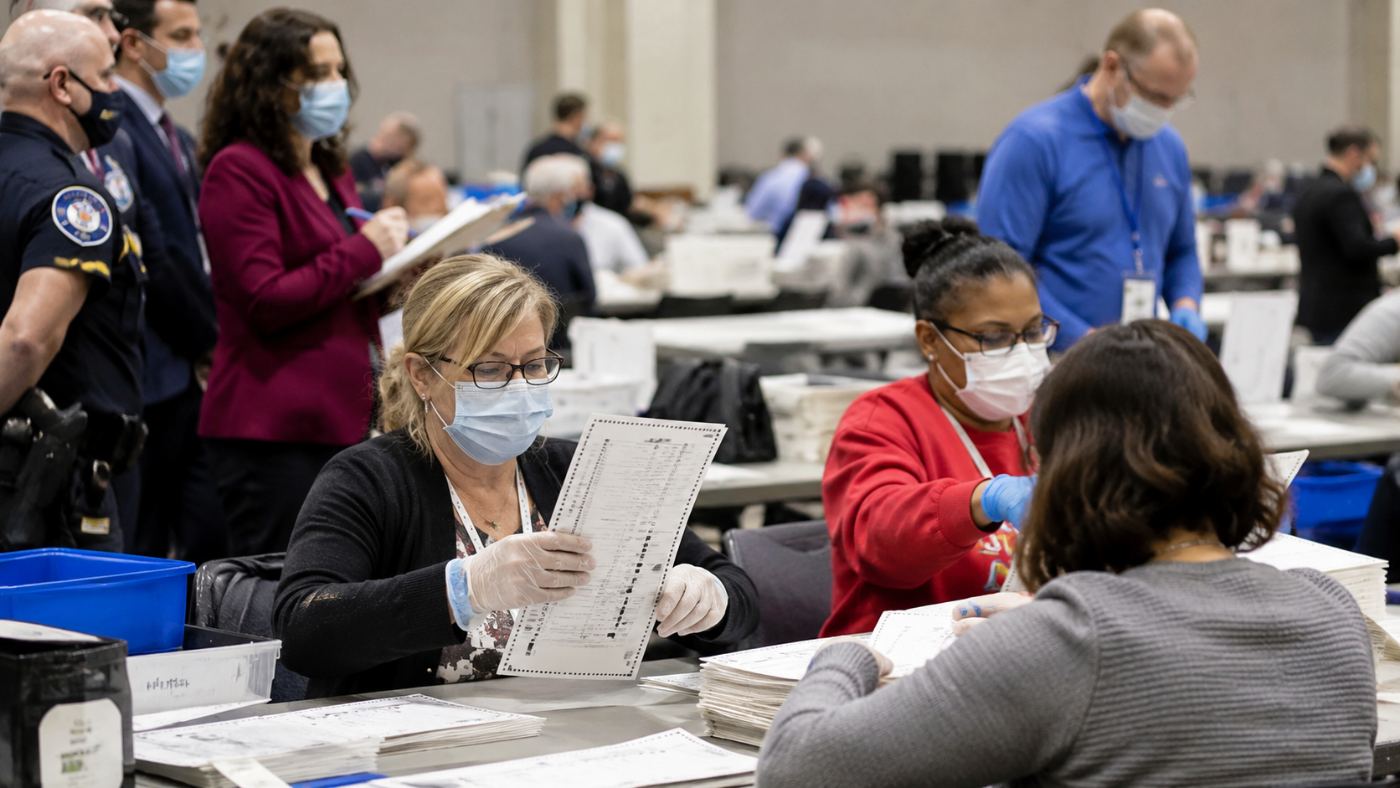
President Donald Trump's efforts to overturn the 2020 presidential election suffered another major setback on November 28, 2020, when the Pennsylvania Supreme Court unanimously dismissed a Republican lawsuit seeking to invalidate more than 2.5 million mail-in ballots and potentially overturn Joe Biden's victory in the state.
The lawsuit, brought by Republican Congressman Mike Kelly, congressional candidate Sean Parnell, and several other plaintiffs, challenged the constitutionality of Pennsylvania's mail-in voting system.
The plaintiffs sought extraordinary remedies. They wanted the courts to invalidate millions of legally cast mail-in ballots or allow Pennsylvania's Republican-controlled legislature to select the state's presidential electors.
Either outcome could have undermined the results of an election in which Biden had defeated Trump by approximately 80,000 votes.
The Pennsylvania Supreme Court rejected the challenge, ruling that the plaintiffs had waited far too long to contest a voting law enacted more than a year earlier.
At the center of the lawsuit was Act 77, legislation passed in October 2019 that expanded mail-in voting by allowing Pennsylvania residents to vote by mail without providing a specific excuse.
The law had been approved with bipartisan support by Pennsylvania's Republican-controlled legislature and signed by Democratic Governor Tom Wolf.
Millions of voters subsequently relied on the law during the 2020 primary and general elections, particularly as the COVID-19 pandemic made in-person voting a concern.
Yet the plaintiffs waited until November 21, 2020, nearly three weeks after Election Day, to challenge the law's constitutionality.
By then, voters had already cast their ballots and Pennsylvania was preparing to finalize its election results.
The Supreme Court concluded that the delay was unjustifiable.
The justices applied the legal doctrine of laches, which prevents parties from seeking relief when they have unreasonably delayed bringing a claim and that delay would unfairly harm others.
In this case, the potential harm was extraordinary: millions of Pennsylvanians could have lost their votes because of a legal challenge filed after the election.
The court also vacated an earlier order from a lower court that had temporarily restricted further election certification activity.
Its decision dismissed the lawsuit with prejudice, preventing the plaintiffs from simply refiling the same claims.
Justice David Wecht, writing separately, emphasized that the plaintiffs had ample opportunity to challenge Act 77 before voters relied on it.
The court's ruling did not determine that every provision of Act 77 was constitutional. Instead, it concluded that the plaintiffs' delay barred the extraordinary post-election relief they sought.
That distinction was important because the case was not primarily about allegations of fraudulent ballots.
The plaintiffs were challenging the legal framework that permitted no-excuse mail-in voting, rather than presenting evidence that millions of individual voters had committed fraud.
Nevertheless, the requested remedy could have invalidated votes cast by ordinary Pennsylvanians who had followed the rules established by their state government.
The lawsuit also exposed a contradiction in the broader Republican effort to challenge Pennsylvania's election results.
The same political party that controlled the legislature when Act 77 passed was now represented by plaintiffs seeking to invalidate votes cast under that legislation.
The timing raised additional questions. The law had been used during Pennsylvania's June primary election without producing the same effort to invalidate millions of ballots.
Only after Trump lost the presidential election did the plaintiffs seek relief that could have changed the outcome.
Supporters of the lawsuit argued that Act 77 violated Pennsylvania's Constitution and that the courts had an obligation to address the issue.
The Supreme Court, however, determined that waiting until after millions of citizens had voted made the requested remedies legally unavailable.
The November 28 ruling came one day after another significant defeat for Trump's election challenges in Pennsylvania.
On November 27, the U.S. Court of Appeals for the Third Circuit rejected a separate lawsuit brought by Trump's campaign.
That decision was written by Judge Stephanos Bibas, a Trump appointee, who emphasized that election challenges required specific allegations and supporting evidence.
Together, the rulings demonstrated that Republican-appointed federal judges and Pennsylvania's state judiciary were rejecting attempts to disturb the certified election results.
Pennsylvania had already certified Biden's victory on November 24, awarding him the state's 20 electoral votes.
Trump and his allies nevertheless continued pursuing legal challenges and publicly questioning the legitimacy of the election.
The Pennsylvania Supreme Court's decision did not end those efforts.
Kelly and the other plaintiffs subsequently sought emergency relief from the United States Supreme Court, but the request was denied in December.
Trump continued disputing the election results even after the Electoral College confirmed Biden's victory on December 14.
Those efforts became part of the broader sequence of events preceding January 6, 2021, when Trump supporters attacked the U.S. Capitol as Congress gathered to count the electoral votes.
The November 28, 2020, ruling remains an important moment in the history of the post-election legal challenges.
It established that political candidates and their allies could not wait until after an election to challenge established voting procedures and then demand that millions of legally cast ballots be discarded.
The court's decision protected voters who had followed the law as it existed when they voted, regardless of which presidential candidate they supported.
The episode also illustrated a fundamental principle of election law: disputes over voting procedures must be addressed through timely legal challenges, not through attempts to invalidate the choices of millions of voters after an unfavorable result.