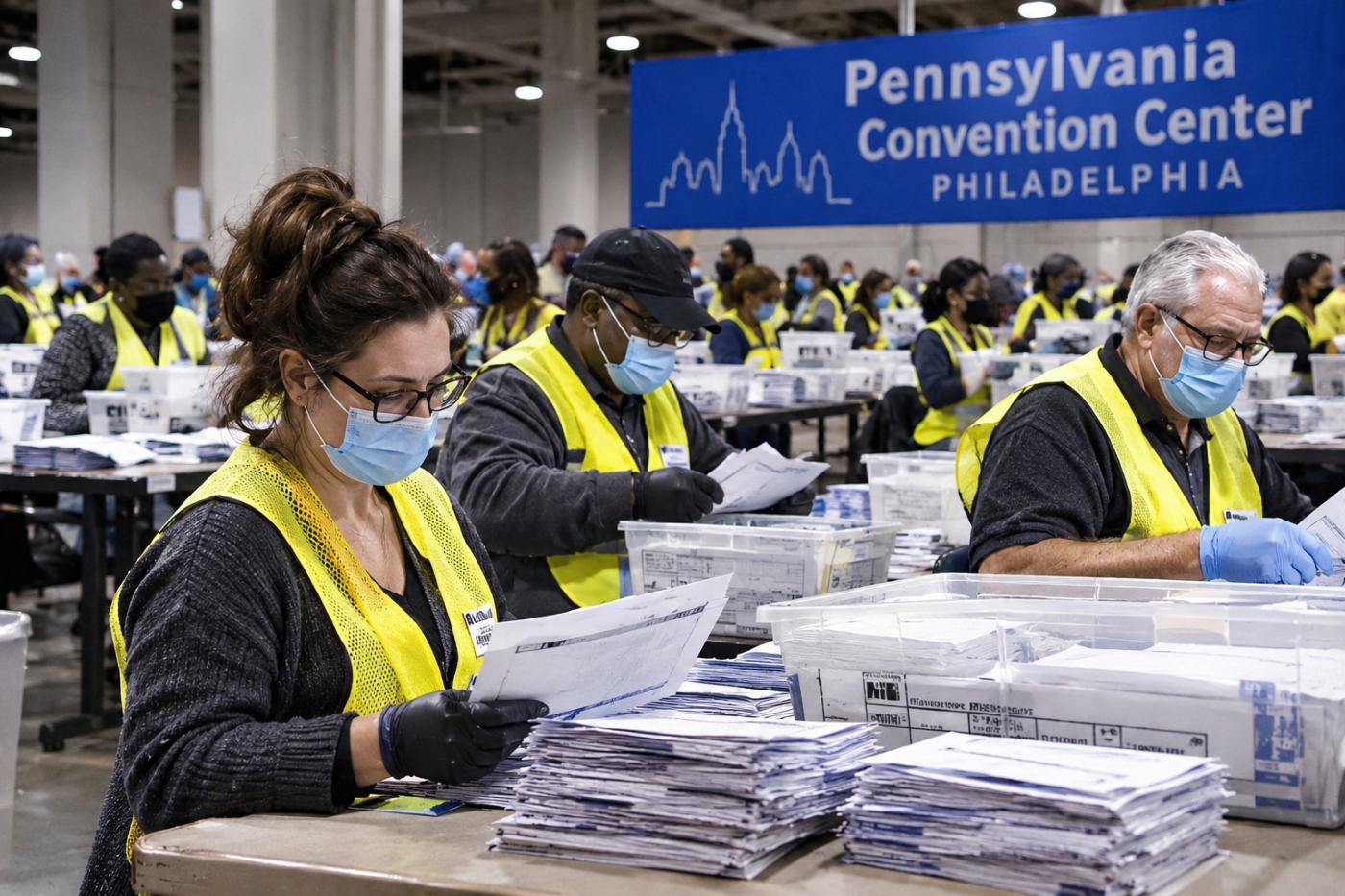
As Donald Trump continued refusing to accept his defeat in the 2020 presidential election, Pennsylvania officials moved to stop his campaign from using the federal courts to block certification of Joe Biden's victory.
On November 12, attorneys representing Pennsylvania Secretary of State Kathy Boockvar and seven counties asked a federal judge to dismiss a lawsuit filed by Trump's campaign. The lawsuit sought to prevent the state from certifying its presidential election results, potentially jeopardizing millions of legally cast ballots.
The legal confrontation unfolded five days after major news organizations projected Biden as the winner of the presidency.
Trump, however, continued alleging widespread election fraud despite the absence of evidence establishing irregularities capable of overturning the results.
Pennsylvania Officials Challenge Trump's Claims
The Trump campaign alleged that election officials in predominantly Democratic counties had improperly handled mail-in ballots, restricted Republican observers, and allowed some voters to correct problems with their ballots.
Campaign attorneys argued that these practices violated constitutional protections by treating voters differently across counties.
Pennsylvania officials disputed those allegations.
They maintained that Republican observers had been permitted to monitor ballot processing and that counties were legally allowed to notify voters about defective mail ballots.
The state's attorneys also challenged the campaign's legal standing and argued that its allegations lacked sufficient factual support.
Attorneys representing four Pennsylvania counties characterized the lawsuit as an effort to undermine the electoral system and invalidate votes legally cast by Pennsylvania residents.
The dispute was particularly consequential because Biden held a statewide lead exceeding 53,000 votes, with approximately 97 percent of ballots counted.
Trump Seeks to Block Certification
Rather than limiting its legal challenge to specific disputed ballots, the Trump campaign sought an order preventing Pennsylvania from certifying the election results.
Attorneys representing the president argued that certification could eliminate their opportunity to obtain meaningful relief from the courts.
Pennsylvania officials countered that such an extraordinary intervention would interfere with the state's responsibility to complete the election process.
Boockvar argued that the campaign's allegations did not justify preventing the certification of votes cast by millions of Pennsylvanians.
The lawsuit also focused heavily on Philadelphia and other Democratic-leaning jurisdictions, where mail-in voting had played an important role in Biden's victory.
The campaign's arguments raised a fundamental question: whether alleged procedural differences between counties could justify invalidating ballots cast by eligible voters.
A Broader Campaign to Challenge the Election
Pennsylvania was only one battleground in Trump's expanding legal effort.
His campaign and Republican allies pursued challenges in states including Michigan, Georgia, Arizona, and Nevada, alleging election irregularities and demanding additional scrutiny of the results.
Although Trump publicly described the election as fraudulent, his attorneys faced the more demanding task of presenting admissible evidence and legally sufficient claims in court.
Judges examining election-related challenges repeatedly demanded specific evidence rather than broad allegations.
Meanwhile, the Trump administration continued withholding formal transition recognition from Biden, complicating preparations for the incoming presidency.
The Court Ultimately Rejects the Lawsuit
The November 12 filings were an important step toward the lawsuit's eventual dismissal.
On November 21, U.S. District Judge Matthew Brann rejected the Trump campaign's case, finding its legal arguments insufficient and its allegations unsupported by the evidence presented.
Brann emphasized the extraordinary scope of the relief being requested: invalidating votes on a scale that could disenfranchise millions of Pennsylvanians.
The Trump campaign appealed, but its efforts did not prevent Pennsylvania from certifying Biden's victory on November 24.
The November 12 confrontation illustrated the widening conflict between Trump's attempts to challenge the election and state officials' obligation to count lawful votes and certify the results.
Ultimately, Pennsylvania's electoral outcome stood, and the courts did not provide the remedy Trump sought.