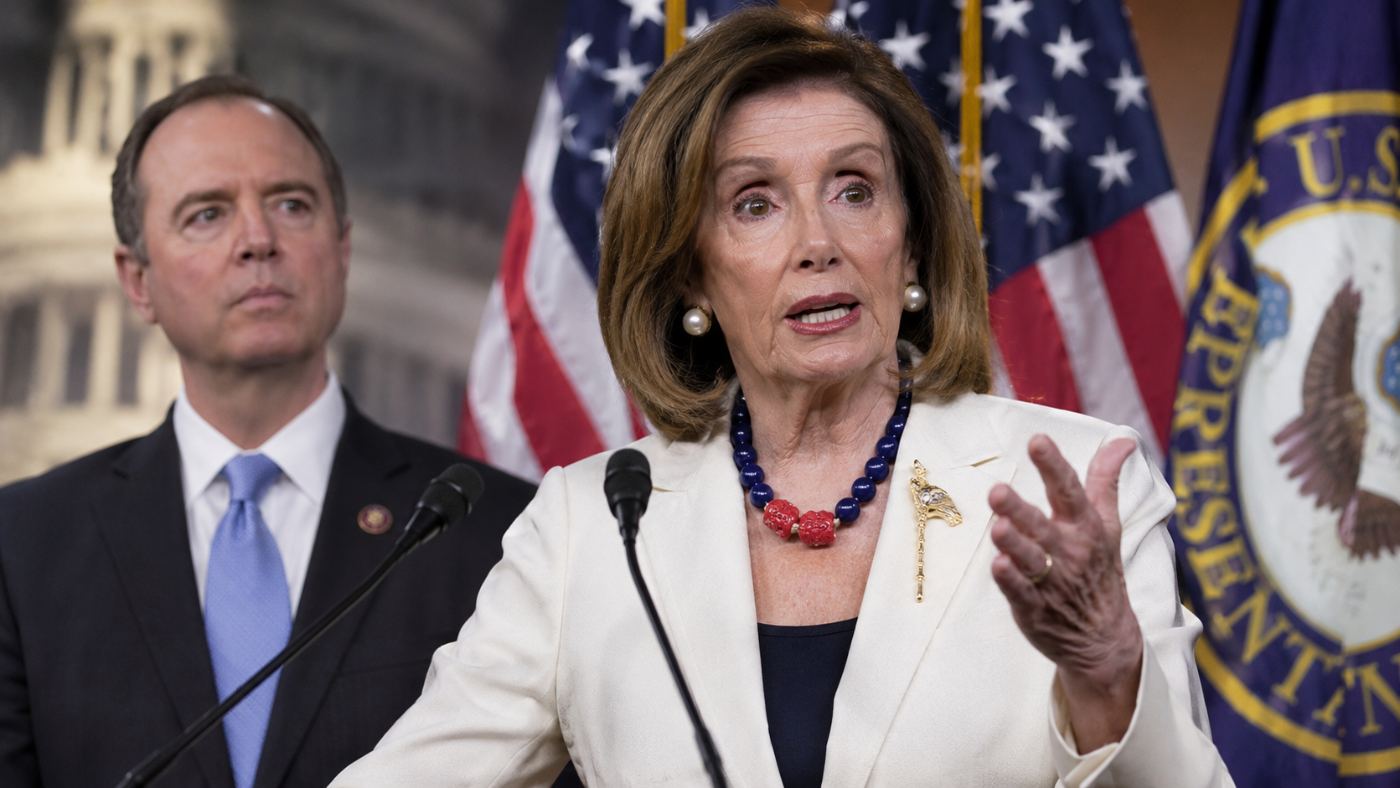
House Speaker Nancy Pelosi announced on December 5, 2019, that congressional leaders would begin drafting articles of impeachment against President Donald Trump, moving the House closer to formally charging him with abusing presidential power.
The announcement followed weeks of testimony concerning Trump's efforts to pressure Ukraine into announcing investigations that could benefit his reelection campaign.
Pelosi accused the president of placing his personal political interests ahead of American national security.
Pelosi Announces the Decision
Speaking at the U.S. Capitol, Pelosi delivered a formal statement explaining why the House would proceed.
"Our democracy is what is at stake," she declared.
Pelosi argued that the evidence established a serious abuse of presidential authority and that Congress had a constitutional responsibility to respond.
She directed House committee chairmen to begin preparing articles of impeachment.
The announcement represented a major escalation from investigating presidential misconduct to preparing formal charges.
The Ukraine Controversy
The impeachment inquiry centered on Trump's July 25, 2019, telephone conversation with Ukrainian President Volodymyr Zelensky.
During the call, Trump asked Zelensky to investigate matters involving former Vice President Joe Biden and his son Hunter Biden.
Biden was a potential Democratic opponent in the upcoming presidential election.
At the same time, the Trump administration had placed a hold on nearly $400 million in congressionally approved military assistance to Ukraine.
House investigators examined whether Trump had used that assistance and the prospect of a White House meeting to pressure Ukraine into announcing politically beneficial investigations.
Trump denied wrongdoing and repeatedly described the call as appropriate.
Constitutional Scholars Testify
Pelosi's announcement came one day after four constitutional law professors testified before the House Judiciary Committee.
Three scholars invited by Democrats concluded that Trump's conduct met the constitutional standard for impeachment.
A fourth scholar, invited by Republicans, argued that the evidence and process were insufficient to justify proceeding at that stage.
The testimony followed a House Intelligence Committee report accusing Trump of abusing his office and obstructing congressional oversight.
Pelosi cited those findings as justification for moving forward.
Trump Demands a Faster Process
Trump responded defiantly to the impeachment announcement.
In social media posts, he urged Democrats to proceed quickly so the matter could move to a Senate trial.
He argued that the investigation was politically motivated and that Democrats were attempting to undermine his presidency.
White House officials similarly rejected Pelosi's allegations.
Republican lawmakers criticized the impeachment process, maintaining that Democrats had failed to establish grounds for removing the president.
The House Moves Toward a Historic Vote
Pelosi's decision placed the House on a path toward a formal impeachment vote.
On December 10, Democratic leaders announced two proposed articles: abuse of power and obstruction of Congress.
On December 18, the House approved both articles, making Trump the third American president to be impeached.
The Republican-controlled Senate acquitted him on February 5, 2020.
Trump remained in office.
A Defining Moment in Trump's Presidency
The December 5 announcement marked the point at which House Democratic leaders formally committed to drafting impeachment charges.
The central dispute concerned whether a president could use the powers of his office to seek political advantages from a foreign government.
Democrats argued that Trump's conduct violated constitutional principles. Republicans disputed the allegations and the justification for impeachment.
The resulting proceedings became one of the defining constitutional confrontations of Trump's first presidency.