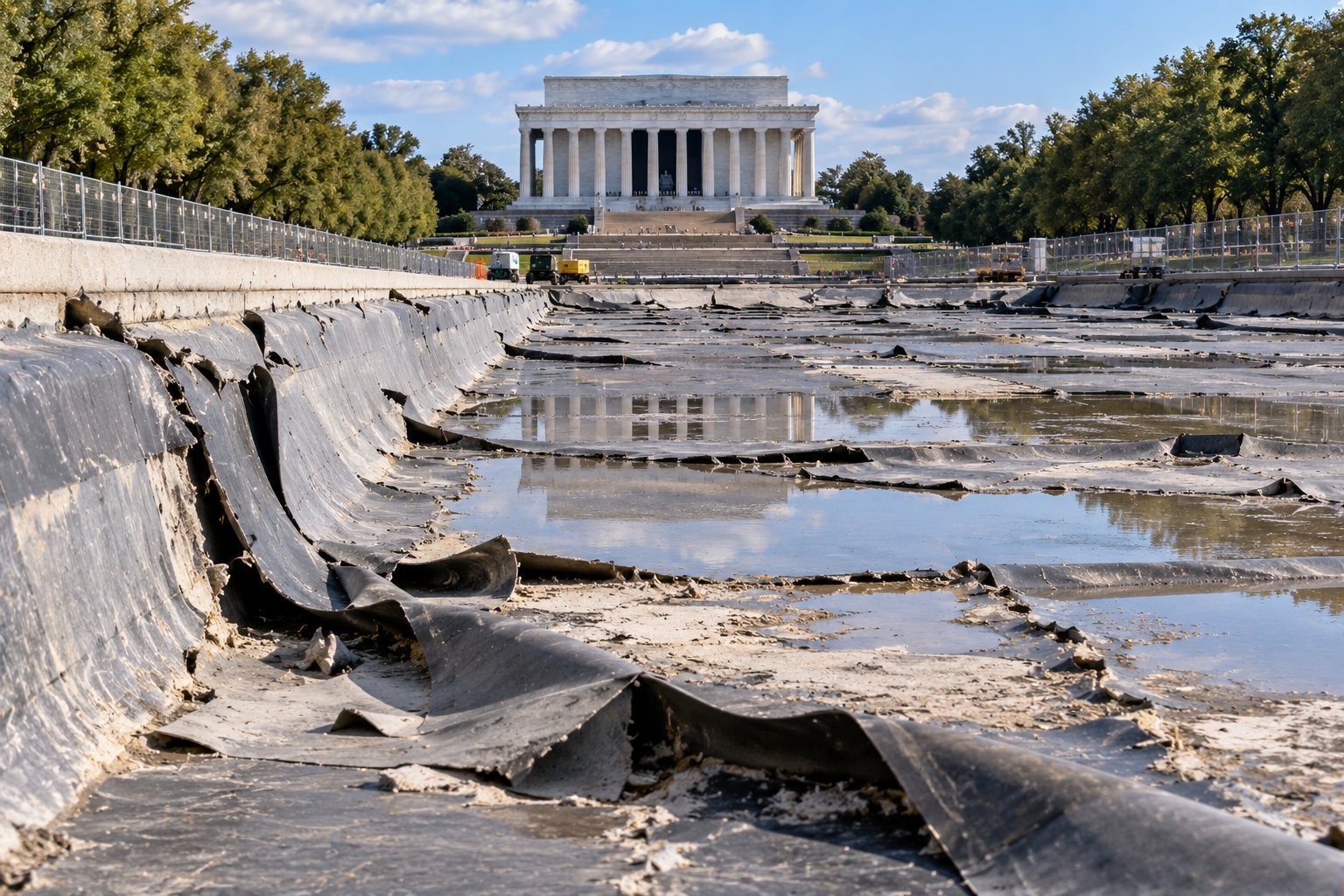
Former U.S. Olympic canoeist David Hearn was arrested, detained for five hours and eventually indicted on a felony charge accusing him of vandalizing the Lincoln Memorial Reflecting Pool. He faced the possibility of years in prison. There was just one enormous problem: federal prosecutors later acknowledged that Hearn hadn't caused the damage at all. They said the deteriorating pool lining resulted from a contractor's botched installation. Now Hearn wants to know how the federal government got it so wrong—and whether misconduct inside the Justice and Interior departments helped put an innocent man in the government's crosshairs.**
David Hearn's criminal case is over.
His fight with the federal government isn't.
Attorneys representing the former Olympic canoeist have formally asked the inspectors general of both the Department of Justice and Department of the Interior to investigate the extraordinary chain of events that resulted in Hearn being arrested and indicted for a crime prosecutors ultimately concluded he did not commit.
Their letter asks a basic question:
How did this happen?
Hearn went from taking a bicycle ride through Washington to facing a felony prosecution carrying the possibility of as much as 10 years in prison.
Federal officials publicly portrayed him as a vandal.
U.S. Attorney Jeanine Pirro publicly condemned his alleged behavior.
President Donald Trump himself weighed in on the controversy.
Then the government's case collapsed.
The damage wasn't vandalism after all.
According to federal prosecutors, it resulted from a contractor's “botched installation.”
A Bike Ride Turns Into an Arrest
The story began June 19.
Hearn, a three-time U.S. Olympic canoeist, was riding his bicycle through Washington when he stopped at the Lincoln Memorial Reflecting Pool.
The pool had recently undergone renovation work.
Hearn saw a piece of the newly installed lining material that had already come loose.
According to his account, he reached into the water and touched it.
A National Park Service employee told him to stop.
He removed his hand.
What followed was considerably more serious.
Hearn was detained for approximately five hours.
His attorneys say he wasn't permitted to make a telephone call and wasn't read his Miranda rights during the detention.
When he was released, according to his lawyers, he discovered two misdemeanor citations among his belongings.
But the government wasn't finished with him.
From Touching the Liner to a Felony Indictment
On July 2, a D.C. grand jury indicted Hearn on a felony charge of destruction of government property.
Federal officials alleged that Hearn had damaged more than $1,000 worth of material in the Reflecting Pool.
Pirro publicly announced the indictment.
She framed Hearn's alleged conduct as part of a broader problem involving attacks on America's monuments.
“This unchecked vandalism and civil disorder turns into criminal behavior,” Pirro said while announcing the case.
Hearn maintained that he hadn't ripped up the pool.
He said he had simply touched material that was already loose.
Nevertheless, he was now facing a felony prosecution.
If convicted, he potentially faced as much as a decade in prison.
Except the Pool Was Already Falling Apart
Then investigators encountered a serious problem.
The Reflecting Pool's new lining was failing in numerous places.
The government eventually obtained information showing problems had developed during installation itself.
Federal prosecutors said Interior Department documents revealed repeated difficulties during the project, which had been rushed ahead of events connected with America's 250th anniversary celebration.
When prosecutors later visited the drained pool, they observed extensive damage.
That prompted them to seek additional information from Interior.
What they learned fundamentally changed the case.
The damage prosecutors had attributed to vandalism was instead the result of what the government itself described as a “flawed installation” and a contractor's “botched installation.”
Hearn hadn't caused it.
The alleged crime underlying the prosecution had not occurred as prosecutors originally believed.
The Government Drops Its Own Case
By the end of July, Pirro's office moved to dismiss the indictment.
The reversal was striking.
Only weeks earlier, Hearn had been publicly portrayed as someone who deliberately damaged one of America's most recognizable national landmarks.
Now the same government that indicted him was telling the court that the evidence showed contractor error—not Hearn—caused the damage.
But even then, the case wasn't completely finished.
The government initially sought dismissal in a way that could potentially have allowed charges to be brought again.
Hearn's attorneys wanted something much stronger.
They wanted the case dismissed with prejudice.
That would prevent prosecutors from simply trying again later.
Trump Wasn't Happy
The collapse of the case caught the attention of President Trump.
Trump publicly criticized Pirro after her office moved to dismiss the Reflecting Pool cases.
He questioned her decision.
The situation became even more unusual when Pirro was subsequently seen carrying a large box into the White House.
Sources later told CBS News that the box contained evidence from the Hearn case that Pirro presented to Trump.
CBS News also reported that White House officials asked Justice Department officials whether another criminal case could potentially be brought against Hearn.
The discussions reportedly explored whether a misdemeanor prosecution might be possible.
In other words, prosecutors had concluded the evidence showed Hearn hadn't caused the damage.
The government had moved to dismiss his felony indictment.
And officials were nevertheless discussing whether there was another way to prosecute him.
The Judge Finally Ends It
On October 1, D.C. Superior Court Judge Todd Edelman settled the question.
He dismissed Hearn's case with prejudice.
It could not be brought again.
The judge emphasized just how unusual the situation had become.
The government hadn't discovered that somebody else committed the crime.
According to the government's own evidence, there wasn't a vandalism crime to prosecute in the first place.
Edelman wrote that the government had recognized that its prosecution “lacked merit.”
He also addressed the possibility that political pressure could result in Hearn being prosecuted again.
The judge wrote that allowing the government to revive the case would expose Hearn to the possibility that, because of pressure from the president apparently motivated at least partly by Hearn's political views, he could again face charges for a crime prosecutors had determined he did not commit.
The dismissal was permanent.
Now Hearn Wants Answers
Five days later, Hearn's attorneys took the next step.
They wrote to DOJ Inspector General Don Berthiaume and Interior Department Inspector General Caryl Brzymialkiewicz requesting comprehensive investigations.
Their letter does not merely argue that government officials made mistakes.
It alleges potentially serious failures and misconduct inside both departments.
“Because of the actions of various DOJ and DOI employees,” Hearn's attorneys wrote, Hearn was deprived of his liberty, indicted for a crime he did not commit, threatened with imprisonment and subjected to damage to his reputation by senior government officials.
They want the watchdogs to determine how that happened.
What Did the Government Know—and When?
One of the most serious questions raised by Hearn's lawyers concerns evidence that could have undermined the government's case.
His attorneys allege prosecutors possessed exculpatory evidence before seeking the felony indictment.
They are asking investigators to determine exactly when government officials learned that problems with the pool lining were related to its installation.
They also want to know what information Interior officials provided to prosecutors—and when.
That timeline matters.
If officials had information indicating the liner was already failing before Hearn was indicted, Hearn's attorneys want to know why the prosecution moved forward.
These are allegations contained in the lawyers' request for an inspector-general investigation. They have not, by themselves, been established as findings of misconduct.
That is precisely why Hearn is asking the watchdogs to investigate.
Questions About Pirro
Hearn's attorneys are also asking investigators to examine Pirro's personal involvement.
They allege that Pirro approached one of Hearn's defense experts while the expert was inspecting the Reflecting Pool.
According to the attorneys, Pirro questioned the expert even though Hearn's defense counsel had not been notified and wasn't present.
They say the government has not produced a report or record documenting the encounter.
Hearn's lawyers characterize the episode as potentially improper.
They are also questioning Pirro's public statements when she announced the indictment.
According to Hearn's attorneys, Pirro went beyond simply announcing that a grand jury had returned charges.
They allege that she discussed anticipated testimony, vouched for government witnesses and publicly characterized Hearn's alleged conduct as criminal behavior before he had been tried.
Again, those are allegations Hearn's attorneys want investigated—not conclusions that an inspector general has reached.
From Accused Vandal to Cleared Defendant
The transformation of the government's case is remarkable.
In early July:
Hearn was the alleged vandal.
The government said he had damaged the Reflecting Pool.
Pirro publicly announced a felony indictment.
Hearn potentially faced years in prison.
Weeks later:
The government said Hearn hadn't caused the damage.
The installation itself was flawed.
The contractor's work had failed.
The felony case was dropped.
And a judge ultimately prohibited the government from bringing the case again.
The Question Is No Longer Whether Hearn Damaged the Pool
That issue has effectively been resolved.
The Justice Department itself moved to dismiss the prosecution after determining that contractor error caused the damage.
The court permanently dismissed the case.
The question now is different.
How did David Hearn become a felony defendant in the first place?
How thoroughly was the case investigated before prosecutors sought an indictment?
What did Interior officials know about problems with the Reflecting Pool installation?
When did they know it?
What information was provided to the Justice Department?
What evidence did prosecutors possess before Hearn was indicted?
Did political pressure influence decisions in the case?
Were professional rules followed?
And after prosecutors concluded that Hearn had not committed the alleged crime, why were government officials discussing whether there was another way to charge him?
Those are now questions for the government's internal watchdogs—if they agree to investigate.
“A Crime He Did Not Commit”
Hearn's attorneys summed up their argument bluntly.
Their client was arrested.
He lost his freedom for five hours.
He was publicly accused.
He was indicted.
He faced the possibility of years behind bars.
Senior government officials publicly discussed his case.
And eventually the government itself acknowledged that the physical damage at the center of the prosecution had been caused by faulty installation rather than Hearn.
His attorneys are now demanding an accounting.
What began with a man reaching into the Lincoln Memorial Reflecting Pool and touching a loose piece of material has become something considerably larger:
An investigation into whether the government itself needs to be investigated.