Michigan Governor Gretchen Whitmer delivered a forceful condemnation of President Donald Trump on October 18, 2020, accusing him of encouraging dangerous political hostility just ten days after federal authorities revealed a plot to kidnap her.
The confrontation followed a Trump campaign rally in Muskegon, Michigan, the previous evening, where supporters erupted into chants demanding Whitmer's imprisonment.
Rather than discouraging the crowd, Trump joined the moment with a remark of his own.
"Lock them all up," the president said.
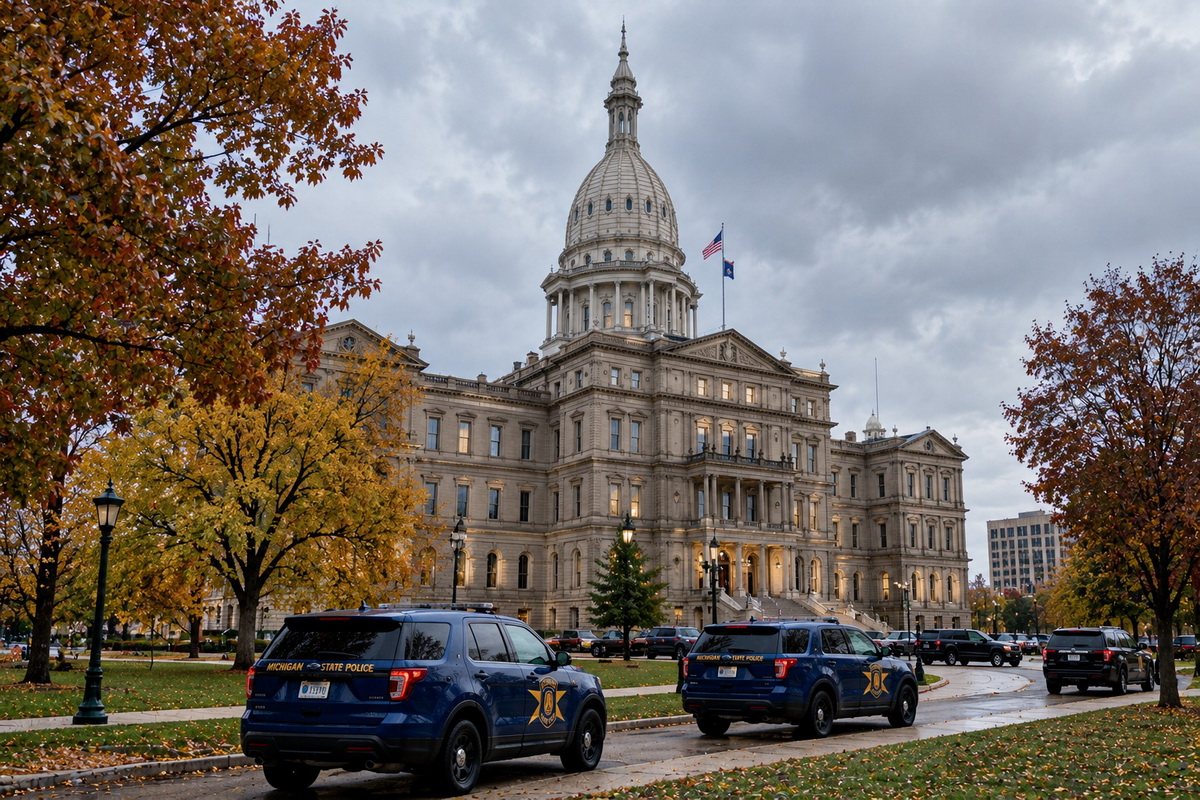
The exchange occurred against an extraordinary backdrop: Federal and state authorities had recently announced charges against more than a dozen men in connection with alleged plots involving the governor, Michigan's Capitol, and law enforcement officers.
For Whitmer, the president's remarks were not simply another round of campaign insults.
They came amid a genuine threat to her personal safety.
A Kidnapping Plot Revealed Just Ten Days Earlier
On October 8, 2020, federal authorities announced that they had disrupted a plot to kidnap Governor Whitmer.
According to investigators, a group of anti-government extremists had discussed abducting the governor from her vacation home and placing her on a form of trial.
Authorities alleged that participants had conducted surveillance, discussed acquiring explosives, and undertaken tactical training in preparation for violent action.
Six men were initially charged federally with conspiracy to commit kidnapping, while seven others faced state charges connected to alleged plots against government officials and law enforcement.
The allegations emerged during a period of intense political hostility over Michigan's COVID-19 restrictions.
Whitmer had imposed emergency measures intended to limit transmission of the coronavirus, including restrictions on gatherings and certain business activities.
The policies prompted protests from residents and business owners who argued that the restrictions were excessive and economically damaging.
Some demonstrations featured heavily armed protesters, including individuals who entered the Michigan Capitol.
Federal investigators alleged that members of the kidnapping conspiracy viewed Whitmer's exercise of emergency powers as illegitimate.
The criminal allegations went far beyond ordinary disagreement with pandemic policies.
They involved plans for violence against an elected public official.
Trump Returns to Michigan and Attacks Whitmer
Despite the recently disclosed threat, Trump returned to Michigan on October 17 for a campaign rally in Muskegon.
The president criticized Whitmer's handling of the coronavirus pandemic, accusing her of imposing unnecessarily restrictive measures.
He urged the crowd to pressure the governor into reopening the state.
As Trump continued criticizing Whitmer, supporters began chanting:
"Lock her up!"
The chant had become a familiar feature of Trump's political rallies, having originally gained prominence during his 2016 campaign against Hillary Clinton.
But in October 2020, its use carried a different context.
The target was a sitting governor who had just been identified as the intended victim of a kidnapping conspiracy.
Trump did not tell the crowd to stop.
Instead, he responded, "Lock them all up."
He also referred to the threats against Whitmer and complained that she had blamed him.
The president's remarks immediately renewed questions about the responsibility of political leaders to avoid escalating hostility toward officials facing credible threats.
October 18: Whitmer Responds
The following morning, Whitmer appeared on NBC's Meet the Press and directly addressed the president's conduct.
She described the rally as deeply troubling given the recent revelations about the kidnapping plot.
Whitmer accused Trump of encouraging an atmosphere in which threats against political officials could become normalized.
"The president is at it again," she said, accusing him of encouraging domestic terrorism.
She emphasized that the consequences extended beyond her own safety.
The danger, she argued, affected her family and other public servants attempting to carry out their responsibilities.
Whitmer called on political leaders from both parties to condemn threatening rhetoric and reduce the hostility surrounding public officials.
Her comments represented a direct accusation against the sitting president: That his political language was contributing to an environment in which extremist threats could flourish.
The allegation was Whitmer's assessment of the president's conduct. The existence of the kidnapping conspiracy did not itself establish that Trump's remarks caused the plot.
Nevertheless, the timing and circumstances made the dispute especially serious.
The White House and Trump Campaign Defend the President
Trump's campaign rejected suggestions that the president had encouraged violence.
Appearing on CNN's State of the Union on October 18, Lara Trump, the president's daughter-in-law and a senior campaign adviser, defended the Muskegon rally.
She argued that Trump had not intended to threaten Whitmer and described the event as a lighthearted political gathering.
"He was having fun at a Trump rally," she said.
CNN anchor Jake Tapper challenged that characterization, questioning whether demands to imprison a governor could reasonably be described as harmless fun under the circumstances.
The exchange highlighted the competing interpretations of Trump's rhetoric.
His defenders viewed the chants as familiar campaign theater and political criticism.
Whitmer and other critics argued that such language was irresponsible when directed toward an official who had recently been targeted by extremists.
House Speaker Nancy Pelosi also criticized Trump's conduct, describing his statements as irresponsible.
The controversy became another flashpoint in an already bitter presidential election campaign.
The President Had Previously Called to "Liberate Michigan"
The October confrontation did not occur in isolation.
Months earlier, as demonstrations against pandemic restrictions intensified, Trump had posted a message calling to "LIBERATE MICHIGAN!"
The April 2020 statement came during a broader dispute between the White House and Democratic governors over emergency public health measures.
Critics argued that Trump's language encouraged hostility toward state officials.
Supporters maintained that he was defending constitutional rights and opposing excessive government restrictions.
After authorities announced the kidnapping plot, Whitmer pointed to the president's previous statements as part of the political environment that concerned her.
The relationship between political rhetoric and extremist violence is complex.
A politician's criticism of government policy does not automatically make that politician responsible for crimes committed by others.
But the controversy raised a narrower question: Once a credible threat against an official becomes public, what responsibility does a president have when addressing an audience expressing hostility toward that person?
That question became central to the October 18 dispute.
Republican Officials Also Express Concern
Criticism of Trump's remarks was not limited to Democrats.
Former Michigan Republican Governor Rick Snyder, who had endorsed Joe Biden in the 2020 presidential election, criticized the president's handling of the chants.
Appearing on CNN, Snyder said it was inappropriate for Trump to encourage such remarks from the crowd.
Republican Congressman Denver Riggleman of Virginia also argued that the chanting should have been stopped.
Their reactions demonstrated that concern over the president's language crossed party lines, even as other Republicans defended his conduct.
The disagreement was not simply about whether Whitmer's pandemic policies were appropriate.
It concerned the boundaries of political criticism when an elected official faced documented threats of violence.
What Happened to the Kidnapping Case?
The criminal investigation continued long after the October 2020 confrontation.
Federal prosecutions produced a mixture of convictions, acquittals, and legal disputes.
Adam Fox and Barry Croft Jr., identified by prosecutors as central figures in the kidnapping conspiracy, were convicted in federal court in 2022.
Both subsequently received lengthy prison sentences.
Other defendants were acquitted, and defense attorneys challenged aspects of the government's investigation, including the extensive involvement of FBI informants and undercover agents.
Those disputes became significant issues during the trials.
The mixed outcomes underscore the importance of distinguishing the original allegations against individual defendants from the offenses ultimately established in court.
The convictions nevertheless confirmed that the investigation uncovered serious criminal conduct involving plans to kidnap the governor.
A Defining Moment in the 2020 Campaign
The October 18 controversy unfolded just sixteen days before the presidential election.
Trump was campaigning for a second term while the country confronted a worsening coronavirus pandemic, widespread economic disruption, and intense political polarization.
Whitmer had become a prominent Democratic governor and frequent target of the president's criticism.
The kidnapping investigation added a new dimension to their political conflict.
For Whitmer, the issue was no longer simply defending her pandemic policies.
It was responding to a president who continued attacking her publicly after authorities disclosed a plot against her safety.
For Trump's defenders, the rally remarks were political theater rather than a call for violence.
Those competing interpretations became part of the national debate about presidential rhetoric.
Why October 18 Matters
October 18, 2020, remains a significant date because it captured a confrontation over the relationship between political speech, public safety, and presidential responsibility.
The underlying facts are well documented.
Authorities had announced a plot to kidnap Michigan's governor.
Ten days later, Trump's supporters chanted for her imprisonment at a campaign rally.
Trump responded by calling for people to be locked up.
And the following morning, Whitmer publicly accused the president of encouraging dangerous hostility.
Whether Trump's rhetoric contributed directly to the actions of particular extremists is a separate question requiring evidence about those individuals and their motivations.
But the president's public response to a crowd targeting an official who had recently faced a kidnapping threat remains an important part of the historical record.
The controversy was not about whether Americans had the right to criticize Governor Whitmer. It was about how the president of the United States chose to respond when his supporters demanded her imprisonment shortly after authorities revealed a violent conspiracy against her.
On October 18, 2020, that question became a national political controversy.