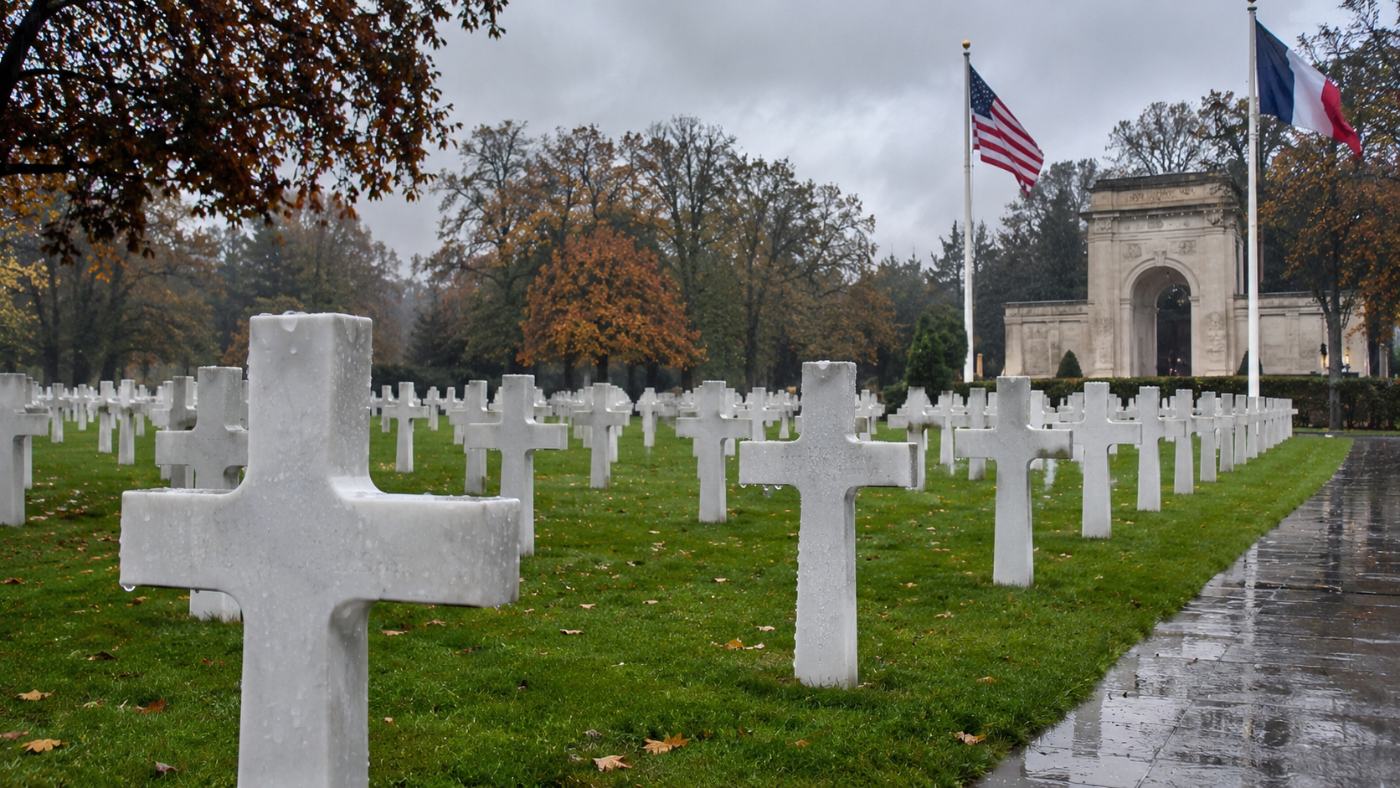
On the 100th anniversary of the armistice that ended World War I, President Donald Trump is facing widespread criticism for canceling a visit to an American military cemetery in France, where thousands of U.S. service members who fought in the Great War are buried or memorialized.
The president was scheduled to visit the Aisne-Marne American Cemetery near Belleau Wood on Saturday, November 10, to lay a wreath and honor American soldiers and Marines who died fighting German forces in 1918.
Instead, the White House canceled the appearance, citing poor weather conditions that prevented the presidential helicopter from flying.
The decision immediately sparked outrage among veterans, former government officials, and political commentators who questioned why the commander-in-chief could not travel approximately 60 miles from Paris by automobile.
The Significance of Belleau Wood
The canceled visit carried particular significance for the United States Marine Corps.
In June 1918, American Marines fought German troops in the brutal Battle of Belleau Wood, one of the most celebrated engagements in Marine Corps history.
The fighting lasted nearly three weeks and involved repeated assaults through machine-gun fire, artillery bombardments, and heavily defended woodland positions.
The battle helped establish the Marine Corps' reputation for determination and battlefield courage.
The nearby Aisne-Marne American Cemetery contains more than 2,200 American graves, while the names of more than 1,000 missing service members are memorialized there.
For generations of Marines, Belleau Wood has represented extraordinary sacrifice in the service of the United States.
Other World Leaders Attend Despite the Weather
While Trump remained in Paris, other world leaders continued participating in remembrance ceremonies despite rainy conditions.
Canadian Prime Minister Justin Trudeau traveled to the Canadian National Vimy Memorial to honor soldiers killed during World War I.
French President Emmanuel Macron and German Chancellor Angela Merkel also participated in commemorations recognizing the sacrifices of the war.
The contrast intensified criticism of Trump's absence.
Former Obama administration official Ben Rhodes argued that presidential travel arrangements should have included an alternative transportation plan.
Former Secretary of State John Kerry also criticized the cancellation, pointing out that American soldiers had endured far worse conditions while fighting in Europe.
White House Defends the Decision
White House officials maintained that the cancellation resulted from legitimate safety and logistical concerns rather than an unwillingness to honor fallen troops.
Officials said poor visibility prevented the use of Marine One and that arranging a presidential motorcade on short notice would have required extensive security preparations and road closures.
Trump was represented at Belleau Wood by two retired and active-duty Marine generals: White House Chief of Staff John Kelly and Joint Chiefs Chairman Joseph Dunford.
Both attended the ceremony and paid their respects.
Trump Attends a Separate Ceremony
On Sunday, November 11, Trump joined international leaders in Paris for ceremonies marking the centennial of the armistice.
He also visited the Suresnes American Cemetery outside Paris, where he delivered remarks honoring American military personnel.
Nevertheless, criticism of Saturday's cancellation continued.
The controversy highlighted disagreements over the responsibilities of a commander-in-chief during ceremonies commemorating military sacrifice.
For critics, the issue was not whether weather conditions created legitimate transportation challenges, but whether sufficient efforts had been made to overcome them.
On a weekend dedicated to remembering Americans who endured the horrors of World War I, the president's absence from Belleau Wood became an unexpected focus of international attention.