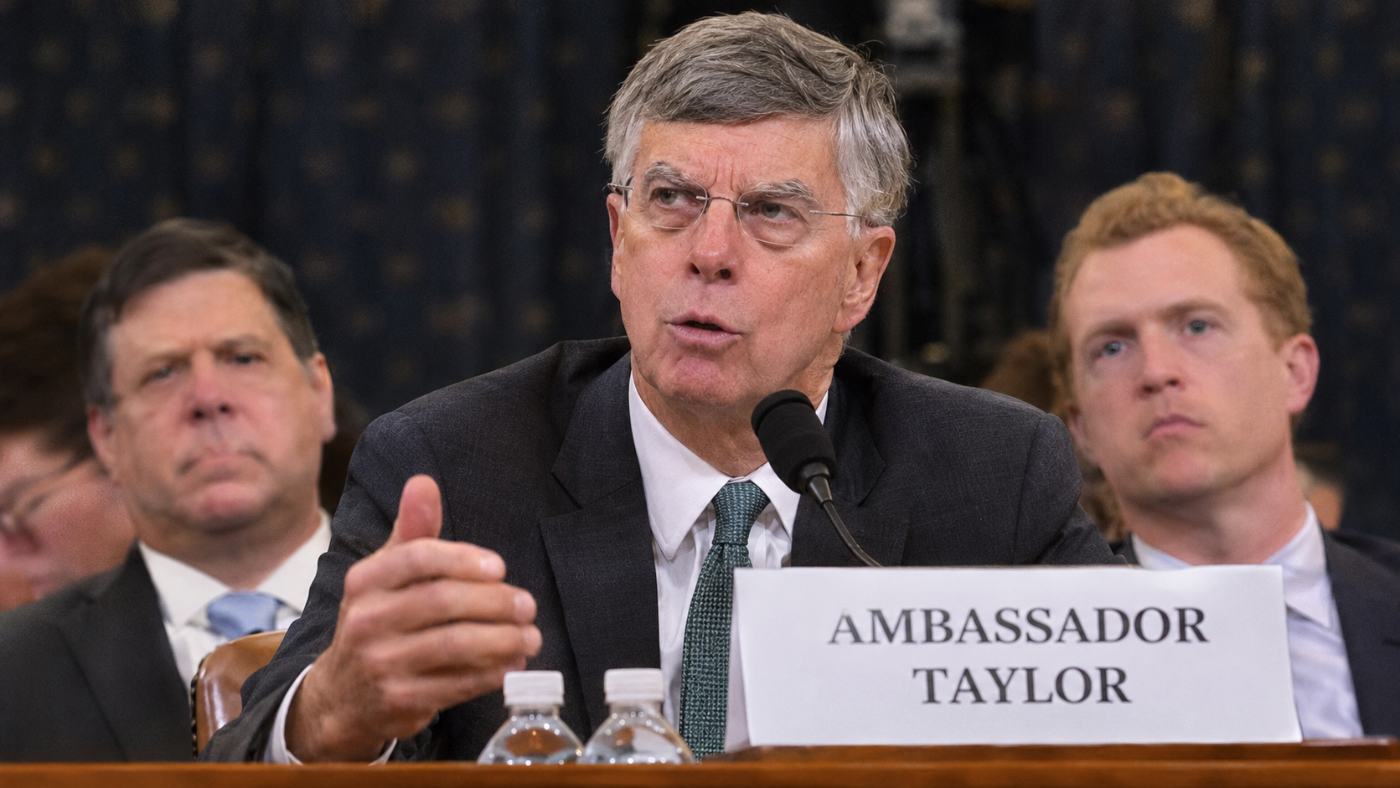
The first public impeachment hearing into President Donald Trump's dealings with Ukraine produced a significant new revelation on November 13, 2019: a previously undisclosed telephone conversation in which Trump personally asked about politically sensitive investigations he wanted Ukraine to pursue.
The disclosure came from William Taylor, the acting U.S. ambassador to Ukraine, during testimony before the House Intelligence Committee.
Taylor described an account from a member of his embassy staff who had overheard Trump speaking with Gordon Sondland, the U.S. ambassador to the European Union, on July 26, 2019.
The conversation occurred just one day after Trump's controversial telephone call with Ukrainian President Volodymyr Zelensky.
A Phone Call That Raised New Questions
According to Taylor's testimony, Sondland called Trump from a restaurant in Kyiv after meeting with Ukrainian officials.
A member of Taylor's staff was present and could hear the president speaking.
Trump asked Sondland about "the investigations," Taylor told lawmakers.
Sondland reportedly responded that Ukrainian officials were prepared to move forward.
But what happened after the call was particularly revealing.
The embassy employee asked Sondland what Trump thought about Ukraine.
According to Taylor, Sondland replied that Trump cared more about investigations involving former Vice President Joe Biden, which his personal attorney Rudy Giuliani had been promoting.
The testimony provided a new account connecting Trump directly to the effort to obtain politically advantageous investigations from Ukraine.
Military Assistance and Political Pressure
The impeachment investigation centered on allegations that Trump had used American foreign policy to pressure Ukraine into investigating Biden, a potential opponent in the 2020 presidential election.
During the summer of 2019, the Trump administration suspended nearly $400 million in congressionally approved military assistance to Ukraine.
The funding was intended to help the country defend itself against Russian aggression.
Congressional investigators examined whether the administration had conditioned the release of that assistance, along with a coveted White House meeting, on Ukraine publicly announcing investigations.
Taylor's testimony added another dimension to the inquiry.
Rather than relying exclusively on conversations among Trump's advisers, investigators now had an account of the president himself asking about the status of the investigations.
Trump Denies Knowledge of the Call
Trump rejected the significance of the disclosure.
Speaking during a White House news conference with Turkish President Recep Tayyip Erdogan, Trump said he knew nothing about the reported conversation and did not recall it.
Sondland's attorney indicated that the ambassador would address the account during his upcoming congressional testimony.
Taylor acknowledged that he had not personally overheard the conversation. He learned about it from the embassy employee shortly before the public hearing.
Nevertheless, the account gave investigators a new witness to question and another potential source of evidence.
Diplomats Describe an Unusual Foreign Policy Operation
Taylor testified alongside George Kent, a senior State Department official responsible for European affairs.
Both described concerns about an unofficial diplomatic effort involving Giuliani and administration officials.
The witnesses distinguished that effort from established American policy toward Ukraine, which emphasized military assistance, anticorruption reforms, and resistance to Russian aggression.
Democrats argued that the evidence showed Trump pursuing personal political interests through the powers of the presidency.
Republicans disputed that interpretation, emphasizing that the military assistance was ultimately released and that neither Taylor nor Kent had personally discussed the alleged arrangement with Trump.
A New Direction for the Impeachment Inquiry
The November 13 revelation changed the focus of the opening impeachment hearing.
Investigators had already examined Trump's July 25 conversation with Zelensky. Taylor's testimony identified another presidential conversation, the following day, concerning the same politically sensitive investigations.
It also raised additional questions about whether the president's interest in investigating Biden had influenced American policy toward Ukraine.
As the televised hearings began, Congress was no longer examining only what Trump's advisers had said and done.
Lawmakers now had a new account of Trump's own words, placing his personal involvement at the center of the impeachment investigation.