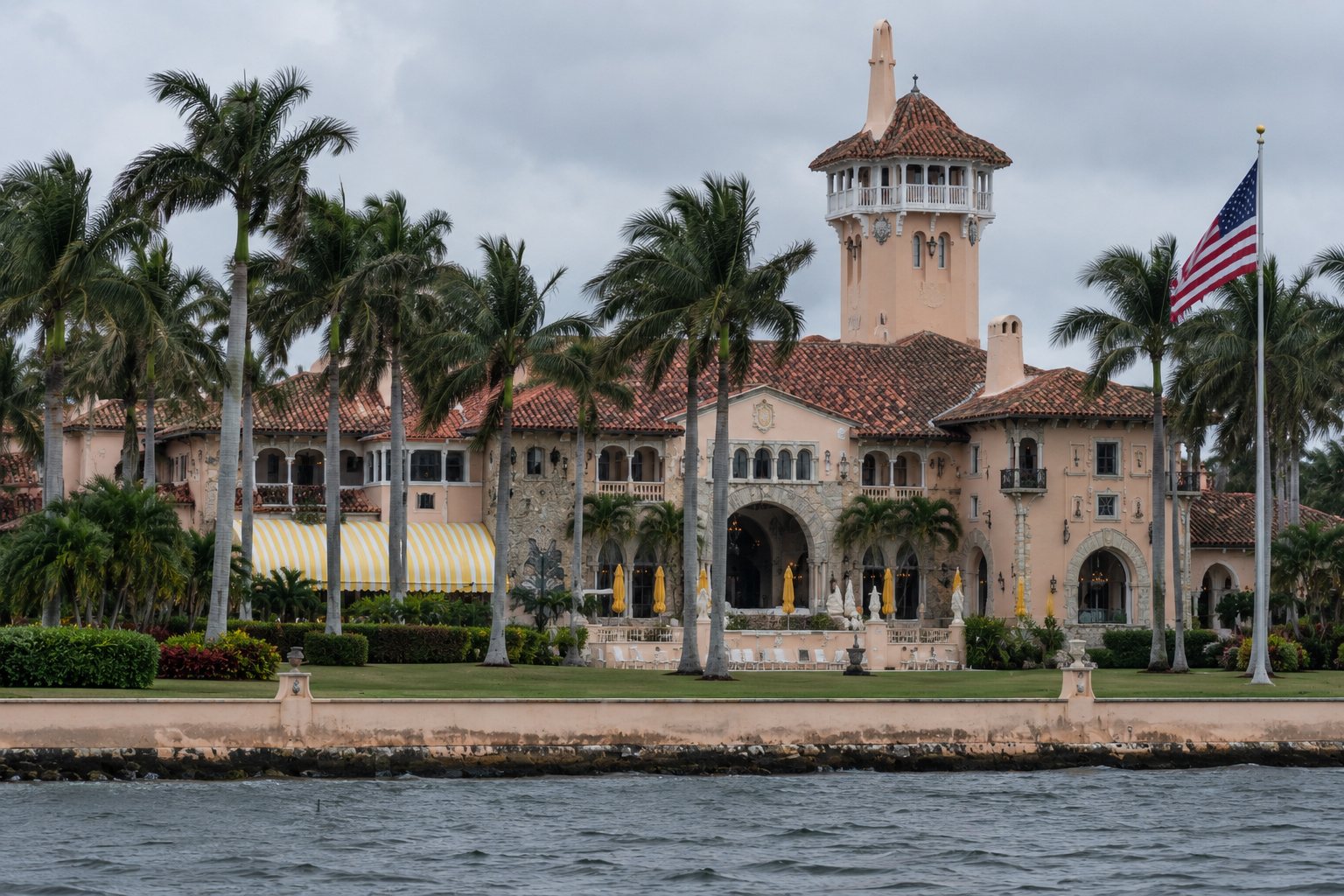
For weeks after the FBI searched Donald Trump's Mar-a-Lago estate, Trump and his allies offered a succession of explanations for why presidential and classified records had ended up at his Florida club.
Trump said he had broad authority to declassify documents.
He claimed the records belonged to him.
He compared his situation to previous presidents.
And some of his allies suggested that the General Services Administration—the federal agency that helped move Trump's belongings after he left the White House—was responsible for packing the boxes.
On October 10, 2022, newly released government emails provided important evidence about that last claim.
The emails showed that when GSA became involved, the boxes had already been packed, sealed and shrink-wrapped.
GSA transported them.
It did not pack the documents inside them.
At virtually the same time, another potentially significant development emerged.
Trump attorney Christina Bobb—the lawyer who had signed a certification concerning the return of documents sought by the Justice Department—had spoken with federal investigators.
The Mar-a-Lago documents investigation was becoming increasingly focused not simply on what Trump possessed, but on how the records got there, what happened when the government demanded their return, and whether representations made to investigators were accurate.
Blaming the GSA
One explanation promoted by Trump allies attempted to shift responsibility for the documents to the federal government itself.
Trump ally Kash Patel had claimed that the General Services Administration had mistakenly packed boxes and transported them to Mar-a-Lago.
If true, the explanation could suggest that Trump had not deliberately taken the material at all.
The government had supposedly packed it.
The government had supposedly shipped it.
But the newly released emails told a different story.
More than 100 pages of GSA emails and documents showed that Trump's materials were already packed when the agency became involved in arranging their transportation.
The boxes were sitting in office space in Arlington, Virginia.
They were sealed.
They were shrink-wrapped.
They were placed on pallets.
Trump aides even provided photographs of the packed pallets so government officials could determine what needed to be transported and where it was going.
The distinction was important.
GSA helped ship the boxes. It did not choose what went inside them.
Trump's Own Aide Certified the Shipment
The emails contained another revealing detail.
Before GSA used federal transition funds to transport the materials, the agency wanted confirmation that the shipment qualified for government-funded transportation.
Trump aide Beau Harrison was asked to affirm that the materials being shipped were either necessary to wind down the Office of the Former President or were property of the federal government.
Harrison provided the requested letter on Office of Donald J. Trump letterhead.
The exchanges showed GSA officials dealing primarily with transportation logistics.
They were not sorting through Trump's presidential records.
They were not deciding which White House documents Trump could legally possess.
They were arranging the movement of material that Trump's team had already packed.
That significantly undercut the suggestion that federal movers had somehow caused classified and presidential records to end up at Mar-a-Lago.
The National Archives Was Already Looking for Records
The timeline created another problem.
While the boxes remained packed in Virginia during 2021, the National Archives and Records Administration was already becoming concerned about presidential records that appeared to be missing.
Under the Presidential Records Act, presidential records belong to the United States—not personally to the former president.
When a president leaves office, custody of those presidential records transfers to the National Archives.
By May 2021, Archives officials were communicating with Trump's representatives about missing records, including correspondence between Trump and North Korean leader Kim Jong Un.
The records dispute would continue for months.
Eventually, in January 2022, Trump returned 15 boxes to the National Archives.
What archivists found inside intensified the matter considerably.
Some of the material contained classified markings.
The Justice Department became involved.
A Subpoena—and a Certification
In May 2022, a federal grand jury issued a subpoena seeking additional documents bearing classification markings.
Trump's attorneys subsequently met Justice Department officials at Mar-a-Lago.
On June 3, investigators received additional documents.
They also received a written certification stating that a diligent search had been conducted and that the documents responsive to the subpoena were being returned.
Christina Bobb signed that certification as the custodian of records.
But there was an important qualification.
Bobb had insisted that the certification say it was being made based on information provided to her.
She had not personally conducted the search.
That qualification would become extremely important.
Because the government's search wasn't finished.
The FBI Finds More
On August 8, 2022, FBI agents executed a court-authorized search warrant at Mar-a-Lago.
They found more than 100 additional documents bearing classified markings.
That discovery immediately raised questions about the June certification.
If a diligent search had located and returned all documents responsive to the subpoena, why were more than 100 additional documents with classification markings subsequently found at the property?
Investigators wanted answers.
And by October, they were talking to Christina Bobb.
Bobb Talks to Federal Investigators
News broke October 10 that Bobb had spoken with Justice Department investigators days earlier.
According to reports at the time, Bobb told investigators about the circumstances surrounding the certification she had signed and identified other Trump attorneys involved in the matter.
Reporting indicated that another Trump attorney, Evan Corcoran, had drafted the certification and had been involved in the search for responsive records.
Bobb had demanded that qualifying language be inserted before she would sign it.
That distinction mattered.
The certification was no longer simply a piece of paperwork.
It had become part of the investigation into whether the government had been misled about the documents remaining at Mar-a-Lago.
Trump Says the Documents Are “Mine”
Trump, meanwhile, continued publicly defending his possession of the records.
At an Arizona rally immediately before the October 10 developments, Trump complained about the FBI search and demanded the return of material agents had seized.
He characterized the records as his property.
That position ran directly into a fundamental provision of the Presidential Records Act.
Presidential records created or received while carrying out the constitutional, statutory or ceremonial duties of the presidency are government property.
They do not become the outgoing president's personal property simply because he leaves office.
Trump was free to possess his personal records.
Presidential records were another matter.
“What About Obama?”
Trump repeatedly attempted to defend himself by pointing toward previous presidents.
One of his most frequent targets was Barack Obama.
Trump claimed Obama had taken millions of presidential records with him to Chicago.
The National Archives publicly rejected that characterization.
Obama did not personally take possession of millions of presidential records.
The National Archives took custody of the records and moved them to a secure facility in the Chicago area.
The records remained under NARA's legal and physical control.
That was fundamentally different from the situation at Mar-a-Lago.
Then Trump Brought Up George H.W. Bush
Trump expanded the comparison.
At his October 9 Arizona rally, he claimed former President George H.W. Bush had taken millions of documents to a former bowling alley and former Chinese restaurant.
The description made the storage arrangement sound almost absurdly insecure.
But it left out the most important fact.
The records were in the custody of the National Archives.
The temporary facility in Texas was used by NARA while the George H.W. Bush Presidential Library was being developed.
Contemporary reporting described substantial security surrounding the facility.
Bush hadn't simply taken millions of government documents and stored them in an abandoned restaurant.
The National Archives had possession of them.
The same basic distinction applied to other former presidents Trump invoked.
The Difference Was Custody
Trump's comparisons repeatedly blurred two very different circumstances.
Former presidents have presidential libraries.
Their presidential records can be stored in temporary facilities while those libraries are established.
Those records can be located geographically near a former president.
But that does not mean the former president personally owns or controls them.
The National Archives maintains custody.
That was the key difference in the Mar-a-Lago investigation.
The records recovered there were not sitting inside a National Archives facility awaiting processing for a presidential library.
They were at Trump's private club and residence.
The National Archives had spent months attempting to retrieve presidential records.
The Justice Department had issued a subpoena.
Trump's representatives had turned over additional documents.
A lawyer had signed a certification concerning compliance.
And then the FBI found more.
Another Explanation Falls Apart
By October 10, 2022, the documents controversy had generated a remarkable collection of explanations.
Trump and his allies had argued that he had declassified the documents.
They argued the records belonged to him.
They compared his situation to Obama and other former presidents.
Some suggested the GSA was responsible for packing the documents.
The newly released emails directly undermined that final explanation.
The government agency responsible for assisting with Trump's post-presidential move had arrived after the boxes were already packed and sealed.
It transported them.
Trump's team had packed them.
Meanwhile, the attorney who signed the June certification had spoken with federal investigators about how that document came to be signed.
And Trump's comparisons with previous presidents continued to omit the central distinction:
Their presidential records were being held by the National Archives.
Trump's were found at Mar-a-Lago.
By October 10, the investigation was no longer merely asking why government records had ended up at Trump's private club.
Investigators were also examining what happened when the government tried to get them back.