A new economic report is challenging the familiar argument that presidents have limited control over inflation, concluding that several of Donald Trump's signature policies have directly contributed to the financial pressures facing American households.**
The report, released by the progressive advocacy organization Defend America Action and examined by Scripps News, argues that Trump's tariffs, the war with Iran, changes to federal healthcare programs and reductions in food assistance have compounded an affordability crisis already affecting millions of Americans.
According to the report, the average American household has faced an estimated $4,700 in additional expenses for everyday necessities during Trump's second administration.
The figure is an advocacy group's estimate rather than an independently established total attributable solely to the president. Nevertheless, several of the policies identified in the report have measurable economic consequences.
Jared Bernstein, who chaired the White House Council of Economic Advisers under President Joe Biden and now advises Defend America Action, told Scripps News that the connection between presidential decisions and consumer costs is unusually apparent in the current administration.
Although presidents generally cannot control prices directly, Bernstein argued that Trump's tariffs and decisions involving Iran have created identifiable financial pressures.
Gasoline Prices Climb Following Iran Conflict
One of the report's most significant findings concerns energy prices.
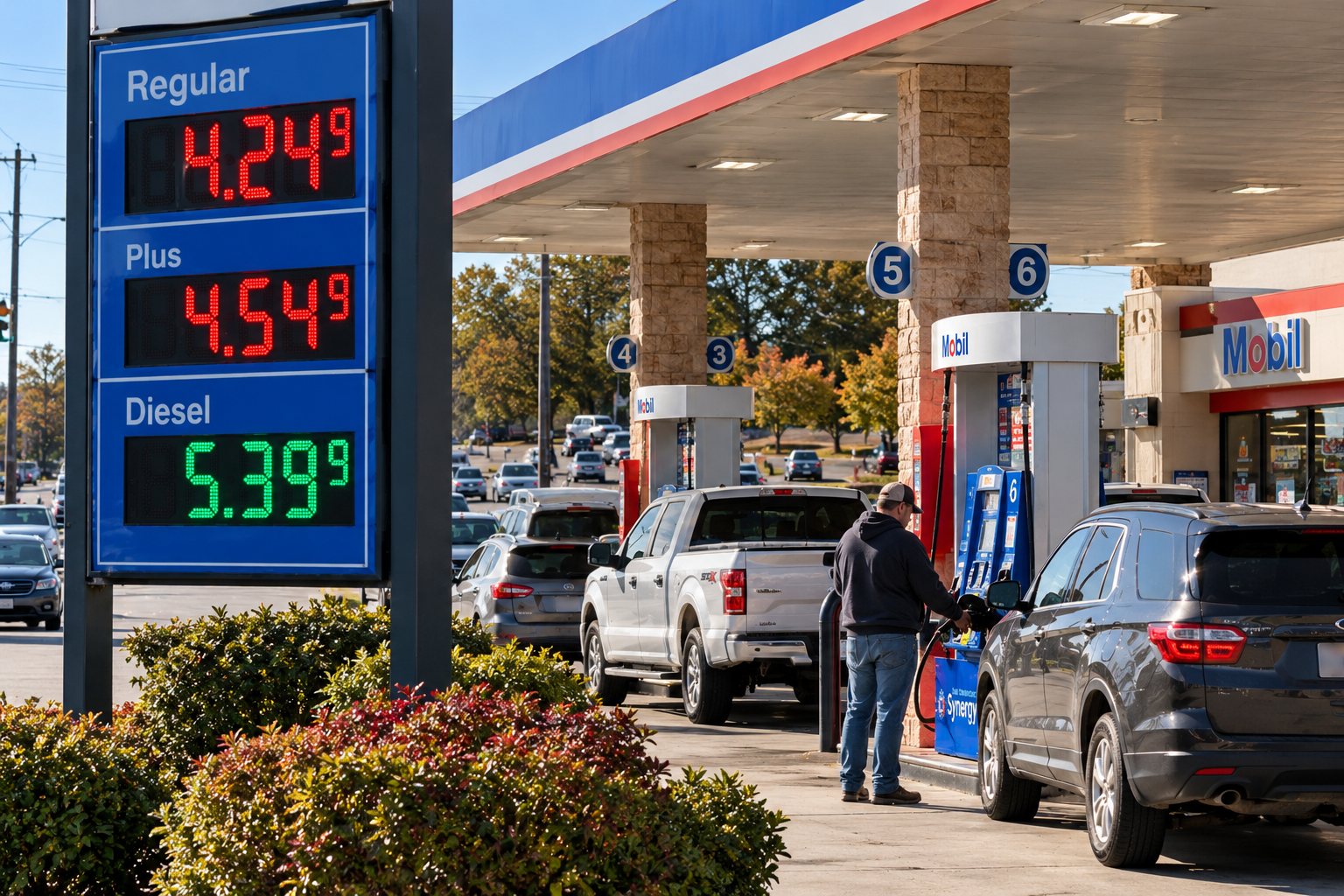
Before the Iran conflict began, the national average for regular gasoline was approximately $2.98 per gallon. By late October, that figure had climbed to approximately $4.24, according to AAA figures cited by Scripps News.
Diesel prices increased even more dramatically, rising from approximately $3.75 to $6.35 per gallon.
Those increases extend well beyond what drivers pay at the pump.
Diesel powers the trucks transporting groceries, consumer goods, agricultural products and industrial materials throughout the country. Higher transportation costs can eventually appear in the prices consumers pay for those products.
The report connects much of the energy shock to U.S. and Israeli military action against Iran and the resulting disruption of shipping through the Strait of Hormuz, a major international oil transportation route.
Trump and his Republican allies have defended the military campaign as necessary for national security.
However, the administration's energy policies have become a point of contention as American households confront higher fuel expenses.
At a recent political rally in Perry, Georgia, Trump celebrated the financial gains enjoyed by American oil and gas producers.
Those industry profits stand in contrast to the higher fuel bills confronting consumers and businesses.
Tariffs Add Another Expense for American Families
The administration's tariffs represent another policy with a direct connection to consumer costs.
Trump has repeatedly described tariffs as payments imposed on foreign countries. In practice, tariffs are collected from American importers, who may absorb the expense or pass some or all of it along to customers.
An analysis by the Tax Foundation estimated that tariffs would cost the average American household approximately $920 in 2026.
That burden can appear through higher prices on imported merchandise, manufacturing materials, household appliances and other consumer products.
The administration maintains that tariffs protect domestic industries, encourage American manufacturing and provide leverage in international trade negotiations.
Critics argue that these potential benefits do not eliminate the immediate financial costs imposed on American businesses and consumers.
For households already struggling with housing, food and transportation expenses, even relatively modest increases across multiple categories can accumulate into substantial annual costs.
Healthcare and Food Assistance Under Pressure
The Defend America Action report also examines federal healthcare and nutrition policies.
Republican-backed changes to Medicaid eligibility requirements, reductions in food assistance and the expiration of enhanced Affordable Care Act premium tax credits have contributed to concerns about the affordability of essential services.
Jessica Schubel, a former Biden administration healthcare official, told Scripps News that healthcare costs were already increasing before Trump returned to office.
However, she argued that Republican policy decisions have made insurance coverage more difficult for some Americans to afford.
The Trump administration points to prescription-drug pricing initiatives and other healthcare proposals as evidence that it is attempting to reduce costs.
Critics counter that those initiatives do not adequately offset the financial consequences of changes to insurance assistance and eligibility requirements.
The broader concern is that families facing higher grocery and energy prices may also be required to devote more of their income to healthcare.
Americans Increasingly Hold Trump Responsible
Recent polling indicates that public frustration with the administration's economic performance has become widespread.
An Associated Press-NORC survey conducted September 24–28 found that 65% of American adults believed Trump's policies were primarily responsible for unusually high prices, rather than circumstances outside his control.
Only 17% approved of his handling of the cost of living, while 26% approved of his overall handling of the economy.
The survey also found that approximately seven in ten Americans believed his handling of affordability had been worse than they expected.
These findings represent a substantial challenge for a president who campaigned on promises to lower prices and improve household finances.
The public's concerns are not limited to political opponents. The same survey found that approximately six in ten Republicans disapproved of Trump's handling of the cost of living, although most Republicans continued to attribute higher prices primarily to factors beyond his control.
White House Continues to Blame Biden
The Trump administration rejects the argument that its policies are chiefly responsible for Americans' financial difficulties.
White House officials contend that Trump inherited an economy already burdened by the inflation experienced during Biden's presidency.
That inflation was substantial. Consumer price inflation reached approximately 9% in June 2022, following pandemic-related supply disruptions, strong consumer demand, energy shocks and federal economic stimulus.
Economic researchers have found that pandemic-era government spending contributed to inflation, although estimates differ and numerous international factors also played important roles.
The administration also argues that wage growth, energy production and other economic indicators should be considered when evaluating affordability.
Kevin Hassett, director of the National Economic Council, recently disputed descriptions of the economy as being in an affordability crisis, arguing that broader economic data presented a more favorable picture.
Those arguments highlight an important distinction: Some of today's high prices reflect increases that occurred before Trump returned to office, while other increases can be linked to decisions made during his current administration.
The Question of Economic Accountability
Presidents cannot determine the price of every grocery item, control international commodity markets or independently set interest rates.
But presidential decisions can affect import taxes, federal spending, military operations, energy markets and healthcare assistance.
The new report argues that Trump's administration has exercised those powers in ways that have increased financial pressure on American households.
Its conclusions come from an organization aligned with Democratic policy priorities, making independent scrutiny of its estimates important. Still, the measurable effects of tariffs and disruptions to international oil supplies demonstrate that some economic pressures can be traced to specific government decisions.
As the November midterm elections approach, the administration continues to defend its economic agenda while voters express dissatisfaction with the cost of everyday necessities.
The central question raised by the report is not whether Trump created every affordability problem confronting the country.
It is how much of the additional financial burden Americans are experiencing can be traced to policies his administration deliberately chose to pursue.