The National Archives released a new collection of records Monday documenting the long-running effort to recover presidential records that Donald Trump took with him after leaving the White House — records that, under federal law, belonged in government custody.
The documents concern 15 boxes of material eventually returned to the National Archives from Trump's Mar-a-Lago estate in Florida in January.
But their return did not end the matter.
Some of the boxes contained classified national security information.
Trump's representatives continued searching for additional presidential records after the 15 boxes were recovered.
And what began as an effort by government archivists to retrieve missing records has since escalated into a federal criminal investigation.
The National Archives' newly released records provide another window into how the situation developed.
The Records Should Have Been Turned Over
The basic issue is remarkably straightforward.
The Presidential Records Act requires presidential records to be preserved and transferred to the National Archives when an administration ends.
Trump left office on January 20, 2021.
The 15 boxes remained at Mar-a-Lago.
According to the National Archives, officials communicated with Trump's representatives throughout 2021 in an effort to recover presidential material.
The boxes were finally transferred to government custody in January 2022 — approximately a year after Trump left office.
The Archives has previously been unusually direct about what should have happened.
“As required by the Presidential Records Act,” the agency said in February, “these records should have been transferred to NARA from the White House at the end of the Trump Administration in January 2021.”
They weren't.
What Was in the Boxes?
This was not simply a collection of Trump's personal belongings.
The National Archives has said the boxes contained presidential records covered by federal law.
More seriously, officials discovered documents marked as classified national security information among the material returned from Mar-a-Lago.
That discovery changed the nature of the dispute.
Archivist of the United States David Ferriero informed Congress in February that the Archives had been communicating with the Justice Department about the discovery.
The Archives also said Trump's representatives were continuing to search for additional presidential records belonging to the government.
That raises the obvious question:
If 15 boxes of government records had already been sitting at Trump's private Florida club for approximately a year, what else was still there?
Months of Effort to Recover the Records
The records released Monday include communications between National Archives officials and Trump's Presidential Records Act representatives through March 31.
They also include communications from the Archives to outside entities, including the Justice Department, Congress and the White House.
The Archives says it received dozens of Freedom of Information Act requests from journalists, lawmakers and members of the public seeking information about the boxes.
Monday's disclosure is only part of the material.
The agency released 11 pages from the category involving communications with Trump's representatives while withholding 298 pages.
It released another 54 pages of communications with outside entities while withholding 1,249 pages.
Among the reasons cited for withholding material are exemptions protecting privileged communications, personal privacy and information connected to active law-enforcement proceedings.
From Missing Records to a Criminal Investigation
By October, the controversy surrounding Trump's records has moved far beyond an administrative disagreement with the National Archives.
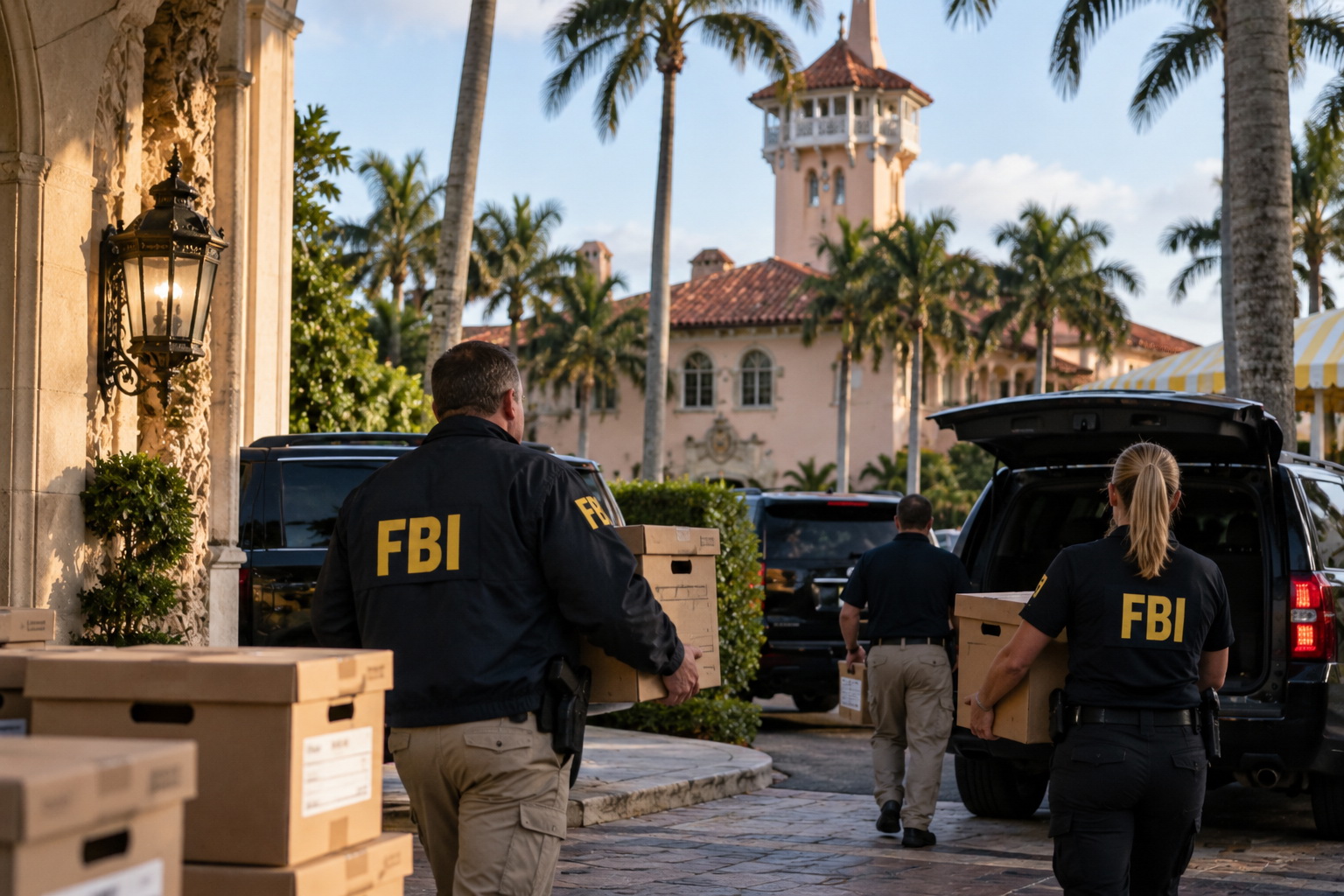
On August 8, FBI agents executed a court-authorized search warrant at Mar-a-Lago.
The search recovered additional government documents, including material bearing classified markings.
The Justice Department is investigating the handling and retention of government records and possible obstruction.
Trump has denied wrongdoing and attacked the investigation, describing the FBI search as politically motivated.
But whatever arguments emerge over the criminal investigation, one fact is already established by the National Archives:
Presidential records that should have been transferred to government custody when Trump left office instead remained at Mar-a-Lago.
And recovering them required months of communications between federal archivists and Trump's representatives.
This Wasn't Trump's Personal Property
That distinction matters.
A president does not simply get to treat the documentary record of his presidency as a personal collection.
The Presidential Records Act establishes government ownership of presidential records and requires their preservation.
Those records belong to the historical record of the United States.
The National Archives exists in part to preserve them.
Yet when Trump's presidency ended, records that should have gone into the Archives' custody went instead to his private club in Florida.
The government spent much of 2021 trying to get them back.
Fifteen boxes were finally returned in January.
Classified material was discovered inside.
Trump's representatives continued searching for still more presidential records.
The matter was referred to the Justice Department.
And eventually, FBI agents arrived at Mar-a-Lago with a search warrant and recovered additional government documents.
The Paper Trail Gets Longer
Monday's release doesn't determine whether Donald Trump committed a crime.
That question belongs to investigators, prosecutors and, if charges are eventually brought, the courts.
But it documents something that no longer depends on political interpretation.
Government records that should have been transferred to the National Archives when Trump's presidency ended were instead kept at Mar-a-Lago.
Some contained classified markings.
Federal officials spent months trying to recover presidential records.
And even after the first 15 boxes were returned, the government determined that additional records remained at Trump's property.
The question facing federal investigators is no longer simply why presidential records ended up at Mar-a-Lago.
It is why they remained there — and whether any laws were broken in the process.