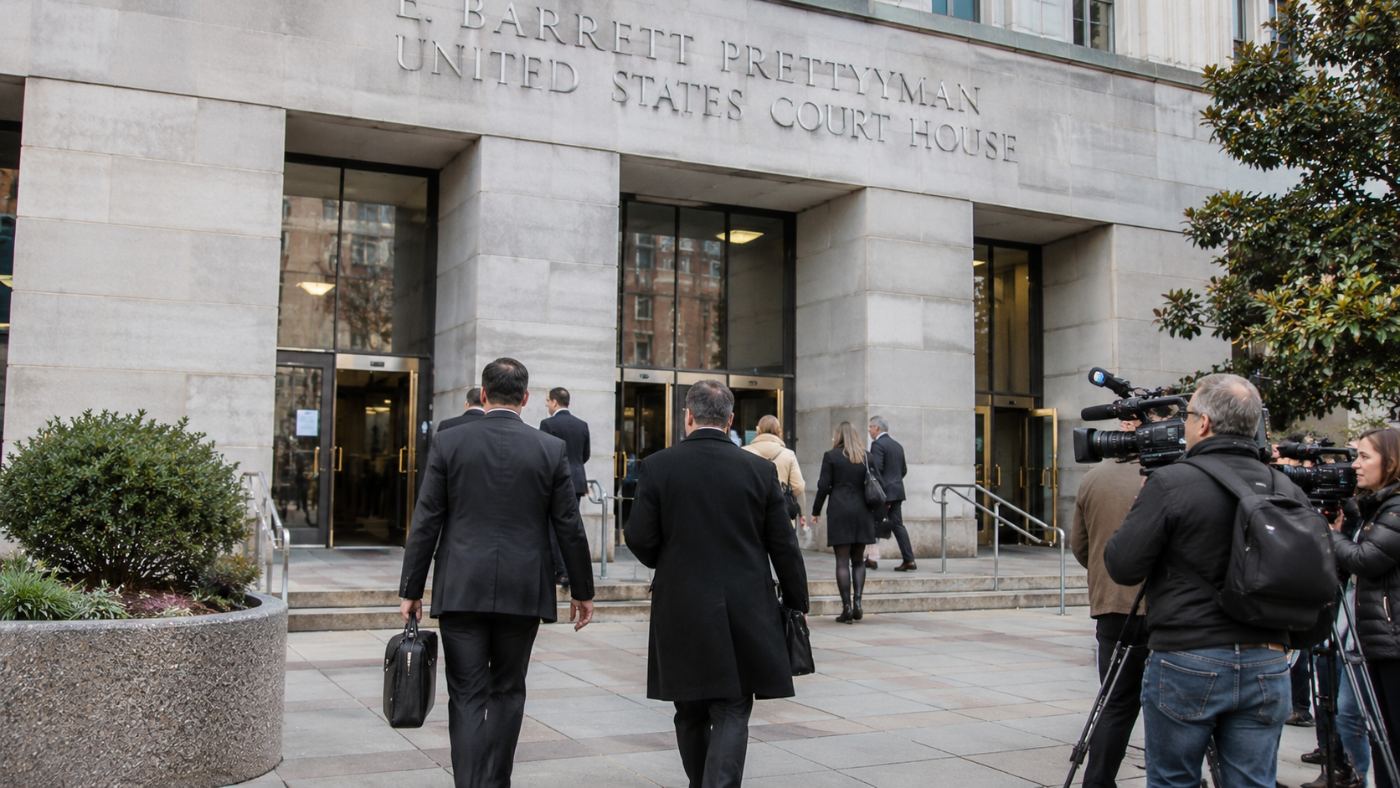
On December 4, 2018, Special Counsel Robert Mueller revealed that President Donald Trump's former national security adviser, Michael Flynn, had provided substantial assistance to federal investigators examining Russian interference in the 2016 presidential election.
In a heavily redacted sentencing memorandum filed in federal court, prosecutors disclosed that Flynn had participated in 19 interviews with investigators and provided information relevant to several ongoing investigations.
Mueller's team recommended that Flynn receive little or no prison time despite his guilty plea for lying to the FBI.
Trump's Former National Security Adviser
Flynn, a retired Army lieutenant general, became Trump's first national security adviser in January 2017.
His tenure lasted just 24 days.
He resigned in February after revelations that he had misled Vice President Mike Pence and other administration officials about conversations with Russian Ambassador Sergey Kislyak.
Those conversations occurred during the presidential transition, including discussions related to American sanctions against Russia.
On December 1, 2017, Flynn pleaded guilty to making false statements to FBI agents about his communications with Kislyak.
As part of his plea agreement, he agreed to cooperate with federal investigators.
Nineteen Interviews With Investigators
The December 4 sentencing memorandum revealed the extent of that cooperation.
Flynn had participated in 19 interviews with Mueller's team and attorneys from other Justice Department offices.
He also supplied documents and communications relevant to their investigations.
Prosecutors emphasized that Flynn had provided firsthand information about interactions between Trump's presidential transition team and Russian government officials.
His position inside Trump's campaign and incoming administration gave him knowledge of events that investigators considered important.
The filing indicated that his early cooperation may also have encouraged other witnesses to provide information.
Mueller Recommends No Prison Time
Under federal sentencing guidelines, Flynn faced an advisory range of zero to six months in prison for his false-statements offense.
Mueller's prosecutors recommended a sentence at the lower end of that range, including the possibility of no incarceration.
The recommendation reflected Flynn's cooperation, not a determination that his offense was insignificant.
Prosecutors emphasized that Flynn had made multiple false statements to Justice Department officials.
However, they argued that his assistance to ongoing investigations justified leniency.
Heavily Redacted Court Documents
Much of the filing was blacked out to protect ongoing investigations.
The visible portions identified Flynn's assistance in the Russia investigation and referenced a separate criminal investigation whose details were initially concealed.
The redactions demonstrated that prosecutors were withholding information they believed could affect other proceedings.
The document did not establish that Trump personally committed a crime or reveal everything Flynn had told investigators.
Nevertheless, it confirmed that a former senior White House official had provided extensive information to federal prosecutors.
A Complicated Legal Aftermath
Flynn's sentencing, initially scheduled for December 18, 2018, was postponed.
His legal strategy subsequently changed, and he sought to withdraw his guilty plea.
In 2020, the Justice Department moved to dismiss the criminal case against him, a decision that generated considerable controversy.
Before the proceedings concluded, Trump granted Flynn a presidential pardon on November 25, 2020.
Flynn never received a final criminal sentence.
A Significant Development in the Mueller Investigation
The December 4 filing offered the public an unusually detailed look at cooperation from someone who had occupied one of the most sensitive national security positions in the Trump administration.
It confirmed that Flynn had supplied information about presidential transition contacts with Russian officials and assisted multiple investigations.
Although much of his cooperation remained confidential at the time, the sentencing memorandum established that investigators had obtained substantial assistance from a former member of Trump's inner circle.
December 4, 2018, remains an important date in the documented history of the Mueller investigation.