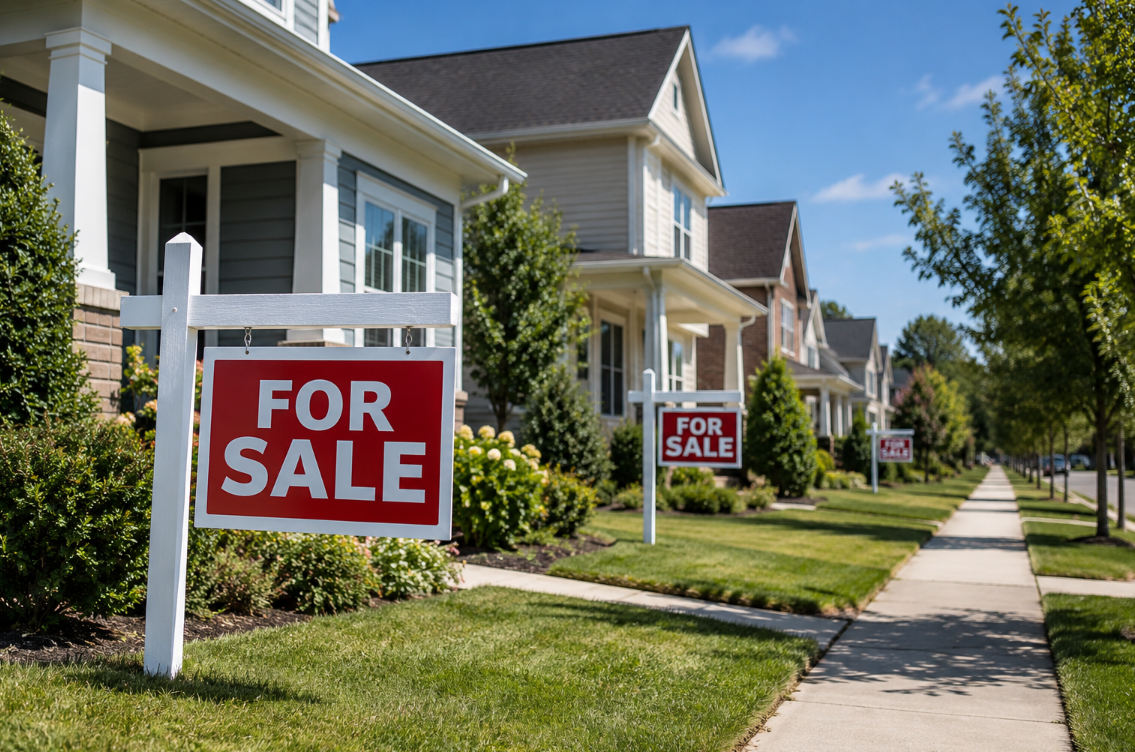
For Americans hoping the cost of buying a home would finally come down, the latest numbers are another dose of bad news.
The average rate on a 30-year fixed mortgage has climbed to 6.95 percent, its highest level in more than 19 months and well above the 6.26 percent borrowers were seeing at this time last year.
It is another affordability problem confronting President Donald Trump at a time when his administration has repeatedly promised Americans relief from high prices.
Instead, borrowing money to buy a home has become more expensive.
Nearly 7 Percent — Again
According to Freddie Mac, the average 30-year mortgage jumped from 6.76 percent to 6.95 percent in just one week.
That may look like a relatively small change on paper. For a family financing hundreds of thousands of dollars, however, changes in mortgage rates can translate into substantial differences in monthly payments and tens of thousands of dollars over the life of a loan.
The latest increase is particularly painful because Americans were already dealing with high home prices and a housing market that has left many first-time buyers struggling to afford a purchase.
Now those buyers are facing mortgage rates approaching 7 percent.
The Inflation Problem Hasn't Gone Away
Mortgage rates are not set by the president, and blaming any president directly for a particular mortgage rate would oversimplify how the market works.
But presidents do influence the economic environment in which those rates are determined.
Mortgage rates are closely influenced by long-term Treasury yields, inflation expectations and Federal Reserve policy. And right now, those forces are moving in the wrong direction for home buyers.
The Federal Reserve raised its benchmark interest rate by a quarter percentage point on September 16, saying inflation remains elevated.
Meanwhile, the economic consequences of the war with Iran have added another complication. Higher oil and energy prices have increased inflation concerns, helping push long-term bond yields higher. Those yields, in turn, influence the rates lenders charge for mortgages.
Trump's tariff policies have also contributed to the inflation debate. Federal Reserve research has found that tariffs accounted for a significant portion of inflation above the Fed's 2 percent target before early 2026, although that effect has since stabilized and other factors have become more important.
In other words, today's mortgage rate cannot honestly be pinned on one Trump policy.
But neither can the administration pretend that its economic decisions exist separately from the conditions now confronting American families.
The Affordability Squeeze
This is where economic policy stops being an argument between politicians and economists and starts appearing in household budgets.
A family does not experience inflation as an abstract percentage.
They experience it when groceries cost more.
They experience it when gasoline and electricity become more expensive.
And they experience it when the monthly payment on the house they hoped to buy suddenly becomes hundreds of dollars more expensive than it would have been at a lower mortgage rate.
The American housing market was already difficult. High prices, limited inventory and elevated borrowing costs have kept many would-be buyers on the sidelines.
Nearly 7 percent mortgages make that problem worse.
Trump Promised Lower Costs
That is what makes the latest numbers politically significant.
Trump returned to office promising an economy in which Americans would see lower prices and greater prosperity.
For families trying to buy a home, that promise is increasingly colliding with economic reality.
The average 30-year mortgage is now substantially higher than it was a year ago. The Federal Reserve is raising rates rather than cutting them. Inflation remains above the central bank's target. And geopolitical and trade policies pursued by the administration are among the forces affecting prices and financial markets.
Trump does not personally set mortgage rates.
But presidents ask voters to judge them on the economy they oversee.
And right now, one of the most important numbers for Americans trying to achieve the traditional dream of homeownership is moving in precisely the wrong direction.
At 6.95 percent, the American dream just became more expensive.