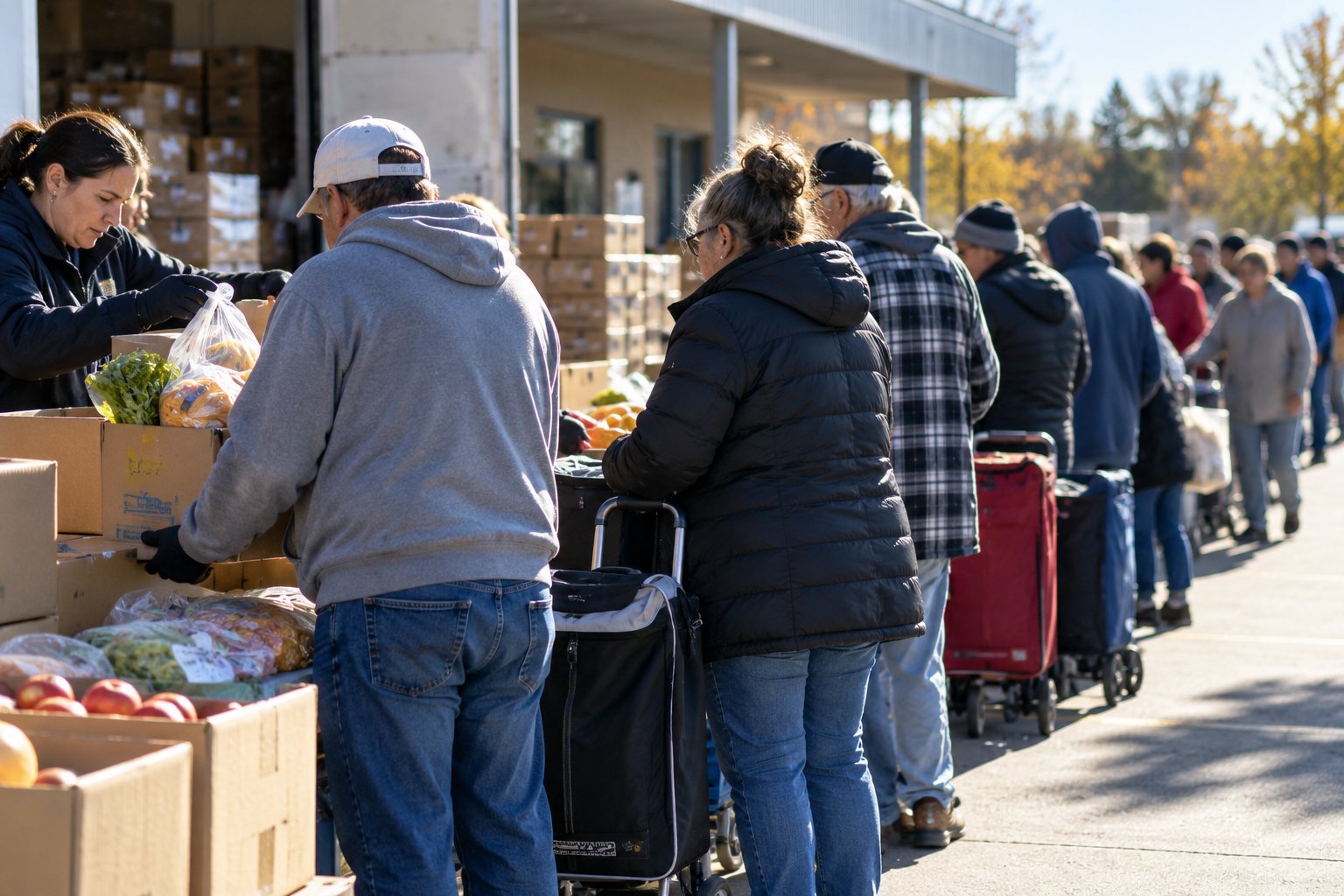
Millions of Americans have disappeared from the nation's food assistance rolls following sweeping restrictions imposed by President Donald Trump, and his administration is celebrating the decline as a victory—even as food banks report growing demand and advocates warn that struggling families are being pushed deeper into hunger.
Enrollment in the Supplemental Nutrition Assistance Program (SNAP), commonly known as food stamps, has fallen approximately 13% since July 2025. According to federal figures cited by The Guardian, participation dropped from 41.6 million Americans to 36.5 million by June 2026.
That represents more than five million people no longer receiving assistance to purchase groceries.
The reductions follow Trump's One Big Beautiful Bill Act, signed into law in July 2025, which significantly tightened eligibility requirements and shifted additional financial responsibilities onto state governments.
Tougher Rules, Fewer Benefits
Previously, SNAP work requirements generally applied to able-bodied adults ages 18 through 54 without dependent children. The Trump administration expanded those requirements to adults through age 64 who do not have a dependent younger than 14.
Affected recipients must generally demonstrate at least 20 hours of qualifying work or volunteer activity each week or risk losing benefits after a limited period, unless they qualify for an exemption.
The Congressional Budget Office estimates the changes will reduce federal spending by approximately $187 billion over the next decade.
Trump administration officials argue that reducing enrollment encourages employment and decreases dependence on government assistance.
Agriculture Secretary Brooke Rollins has publicly celebrated the removal of millions of recipients from the program, portraying the decline as evidence that the administration's policies are working.
But anti-hunger organizations challenge that interpretation.
A reduction in SNAP enrollment does not necessarily mean recipients have found better-paying jobs or become financially secure. It can also mean people have lost eligibility, failed to navigate new administrative requirements, or been unable to document sufficient working hours.
Food Banks Face Growing Pressure
The consequences are already being felt across the country.
In Michigan, a food assistance helpline experienced more than triple its previous daily call volume following the changes, reflecting the growing number of residents seeking help.
The impact varies dramatically by state. Arizona experienced an enrollment decline of approximately 50% between July 2025 and June 2026, while Kentucky recorded a decrease of about 6%.
Kentucky Governor Andy Beshear has expressed concern that the changes are increasing hunger, including among children and elderly residents.
The Center on Budget and Policy Priorities reports that SNAP participation has fallen across nearly every state. Its October analysis also suggests that approximately two million fewer children nationwide may be receiving food assistance than before the law took effect.
States Face Additional Costs
The legislation also forces states to shoulder a greater share of SNAP administrative expenses.
Beginning this month, states are responsible for 75% of those costs, up from 50%. Additional state contributions toward benefit payments are scheduled to begin in 2027 for states meeting specified payment-error thresholds.
Critics warn that these changes could strain state budgets, slow application processing, and make food assistance harder to obtain.
The broader consequences extend beyond individual households. Declining SNAP participation can also affect whether schools qualify for programs that provide free meals to all students.
A Political Victory With a Human Cost
The Trump administration is presenting falling SNAP enrollment as proof of successful welfare reform. But the numbers alone cannot establish that millions of Americans are better off.
The Center on Budget and Policy Priorities notes that unemployment has remained relatively flat even as food assistance enrollment has plunged, raising questions about whether increased employment explains the decline.
For families struggling with grocery bills, the distinction is significant.
Removing someone from a government assistance program may reduce federal spending. It does not necessarily reduce that person's need for food.
As the administration celebrates millions leaving SNAP, food banks and community organizations are confronting a different reality: Americans who still need to eat, but have fewer resources to pay for groceries.