Donald Trump had lost Michigan by more than 154,000 votes. But nearly three weeks after Election Day, his campaign and Republican allies were still attempting to prevent the state from finalizing Joe Biden's victory.
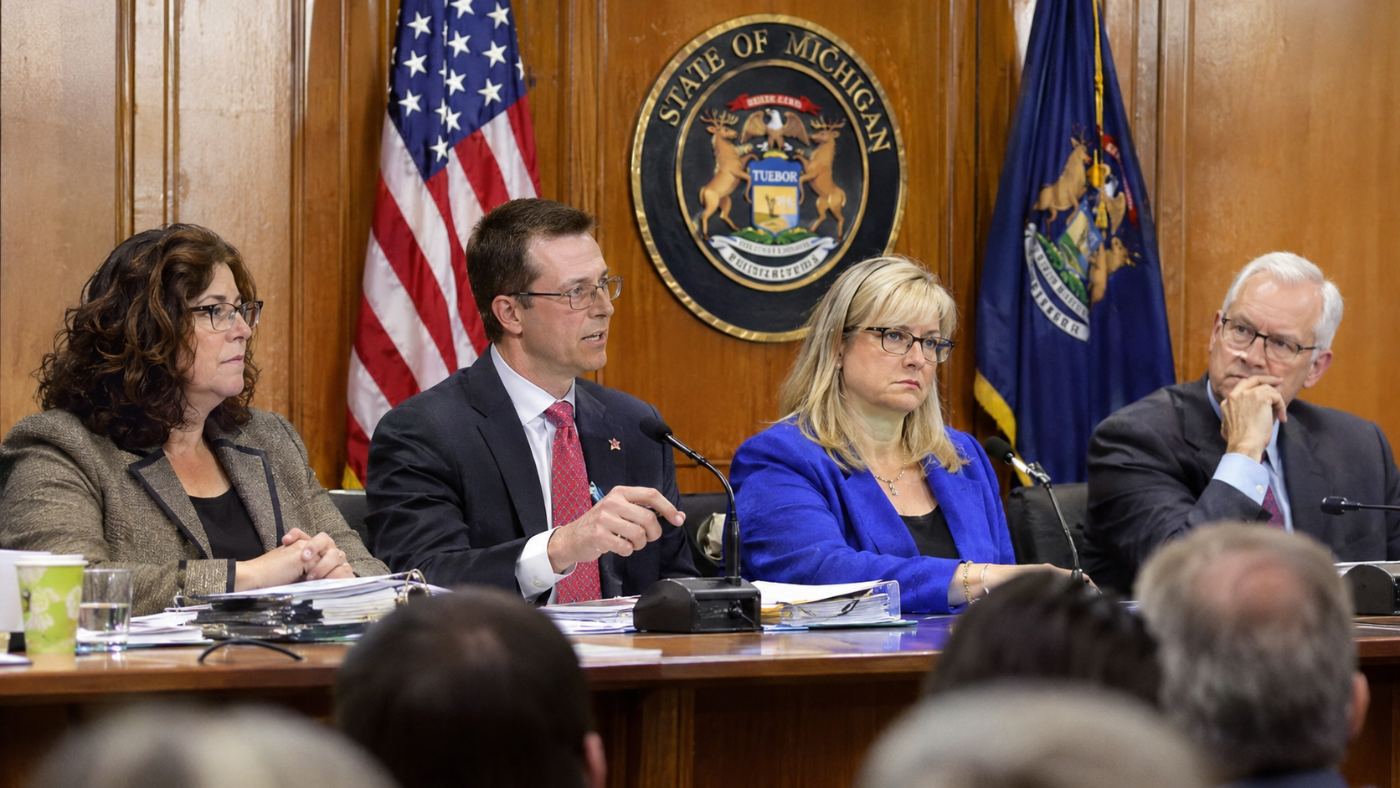
On November 23, 2020, Michigan's bipartisan Board of State Canvassers voted 3–0, with one Republican abstention, to certify the presidential election results.
The decision awarded Michigan's 16 electoral votes to Biden and represented another setback for Trump's attempts to challenge the outcome of the 2020 presidential election.
At the center of the decision was Republican board member Aaron Van Langevelde, who joined the board's two Democrats in voting for certification despite demands from Trump supporters to delay the process.
Trump Tries to Challenge Michigan's Results
Biden had defeated Trump in Michigan by 154,188 votes, a margin substantially larger than the state's narrow result in 2016.
Nevertheless, Trump repeatedly alleged that widespread election fraud had affected the outcome.
His campaign focused particular attention on Detroit and Wayne County, where large numbers of Democratic voters had supported Biden.
Trump and his allies raised allegations about ballot counting, election procedures, and supposed irregularities.
Election officials disputed claims of widespread fraud, and no evidence emerged establishing misconduct sufficient to reverse Biden's victory.
Yet Republican activists continued pressuring election officials to delay certification.
A Controversial White House Meeting
Three days before Michigan's certification vote, Trump invited two prominent Michigan Republican lawmakers to the White House.
State Senate Majority Leader Mike Shirkey and House Speaker Lee Chatfield met with the president on November 20.
The meeting attracted scrutiny because Trump was continuing to challenge the state's election results.
Critics feared that the president was attempting to persuade Republican legislators to intervene in the certification process or support an alternative method of selecting presidential electors.
After the meeting, Shirkey and Chatfield issued a statement saying they had received no information that would change Michigan's election outcome.
They also acknowledged that the certification process should proceed according to state law.
Trump nevertheless continued disputing Biden's victory.
Republican Officials Face Pressure
The November 23 certification meeting followed days of political tension.
Earlier, Republican members of the Wayne County Board of Canvassers had initially refused to certify the county's results before reversing course.
The episode prompted concerns that partisan disagreements could interfere with routine election administration.
At the statewide level, Republican canvasser Norman Shinkle argued that additional investigation was necessary before certification.
He ultimately abstained.
Van Langevelde took a different position.
He explained that the board's responsibilities were defined by Michigan law and that its role was to certify the results submitted through the established election process.
Questions about alleged wrongdoing could be investigated through appropriate legal channels, but the board did not have unlimited authority to delay certification.
A Republican Votes to Certify Biden's Victory
Van Langevelde's vote was decisive in establishing bipartisan support for certification.
The two Democratic board members, Jeannette Bradshaw and Julie Matuzak, also voted in favor.
Shinkle abstained, producing the final 3–0 result.
The decision certified Biden's victory and the results of Michigan's other statewide contests.
For Trump, it meant another battleground state had formally confirmed the election outcome despite his continuing objections.
For Michigan election officials, it meant completing a legally required administrative responsibility under extraordinary political scrutiny.
The Attempt to Change the Outcome Continues
Michigan's certification did not immediately end Trump's efforts to challenge the election.
His campaign continued pursuing litigation and alleging irregularities in several battleground states.
Trump also continued making public claims that the presidential election had been stolen.
But certification significantly narrowed the opportunities for altering Michigan's officially recognized result.
The state's election officials had reviewed the returns, the bipartisan canvassing board had acted, and Biden's victory was formally established.
The Trump campaign had not demonstrated fraud capable of overcoming the certified margin.
A Test of Election Administration
The November 23 vote illustrated the importance of election procedures that operate independently of presidential demands.
Certification is not a declaration of political support for a candidate.
It is an administrative determination that election returns have been canvassed and recorded according to applicable law.
Van Langevelde's decision showed that Republican officials could acknowledge Biden's victory while remaining members of Trump's political party.
Shinkle's abstention also demonstrated that disagreements about election procedures remained.
But those disagreements did not prevent the board from completing certification.
Michigan's Results Stand
On November 23, 2020, Michigan formally certified an election result that Trump had spent weeks challenging.
Biden's 154,188-vote margin remained intact.
The president's allegations had not produced evidence sufficient to overturn the outcome, and his meeting with Republican legislative leaders had not resulted in legislative intervention.
The certification became one of several important developments that day as states continued finalizing the presidential election.
Michigan's bipartisan board completed its responsibility despite intense political pressure.
The result was a documented moment when established election procedures prevailed over efforts to delay recognition of Biden's victory.