For more than a decade, Michael Cohen had been one of Donald Trump's most loyal employees.
He was Trump's personal attorney, dealmaker and self-described fixer — the man who once said he would “take a bullet” for his boss.
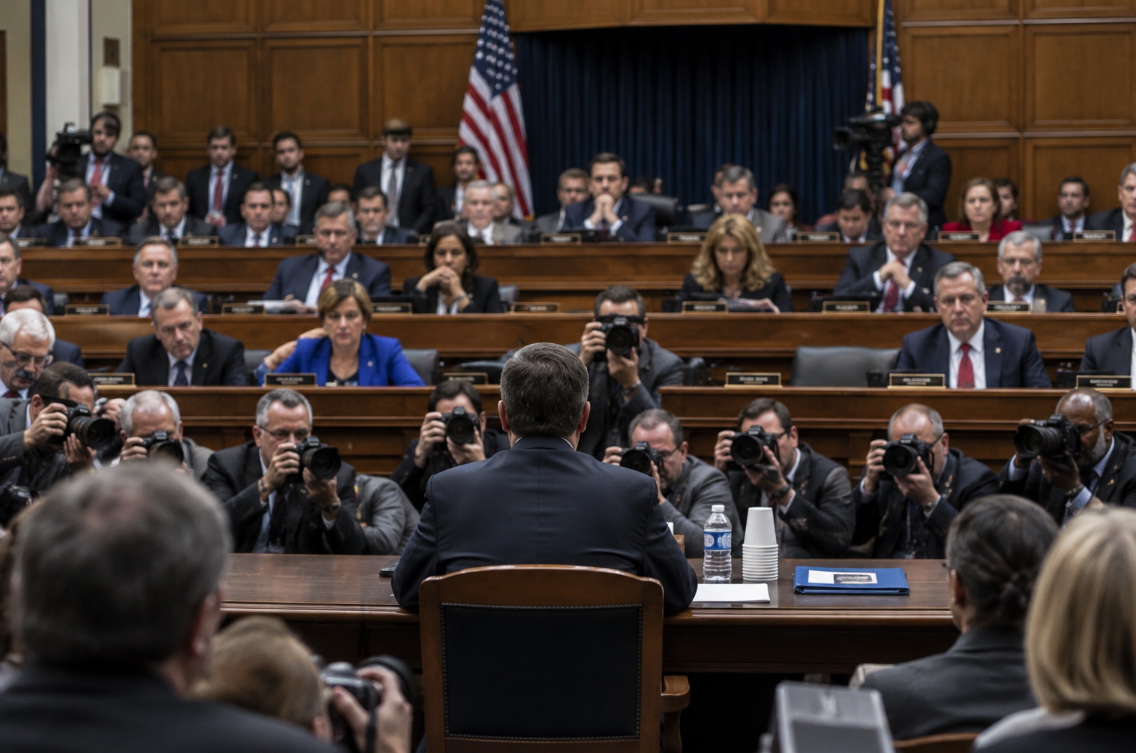
On February 27, 2019, Cohen sat before Congress and turned on him.
In hours of nationally televised testimony before the House Committee on Oversight and Reform, Cohen described the man he had spent years protecting and offered lawmakers an extraordinary insider's account of Trump's business, campaign and presidency.
But there was an obvious problem with the witness.
Michael Cohen was a convicted liar.
He had already pleaded guilty to multiple federal crimes, including tax evasion, campaign-finance violations and lying to Congress.
That history would dominate Republican attacks on his credibility throughout the hearing.
Cohen acknowledged it himself.
“The last time I appeared before Congress, I came to protect Mr. Trump,” Cohen told lawmakers.
“Today, I'm here to tell the truth about Mr. Trump.”
Then he began talking.
The Hush-Money Payments
One of the most tangible pieces of evidence Cohen brought with him was a check bearing Trump's signature.
Cohen had paid $130,000 to adult-film actress Stormy Daniels shortly before the 2016 election in exchange for her silence concerning an alleged sexual encounter with Trump, which Trump denied.
Cohen had already admitted in federal court that he made the payment at Trump's direction for the purpose of influencing the election.
Trump subsequently reimbursed Cohen.
At the hearing, Cohen produced a copy of a $35,000 check signed by Trump in August 2017 — months after Trump had become president.
Cohen said it was one of a series of payments reimbursing him for the Daniels payment.
This portion of Cohen's story did not depend solely upon his credibility.
There were checks.
There were bank records.
There were federal court filings.
And Cohen had already pleaded guilty to the campaign-finance crime.
Trump Tower Moscow
Then Cohen returned to the subject that had already sent him into a federal courtroom for lying to Congress.
Trump's company had pursued a proposed Trump Tower in Moscow during the 2016 presidential campaign.
Cohen had previously told Congress that discussions about the project ended in January 2016.
That was false.
The negotiations continued into June 2016, while Trump was campaigning for president and preparing to become the Republican nominee.
Cohen pleaded guilty in November 2018 to lying about that timeline.
Now he told Congress that Trump knew about the negotiations.
Cohen said Trump asked him about the Moscow project repeatedly during the campaign.
He also made an important distinction.
Cohen did not testify that Trump directly ordered him to lie to Congress.
Instead, Cohen claimed Trump communicated indirectly.
“He speaks in a code,” Cohen told lawmakers, “and I understand the code.”
That was Cohen's interpretation of his interactions with Trump — not independently established proof that Trump instructed him to commit perjury.
But the underlying fact that the Moscow negotiations continued months longer than Cohen had originally told Congress was no longer in dispute.
Cohen had admitted lying about it in federal court.
Allegations Beyond the Documents
Cohen went much further.
He accused Trump of manipulating the reported value of his assets depending upon what benefited him financially.
According to Cohen, Trump inflated the value of his assets when seeking recognition or favorable treatment and reduced their value when dealing with matters such as taxes.
Cohen supplied lawmakers with copies of financial statements he said supported portions of that allegation.
But the documents themselves did not establish every conclusion Cohen drew from them.
He also testified about Trump's alleged knowledge of Roger Stone's contacts concerning WikiLeaks.
Cohen said he remembered Trump receiving a telephone call from Stone in which Stone discussed information expected to be released by WikiLeaks damaging Hillary Clinton.
Again, this was Cohen's testimony.
It was not the same thing as independently established evidence that Trump coordinated with WikiLeaks or with Russia.
Cohen himself acknowledged that distinction.
He told Congress he had no direct evidence that Trump or his campaign had colluded with Russia.
He said he had suspicions.
The Credibility Problem
Republicans repeatedly returned to Cohen's criminal history.
Why, they asked, should Americans believe a man who had already admitted lying to Congress?
It was a legitimate question.
Cohen was not appearing before Congress as a neutral observer.
He was a convicted felon preparing to report to prison.
He had lied for Trump.
He had lied about Trump.
And now he was asking Congress and the American public to believe him when he described what happened behind closed doors.
That meant his testimony had to be separated into different categories.
Some statements were supported by documents or previously established facts.
Others depended almost entirely upon Cohen's credibility and recollection.
Cohen's criminal history did not automatically make everything he said false.
Nor did his proximity to Trump automatically make everything he said true.
The evidence mattered.
Trump's Fixer Becomes a Witness
Perhaps the most significant aspect of the hearing wasn't any single accusation.
It was who was making them.
Cohen had spent years inside Trump's world.
He negotiated deals.
He handled problems.
He communicated with reporters.
He threatened legal action.
He arranged payments.
He protected Trump's interests.
Now he was sitting beneath the bright lights of a congressional hearing room explaining how that world operated.
And while Cohen testified in Washington, Trump was nearly 9,000 miles away.
The president was in Hanoi, Vietnam, meeting North Korean leader Kim Jong Un at one of the most consequential foreign-policy events of his presidency.
Trump later complained about the timing of Cohen's hearing.
But the split-screen image was impossible to ignore.
In Hanoi, Trump was attempting to negotiate with one of America's most dangerous adversaries.
Back in Washington, the man who had spent a decade fixing Trump's problems was explaining those problems to Congress under oath.