Donald Trump routinely warns Americans about the supposed threat of communism. His wife just offered a considerably more complicated description of what growing up under it was actually like.
For years, Donald Trump has used one word as an all-purpose political weapon against his opponents:
Communist.
Democrats have been called communists. Democratic socialists have been called communists. Policies Trump opposes have routinely been described as steps toward communism.
But this week, someone considerably closer to the president offered Americans a very different description of life under an actual communist government.
His wife.
First Lady Melania Trump, who grew up in Slovenia when it was part of communist Yugoslavia, was asked during a Fox interview about her childhood and how living in Eastern Europe shaped her understanding of freedom.
Her answer probably wasn't what the question anticipated.
“I grew up, under the communism, and actually, I didn't miss anything,” Melania said.
She described having a “very beautiful childhood” and credited her parents with providing a good life for their family.
That doesn't mean Melania endorsed communism.
In fact, she immediately acknowledged one of the fundamental differences between the country of her childhood and the United States.
People had to be careful about what they did, she explained, and Yugoslavia did not provide the same level of freedom Americans enjoy.
That distinction is important.
But so is the extraordinary contrast between Melania Trump's firsthand description of growing up under communism and the way her husband routinely invokes the word.
Trump Has Turned ‘Communist’ Into a Political Insult
Donald Trump rarely discusses communism as an economic or political system requiring careful definition.
Instead, it has become one of his favorite labels for opponents.
During the 2026 political campaign, Trump has again portrayed Democratic socialists and Democrats more broadly as communists, continuing rhetoric he has used repeatedly throughout his political career.
The message is straightforward:
Communism is something Americans should fear.
Which makes Melania's description particularly interesting.
She doesn't remember her childhood as an existence defined by deprivation and misery.
She remembers loving parents, a comfortable home and a happy childhood.
And there is a historical reason her experience may differ considerably from the stereotypical American image of life behind the Iron Curtain.
Yugoslavia Wasn't the Soviet Union
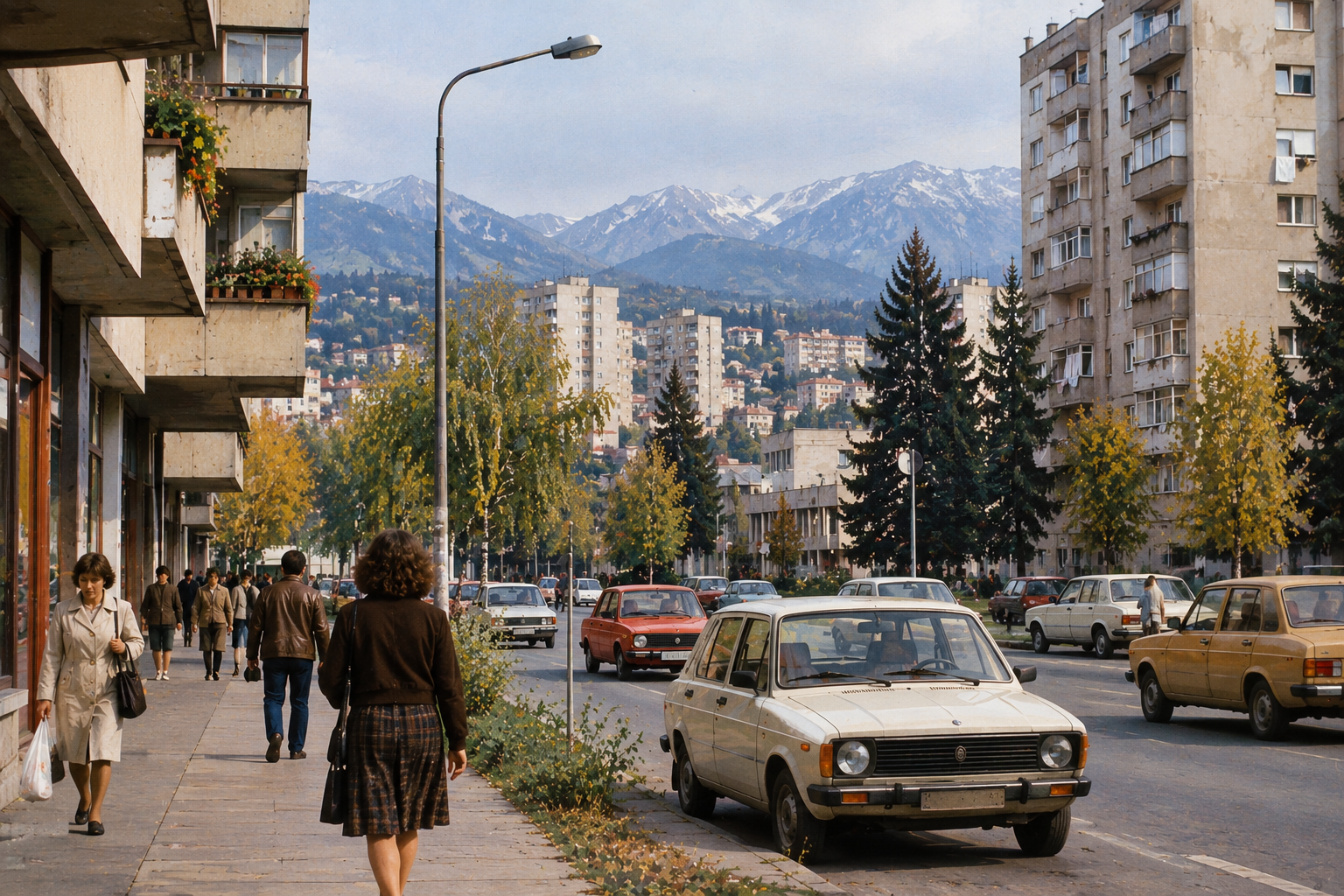
Melania was born Melanija Knavs in 1970 in what was then the Socialist Federal Republic of Yugoslavia.
Yugoslavia was communist, but it was not part of the Soviet Union.
Under longtime leader Josip Broz Tito, the country pursued an independent path after breaking with Soviet leader Joseph Stalin in 1948.
Yugoslav citizens generally enjoyed greater freedom to travel internationally and greater access to Western consumer goods and culture than people living in many Soviet-bloc countries.
Melania herself has previously emphasized that distinction.
In her memoir, she wrote that communism in Yugoslavia was different from the Soviet system and that she felt culturally connected to neighboring Italy and Austria.
Her family also appears to have been relatively comfortable.
Her father worked in the automobile industry. Her mother worked in fashion at a children's clothing manufacturer.
The family traveled, attended concerts and provided opportunities that eventually helped Melania enter modeling and move into Western Europe.
Her experience obviously wasn't the experience of every Yugoslav citizen.
But it was hers.
There Was Still a Price
None of this transforms communist Yugoslavia into a liberal democracy.
It wasn't.
Political dissent faced restrictions. The state controlled significant portions of the economy. Freedom of expression and political organization did not resemble what Americans expect under the First Amendment.
Melania acknowledged that herself.
People had to “watch over what you do,” she explained.
“It’s not as free as here in the United States.”
That may actually be the most important part of her answer.
Melania managed to do something her husband's political rhetoric frequently does not:
She separated a political system from the ordinary people who lived their lives inside it.
A person could grow up under communism, recognize its restrictions and still remember childhood fondly.
Those things aren't mutually exclusive.
The Irony Is Difficult to Miss
There is nevertheless considerable political irony in hearing this particular account from this particular White House.
Donald Trump routinely presents communism as one of the darkest possible outcomes for America.
His own wife actually grew up under a communist government.
And when someone asked her about it, she didn't describe a childhood of misery.
She said she didn't miss anything.
She said her childhood was beautiful.
Then she acknowledged that America offered freedoms Yugoslavia did not.
That is a much more nuanced description than the word “communist” usually receives in American political rhetoric.
Melania Trump isn't endorsing communism.
But she has inadvertently demonstrated why reducing an entire political system—and the lives of millions of people who lived under it—to a campaign insult tells Americans very little about history.
For Donald Trump, “communist” remains a convenient word to throw at his political opponents.
For the woman married to him, it was something considerably more complicated.
It was where she grew up.