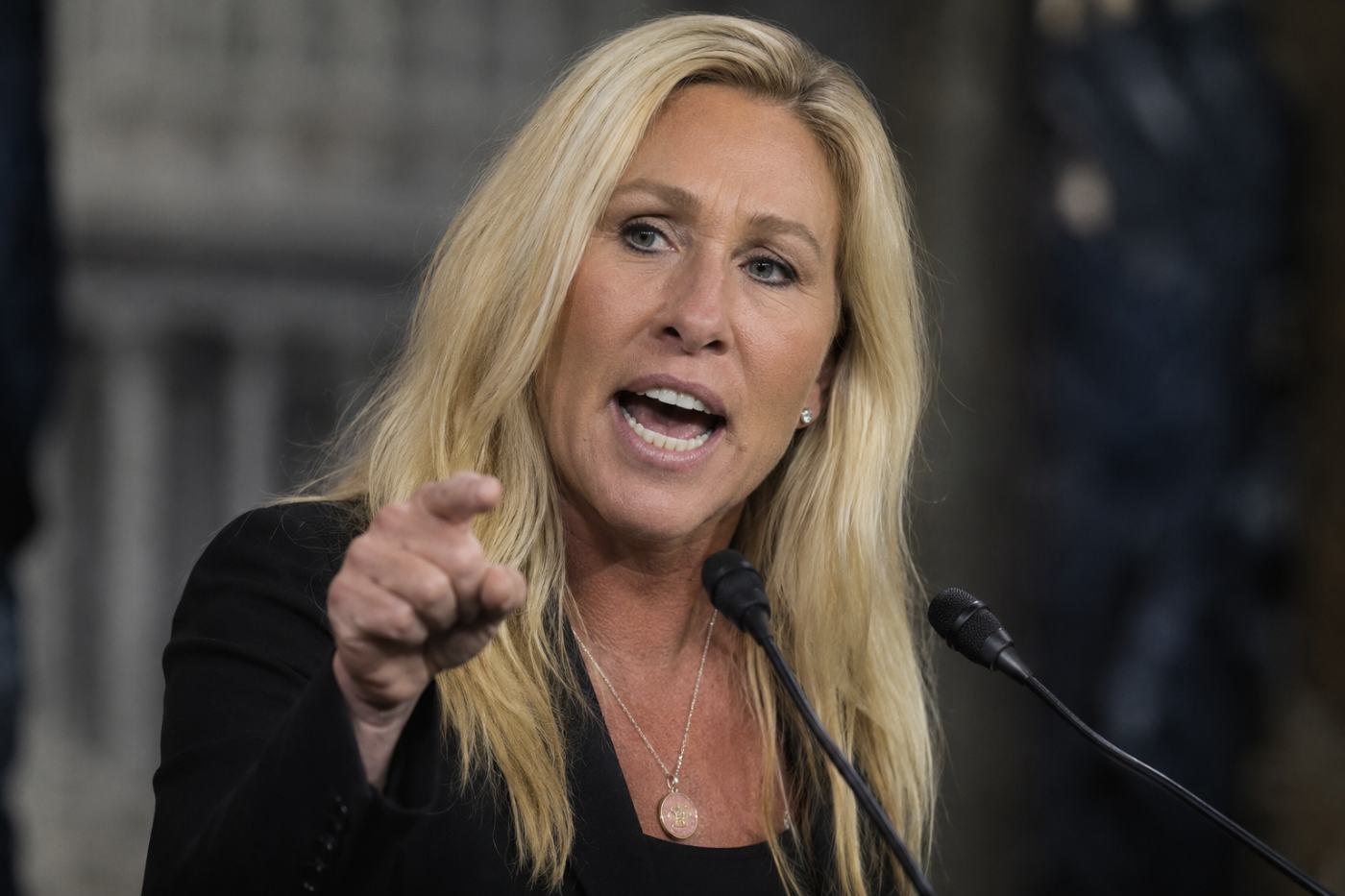
For years, Marjorie Taylor Greene was among Donald Trump's most devoted political allies. She defended him through investigations, promoted his election claims, attacked his opponents, and became one of the most recognizable faces of the Make America Great Again movement.
Now, the former Republican congresswoman is delivering a remarkably different message: MAGA was built on promises that Trump failed to keep.
In a January 2026 interview with political commentator Kim Iversen, Greene declared that Americans were beginning to recognize the movement for what she believed it had become.
“MAGA is — I think people are realizing it was all a lie,” Greene said.
Her criticism has only intensified.
Speaking with CNN's Kaitlan Collins ahead of the November 3 midterm elections, Greene described the vote as a referendum on Trump's leadership and what she called his betrayal of the Americans who supported him.
From Loyal Defender to Outspoken Critic
Greene's transformation represents one of the more striking political ruptures within Trump's former inner circle.
The Georgia Republican built much of her national reputation defending Trump, even as she attracted controversy for conspiracy theories, inflammatory rhetoric, and attacks on political opponents.
But disagreements over foreign policy, the Jeffrey Epstein files, and the administration's priorities eventually fractured their alliance.
Trump withdrew his support from Greene in late 2025, publicly attacking his former ally. Greene subsequently resigned from Congress in early 2026.
Rather than retreating from politics, she began openly challenging the movement she had helped champion.
Accusations of Betrayal
Greene's central complaint is that Trump abandoned the promises that persuaded millions of Americans to support him.
She has repeatedly pointed to his pledge to avoid additional foreign wars, his handling of the Epstein records, and his administration's response to rising household expenses.
In her November CNN appearance, Greene argued that ordinary Americans were struggling with health insurance, gasoline, diesel, and other living expenses while the president celebrated wealthy donors, expensive dinners, and his White House ballroom project.
She also accused Trump of placing the interests of powerful contributors ahead of those of ordinary voters.
During her earlier interview with Iversen, Greene alleged that major donors and corporations enjoyed privileged access to the administration, including government contracts and presidential pardons.
Those allegations reflect Greene's interpretation of Trump's conduct, rather than independently established findings of improper exchanges.
Nevertheless, they are striking accusations from someone who spent years defending his political movement.
Republicans Accused of Surrendering Their Independence
Greene's criticism extends beyond the president.
She has accused House Speaker Mike Johnson and congressional Republicans of failing to challenge Trump or advance an independent legislative agenda.
According to Greene, Republican lawmakers have become so concerned about provoking presidential retaliation that they have neglected their responsibility to represent their constituents.
At a September appearance at The Texas Tribune Festival, Greene described MAGA as a cult and criticized supporters unwilling to hold Trump accountable for broken campaign promises.
Her remarks exposed a fundamental disagreement within the conservative movement: whether loyalty to Trump should take precedence over the policies and principles his supporters originally embraced.
A Movement Divided
Greene is not the only prominent conservative to break with Trump.
Former Fox News personality Tucker Carlson, Kentucky Republican Thomas Massie, and former counterterrorism official Joe Kent have also challenged aspects of the administration's foreign policy.
In August, Greene appeared alongside several of these figures and suggested that a new political movement was emerging.
Yet Greene has emphasized that rejecting Trump does not mean embracing the Democratic Party.
She continues to identify with conservative principles and the America First agenda, arguing that Trump and the Republican establishment have departed from those commitments.
The Political Reckoning
Perhaps the most significant aspect of Greene's reversal is not simply that she has become a Trump critic. It is that she once helped persuade Americans to trust the very movement she now questions.
Her criticism raises uncomfortable questions about the relationship between political loyalty and accountability.
Greene spent years defending Trump against accusations that his critics considered serious warnings about his leadership. Today, she is making some of her own accusations about his priorities, promises, and treatment of supporters.
Trump and his remaining allies have rejected attacks from former supporters, portraying prominent critics as disloyal or politically irrelevant.
But Greene's break demonstrates that the disagreements within the movement are no longer confined to Trump's traditional opponents.
One of MAGA's most recognizable former advocates now argues that its central promises were never fulfilled.
Whether voters share her conclusions remains a separate question. What is undeniable is the reversal itself: a politician who once demanded loyalty to Donald Trump is now publicly demanding accountability from him.