The Republican Party's devastating defeat in the 2026 midterm elections has triggered outrage across the MAGA movement. But one prominent Trump-supporting pastor has taken that outrage to a disturbing new level, openly calling for another January 6 following the Democrats' sweeping victories.
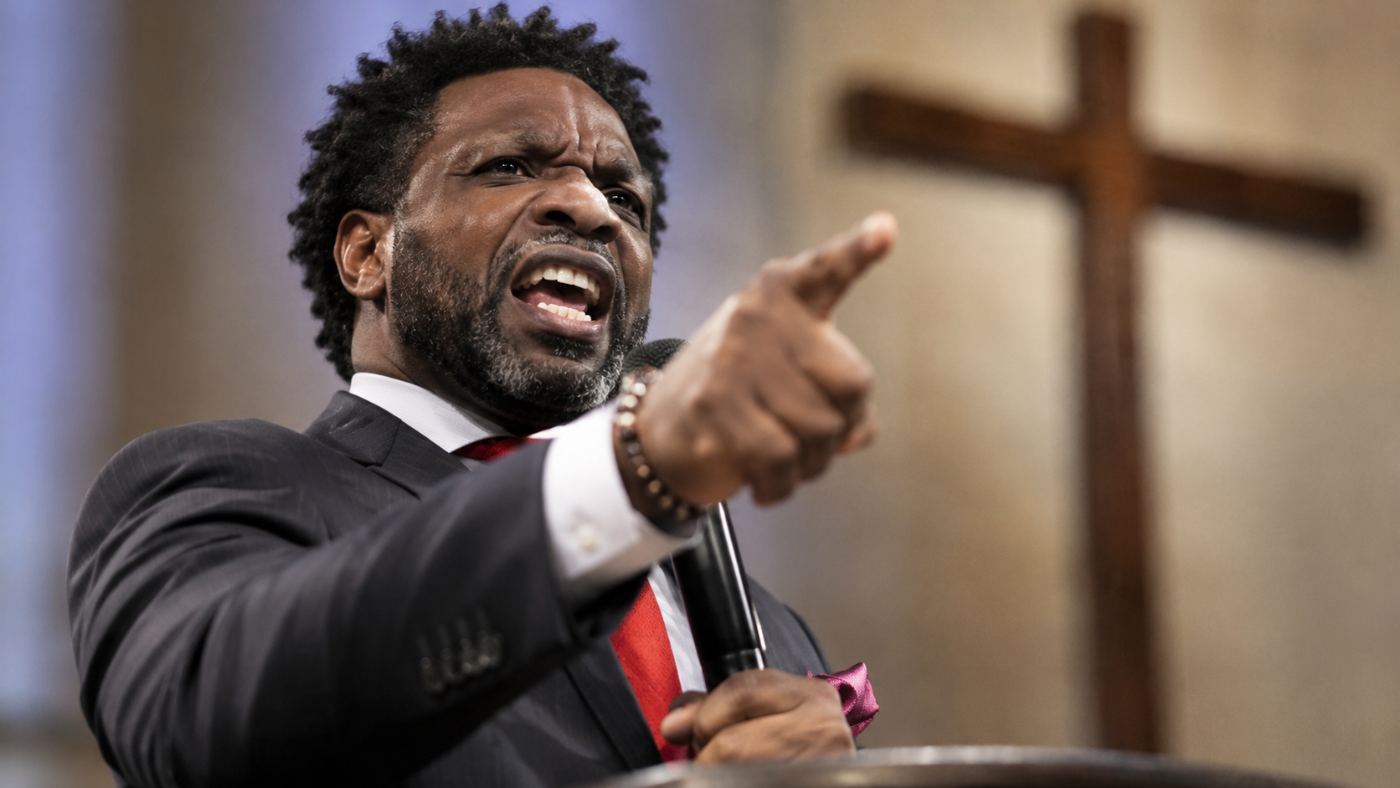
Pastor Lorenzo Sewell, a Christian nationalist who delivered the benediction at Donald Trump's second presidential inauguration, appeared on the religious political program FlashPoint on November 4, where he suggested that the election had been stolen and declared his willingness to return to the U.S. Capitol.
Sewell offered no credible evidence of widespread election fraud. Instead, he claimed that his suspicions came from divine inspiration.
"I got a Holy Ghost hunch that we need another January 6th," Sewell declared.
The pastor went further, announcing that he was preparing to travel to Washington and had already spoken with friends about presenting supposed evidence of election wrongdoing.
His comments came just one day after American voters delivered a historic rejection of Trump's Republican Party, handing Democrats control of both chambers of Congress.
Apparently, Elections Only Count When Republicans Win
Sewell's argument rested largely on his disbelief that Democrats could win statewide elections while Republicans carried more individual counties.
He pointed to results in Michigan, Texas, and Ohio, arguing that Democratic victories were suspicious because Republican candidates had won more counties.
What Sewell apparently failed to acknowledge is that American elections are decided by votes, not by the number of counties a candidate wins. A densely populated urban county can contain more voters than dozens of rural counties combined.
His misunderstanding of basic electoral mathematics became the foundation for allegations that millions of Americans had somehow participated in another stolen election.
Rather than accepting that voters had rejected Republican candidates, Sewell portrayed the results as an assault on the nation itself.
The Dangerous Return of January 6 Rhetoric
The pastor's remarks carry particular significance because January 6, 2021, was not an ordinary political protest.
That day, a mob of Trump supporters violently breached the U.S. Capitol while Congress was certifying Joe Biden's presidential victory. Police officers were assaulted, lawmakers were evacuated, and the constitutional transfer of power was disrupted.
More than five years later, a prominent religious supporter of Trump is invoking that same date as a model for responding to another Republican electoral defeat.
Sewell did not explicitly call for violence, but his decision to invoke January 6 raises serious concerns about the continued normalization of election denial within Trump's political movement.
Religion Becomes a Political Weapon
Perhaps the most troubling aspect of Sewell's remarks was his attempt to frame a Democratic electoral victory as a spiritual battle.
He suggested that the church needed to rise up and reclaim what had been taken, describing the political setback in religious terms.
This rhetoric illustrates the increasingly blurred boundaries between Christian nationalism and partisan politics, where electoral defeats are portrayed not simply as political losses but as evidence of evil forces working against the country.
The implication is unmistakable: When Republicans win, democracy has spoken. When Democrats win, the results become evidence of a conspiracy that must be resisted.
The MAGA Movement Faces a Reckoning
The 2026 midterms delivered a devastating political setback to Donald Trump, with Democrats capturing both the House and Senate and winning major contests in traditionally Republican territory.
For Republican leaders, the results present difficult questions about the future of their party and the declining appeal of Trump's political brand.
For figures like Sewell, however, the answer appears considerably simpler: Refuse to accept defeat.
That response exposes one of the most dangerous legacies of Trump's political movement. Election denial has become so deeply embedded in parts of MAGA culture that even overwhelming electoral losses are treated as proof of wrongdoing rather than evidence of voter dissatisfaction.
Americans have the right to protest, challenge election procedures, and demand investigations supported by credible evidence.
What they do not have is the right to overturn legitimate election results simply because their preferred candidates lost.
The voters delivered their verdict on November 3. Whether Lorenzo Sewell and the broader MAGA movement are willing to accept it is another question entirely.