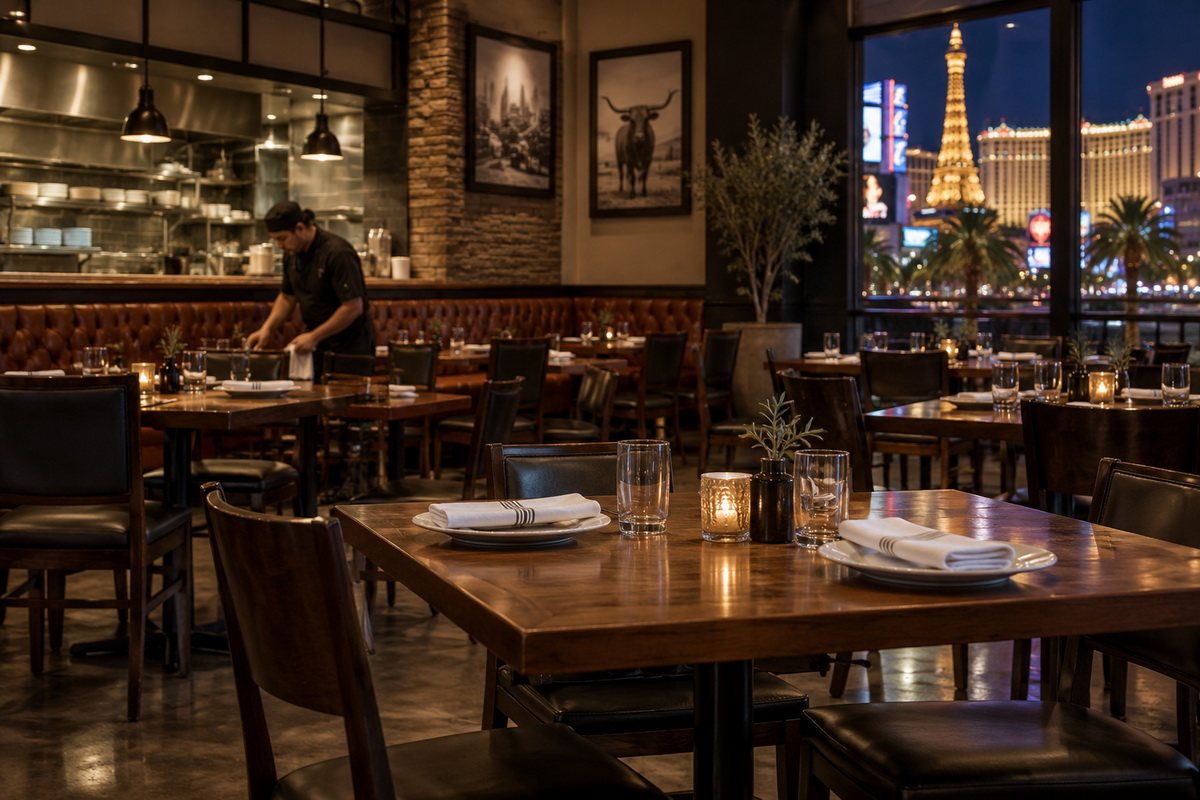
In August 2024, Las Vegas restaurant owner Javier Barajas proudly welcomed Donald Trump into his establishment, Il Toro E La Capra. The Republican presidential candidate was campaigning on promises of economic prosperity, lower costs, and eliminating federal income taxes on tips.
Barajas, a Mexican immigrant who had built a successful restaurant business, enthusiastically embraced Trump's message.
"I need you to please make America great," he told Trump during the campaign appearance.
More than two years later, Barajas is telling a very different story.
In a recent CNN interview, the restaurant owner described a business struggling under rising expenses, employees facing serious financial hardship, and an economic environment he believes has deteriorated since Trump returned to the White House.
"We go backwards, everything is worse," Barajas said.
From the American Dream to Financial Uncertainty
Barajas came to the United States from Mexico as a teenager in the late 1970s. Starting as a dishwasher, he eventually worked his way into restaurant ownership, building a business that included multiple establishments in Southern Nevada.
His immigrant success story made him an appealing figure for Trump's 2024 campaign.
During the campaign stop, Trump praised Barajas for his accomplishments, presenting him as an example of the opportunities available in America.
But the economic promises that accompanied that visit have collided with the financial realities of operating a restaurant in 2026.
Barajas says increasing food prices, fuel expenses, and other operating costs have made it extraordinarily difficult to keep his business running.
In an earlier interview with Las Vegas television station KTNV, he explained that the rising cost of basic ingredients had become nearly impossible to absorb.
A case of tomatoes that previously cost $26 had climbed to $65. Jalapeños had more than doubled in price.
Meanwhile, customers struggling with their own household expenses were increasingly reluctant to spend money dining out.
Barajas said he had even reduced menu prices by approximately 30 percent in an effort to attract customers.
The result was a painful financial squeeze: higher operating expenses and limited ability to pass those increases along to diners.
The Workers Are Struggling, Too
The financial hardship extends beyond the restaurant owner.
In CNN's reporting, employees described increasingly difficult personal circumstances as they struggled to afford basic necessities.
Some reported taking second jobs, selling vehicles, or working extraordinarily long hours simply to survive.
Chef Fernando Perez described the shared financial strain.
"Every single one of us, we feel like, one way or another, we feel the pain."
These accounts illustrate how rising costs can affect both business owners and the workers who depend on them.
When restaurant expenses increase, owners face difficult decisions about prices, staffing, wages, and whether they can remain open at all.
For employees already living paycheck to paycheck, those pressures can be devastating.
What Happened to the Economic Promises?
Trump's 2024 campaign emphasized reducing costs and improving economic conditions for American workers and small businesses.
His proposal to eliminate federal income taxes on tips became a centerpiece of his outreach to Nevada's hospitality industry.
But Barajas told KTNV that the tip-related tax policy had provided little meaningful relief to his restaurant amid escalating expenses.
The Trump administration has defended its economic policies as measures intended to encourage investment, job creation, and higher wages.
Nevertheless, Barajas is among the business owners who say the economic conditions they experience do not match those promises.
Trump's tariffs have added costs to some imported products, while the war involving Iran has contributed to higher fuel prices and supply disruptions.
Not every increase in restaurant expenses can be attributed directly to presidential policy. Inflation, supply chains, labor costs, and changing consumer behavior all play roles.
But Barajas believes the economic environment has worsened, and his business is now paying the price.
A Larger Problem Across Las Vegas
Barajas is hardly the only Las Vegas business owner reporting financial difficulties.
An October 20 report in the Las Vegas Sun documented declining tourism, higher import costs, and shrinking profit margins among local businesses.
Some restaurant operators reported fewer customers, while others described cutting staff or operating at a loss.
The report also cited an estimated 78 small restaurant closures in Clark County during the first half of 2026.
For a city heavily dependent on tourism, hospitality, and discretionary consumer spending, those economic pressures can spread quickly.
Restaurants, hotels, transportation companies, and entertainment businesses all depend on visitors having money to spend.
When those visitors stay home or reduce their spending, local workers and business owners feel the consequences.
The Political Irony
Perhaps the most striking aspect of Barajas' story is the contrast between his public support for Trump in 2024 and his assessment of the economy today.
He was not simply a voter quietly hoping for better economic conditions.
He welcomed Trump into his restaurant, appeared alongside him during a presidential campaign, and publicly asked him to restore American prosperity.
Now he is describing the possibility of losing the business he spent decades building.
His experience raises a question extending far beyond one restaurant in Nevada: What happens when the economic promises that persuade business owners to support a candidate fail to match their subsequent experiences?
For Barajas, that question is no longer theoretical.
It is reflected in his food invoices, his employees' financial struggles, and the possibility that his restaurant may not survive.
In 2024, he asked Donald Trump to make America great.
In 2026, he says everything is worse.