There are trade negotiations. There are diplomatic disputes. There are disagreements between neighboring countries over tariffs, manufacturing, and economic policy.
And then there is renaming Lake Ontario.
On August 27, 2026, President Donald Trump signed Executive Order 14422 directing the federal government to refer to Lake Ontario as “Lake America.”
It was not satire. It was not merely something Trump floated at a rally or posted on social media. It became an official presidential action directing the Department of the Interior and the U.S. Board on Geographic Names to change the lake's name in federal geographic records.
The timing made the decision particularly notable.
The United States and Canada were already locked in a worsening trade dispute, and negotiations had deteriorated. Just days before signing the order, Trump connected his proposed name change directly to that dispute, saying the United States did not expect to be doing much business with Ontario.
Then he followed through.
A Shared Lake Gets an American Name
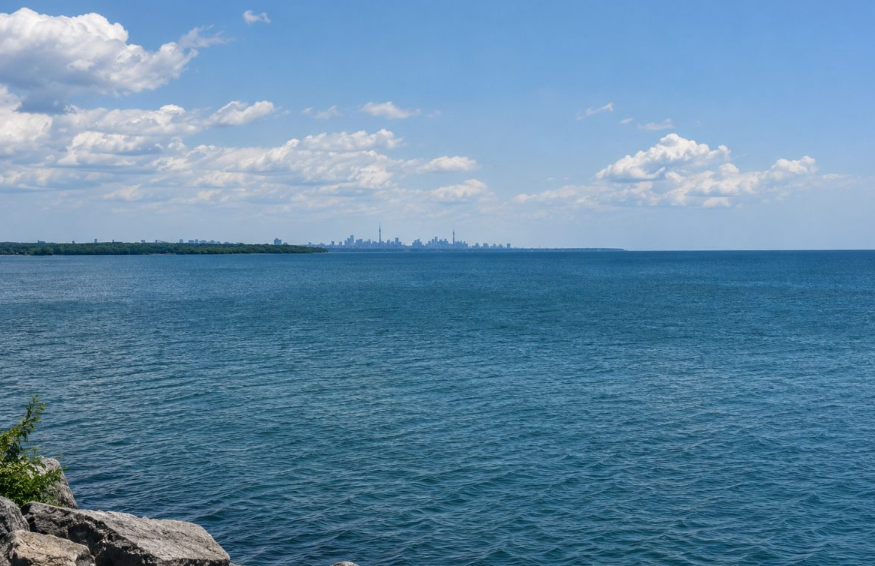
Lake Ontario is one of the five Great Lakes and forms part of the international boundary between the United States and Canada.
Its northern, western and southwestern shores are in the Canadian province of Ontario. Its southern and eastern shores are in New York.
That did not prevent the White House from declaring that, for purposes of the United States government, it would become Lake America.
The executive order argued that the United States had made substantial investments in protecting and maintaining the Great Lakes and cited American contributions to icebreaking, environmental protection, commerce and defense.
It then concluded:
> “I am directing that the Lake officially be renamed as Lake America.”
But a presidential executive order cannot make Canada adopt the same terminology.
The practical effect is therefore largely within the United States federal government: federal agencies, maps, documents and geographic databases are being directed to use the new name.
Canada remains free to call it what it has called it for centuries: Lake Ontario.
The Trade War Behind the Name Change
The episode becomes more significant when viewed in the context of the rapidly deteriorating relationship between Washington and Ottawa.
Trump had been escalating his trade confrontation with Canada, including tariffs and threats aimed at Canadian products and industries.
When Trump first publicly discussed renaming the lake, he explicitly tied the idea to trade.
Two days later, an international economic dispute had produced an executive order changing the federal government's name for a Great Lake.
That is what makes the episode more than a strange footnote.
Presidents routinely confront serious disagreements with allies. They negotiate tariffs, impose sanctions, challenge trade practices and use diplomatic pressure.
Renaming a geographic feature shared with the country involved in the dispute is something else entirely.
It transformed an economic disagreement into a symbolic confrontation.
Canada Didn't Go Along
Canadian officials rejected the change.
Prime Minister Mark Carney responded that the body of water remained Lake Ontario and pointed to the much older origins of its name.
The word “Ontario” derives from an Indigenous name that predates both the modern United States and Canada.
Trump's executive order therefore created an unusual situation in which the governments on opposite sides of the same lake can officially call it different things.
For American federal agencies, it is Lake America.
For Canada, it remains Lake Ontario.
For much of the rest of the world, the centuries-old name remains perfectly understandable.
Government Resources for a Symbolic Fight
Changing a name inside the federal government is not simply a matter of editing a sign.
Trump's order directed the Department of the Interior and Board on Geographic Names to update the Geographic Names Information System and instructed federal departments and agencies to use the new terminology on government maps, contracts, documents and communications.
In other words, federal employees and agencies now have to implement a name change whose most obvious effect is symbolic.
Nothing about the order resolves a tariff dispute.
Nothing about it improves cross-border commerce.
Nothing about it makes negotiations with Canada easier.
And nothing about it changes what Canada calls the lake.
From the Gulf of Mexico to Lake Ontario
The decision also continued Trump's practice of using presidential authority to change prominent geographic names.
On his first day back in office in January 2025, Trump ordered the federal government to adopt “Gulf of America” in place of Gulf of Mexico and restored the name Mount McKinley for the mountain that had officially been called Denali.
The Lake Ontario order explicitly cited that earlier executive order as precedent.
But Lake Ontario introduced an additional complication.
This was not simply a geographic feature within the United States.
It is an international body of water shared with Canada — one of America's closest neighbors and historically one of its largest trading partners.
And the renaming occurred while the president was openly fighting with that neighbor over trade.
More Than a Strange Name
“Lake America” can easily be treated as another bizarre political headline.
But viewed alongside the broader deterioration of U.S.-Canada relations in 2026, it illustrates something more consequential.
A disagreement over tariffs and trade policy had reached the point where the president of the United States was using executive authority to rename a shared geographic landmark while publicly criticizing the country on the other side of it.
The lake did not move.
The international border did not move.
Canada did not change what it calls Lake Ontario.
What changed was the language of the United States government.
And somewhere inside the federal bureaucracy, maps, databases, documents and government communications now have to be rewritten because the president decided that, amid a trade fight with Canada, Lake Ontario needed a new name.