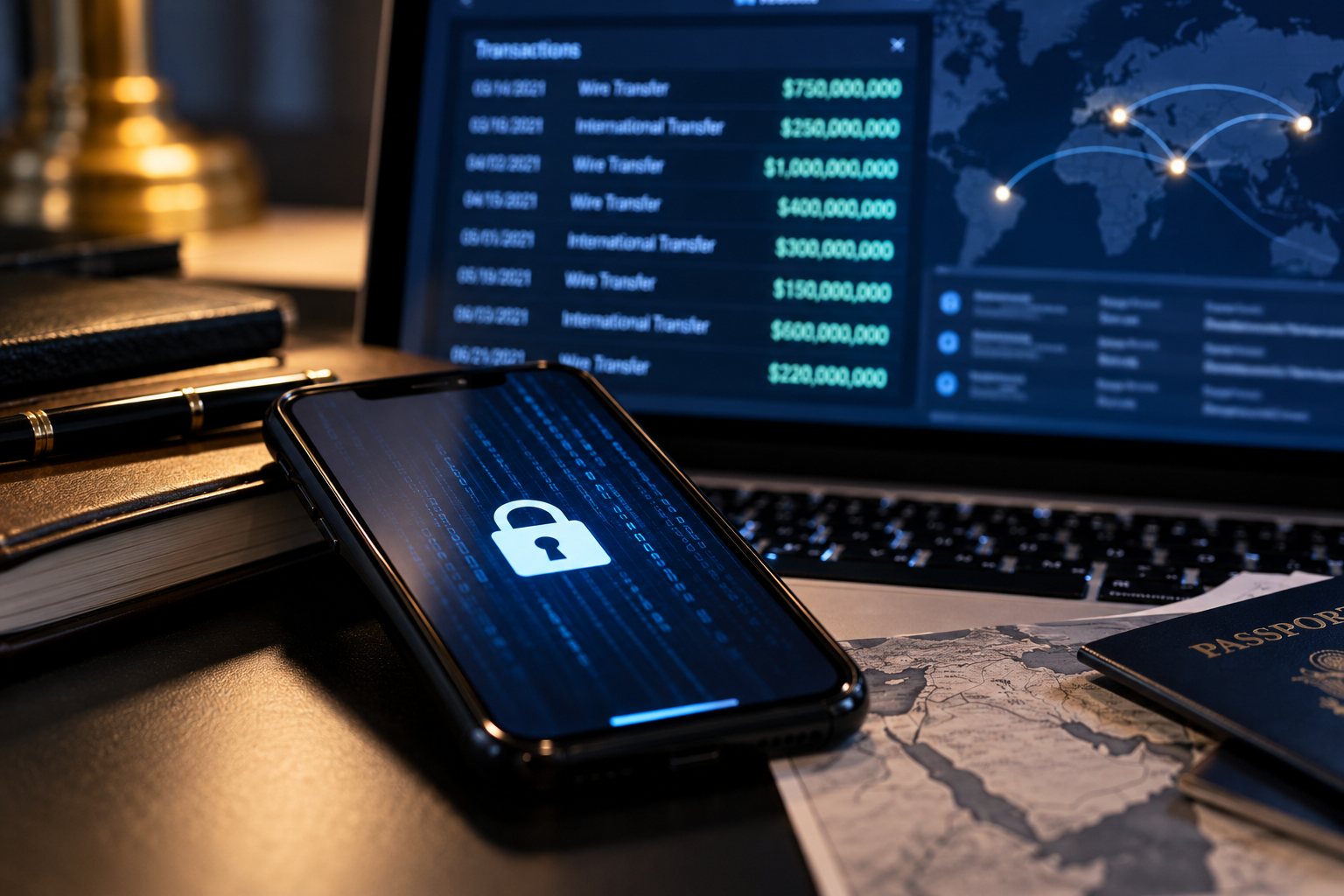
Jared Kushner, President Donald Trump's son-in-law and former senior White House adviser, is facing extraordinary allegations involving billions of dollars in secret foreign accounts, Middle Eastern governments, and a reported intelligence operation that allegedly exposed his financial dealings.
The claims originate from investigative journalist Matthew Cole's forthcoming book, Princes and Thieves: Jared Kushner and Mohamed bin Zayed's Secret Plot to Remake the Middle East. An excerpt published by Vanity Fair on October 22 describes what Cole alleges was a network of undisclosed financial arrangements involving leaders of the United Arab Emirates and Saudi Arabia.
Kushner has categorically denied the allegations, calling them fabricated, while his attorneys have threatened legal action against those responsible for publishing them.
A Phone Allegedly Compromised by Foreign Intelligence
According to Cole's reporting, Russian military intelligence gained access to Kushner's iPhone in 2017, while he was serving as a senior adviser in the Trump White House.
Dutch intelligence officers allegedly discovered the intrusion after obtaining cooperation from a Russian operative. The Dutch reportedly used information from the Russian operation to gain their own access to Kushner's phone.
Cole claims the surveillance revealed Kushner accessing foreign bank accounts containing enormous sums of money.
One account, allegedly connected to the United Arab Emirates, reportedly received approximately $750 million. Another account, linked in Cole's reporting to Saudi Arabia, allegedly involved approximately $1 billion transferred through international financial channels.
The book claims that leaders of the two countries placed at least $2 billion into accounts associated with Kushner.
These allegations have not been independently verified, and no publicly authenticated banking records establishing Kushner's control of the alleged accounts have been presented.
Allegations Raise Questions About Foreign Influence
The reported financial arrangements are particularly significant because Kushner was helping shape American foreign policy in the Middle East during the period in question.
As a senior White House adviser, Kushner maintained close relationships with Saudi Crown Prince Mohammed bin Salman and UAE leader Mohamed bin Zayed.
Cole alleges that the accounts were connected to efforts to influence American policy and advance diplomatic objectives involving Israel and other Middle Eastern countries.
The book also claims that some money was transferred to individuals involved in military and intelligence activities abroad.
If substantiated, undisclosed access to foreign government-controlled funds could raise serious questions about financial disclosure requirements, conflicts of interest, and potential foreign influence over American policymaking.
However, access to an account would not by itself establish bribery, illegal conduct, or a direct financial benefit. Those conclusions would require additional evidence about ownership, control, disclosure obligations, and the purpose of any transactions.
Kushner and Trump Reject the Story
Kushner responded forcefully to the allegations on October 22, declaring that the events described by Cole never occurred.
He challenged the author to produce bank statements, account numbers, wire transfer records, or other documentation supporting the accusations.
His attorney, Chad Mizelle, said Kushner's legal team had already sent a detailed letter disputing the book's claims before publication and intended to pursue legal action.
President Trump also defended his son-in-law on October 23, describing the report as false and dismissing it as fabricated news.
The White House has similarly rejected the allegations, arguing that the reporting relies on anonymous sources without sufficient supporting documentation.
CBS News, which covered the controversy, explicitly stated that it had not independently verified the allegations contained in Cole's book excerpt.
Serious Questions Remain Unresolved
The dispute now centers on two competing accounts: Cole's allegations of secret financial arrangements uncovered through foreign intelligence surveillance, and Kushner's categorical denial that the accounts or transactions existed.
The reported hacking also raises a separate national security question. If foreign intelligence agencies obtained access to the personal communications of a senior White House adviser, the potential exposure of sensitive diplomatic information would warrant examination regardless of whether the financial allegations prove accurate.
For now, the most consequential claims remain disputed.
Whether additional documentation emerges from Cole's book, independent reporting, or an official investigation will determine whether the allegations can be substantiated.
Until then, the controversy illustrates the importance of transparency when senior government officials maintain close relationships with foreign leaders whose interests may intersect with American foreign policy.