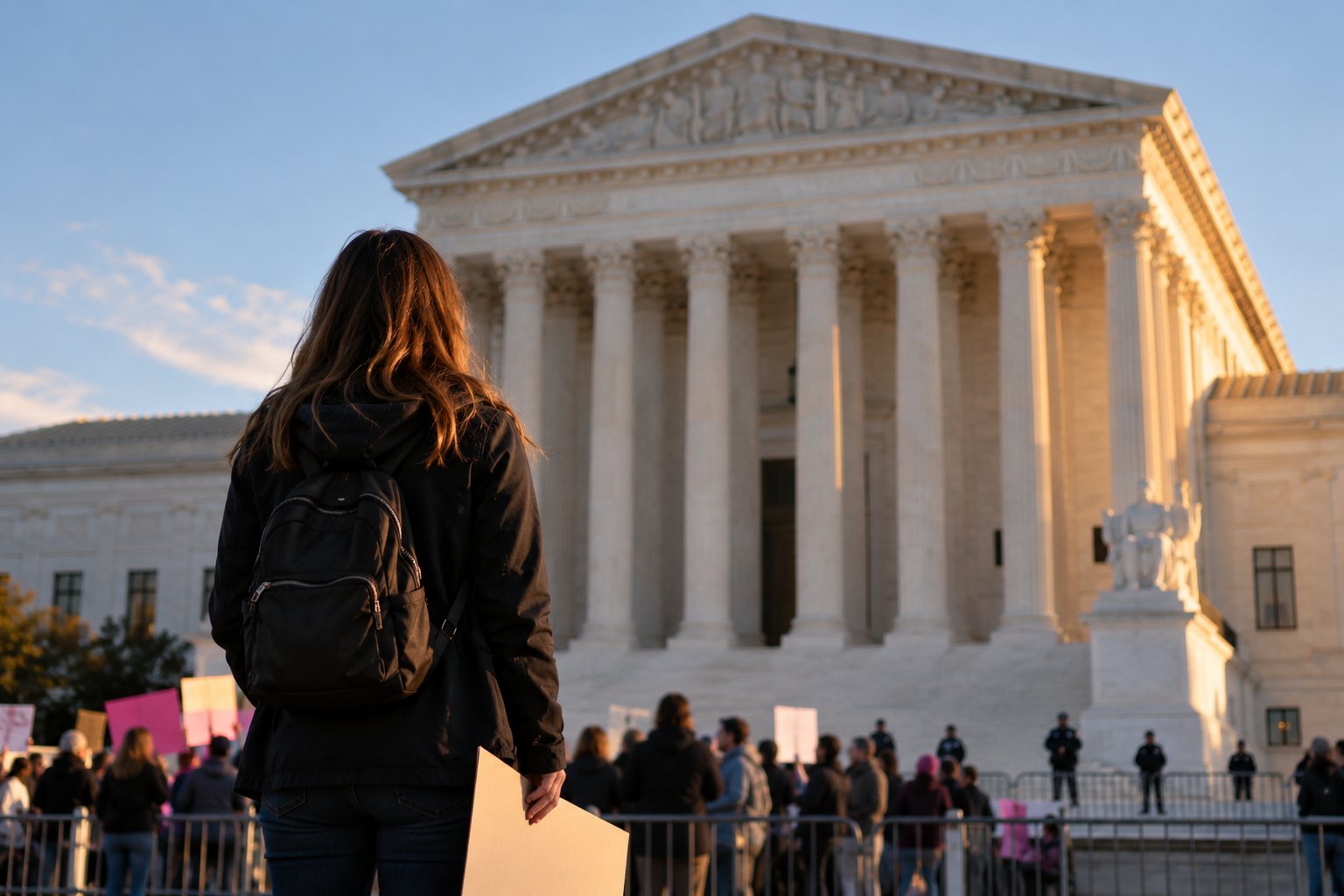
On October 6, 2018, the United States Senate confirmed Brett Kavanaugh to the Supreme Court by one of the narrowest margins in modern history.
The vote was 50–48.
For President Donald Trump and his supporters, Kavanaugh's confirmation was a major political victory. For many women, reproductive-rights advocates and sexual-assault survivors, the day represented something profoundly different: fear that decades of legal protections involving abortion and reproductive autonomy were about to be dismantled.
Those fears would prove consequential.
Less than four years later, Kavanaugh would join the Supreme Court majority that overturned Roe v. Wade.
A Confirmation Battle Dominated by Women's Voices
Kavanaugh's confirmation had already become one of the most contentious Supreme Court battles in American history.
Christine Blasey Ford publicly accused Kavanaugh of sexually assaulting her when they were teenagers. Other allegations of sexual misconduct subsequently emerged.
Kavanaugh categorically denied the allegations.
Ford and Kavanaugh both testified publicly before the Senate Judiciary Committee in an extraordinary nationally televised hearing.
Ford told senators she was certain Kavanaugh was the person who assaulted her.
Kavanaugh forcefully denied it.
The FBI subsequently conducted a supplemental background investigation. Importantly, the investigation did not determine whether the allegations were true or false; background investigations provide information to decision-makers rather than making findings about the credibility of allegations.
The confirmation fight nevertheless became much larger than one nominee.
For many women watching across the country, it became a national argument about whether women who reported sexual assault were being heard and taken seriously by the country's most powerful institutions.
Women Protested. The Senate Confirmed Him Anyway.
Protests erupted around Washington as the Senate moved toward its final vote.
Women demonstrated inside and outside the Capitol. Protesters confronted senators. Some were arrested.
Inside the Senate chamber, protesters repeatedly interrupted the proceedings as senators cast their votes.
Then the result became official:
**50 senators voted yes.
48 voted no.**
Kavanaugh was confirmed.
He was sworn in that evening as the 102nd associate justice of the Supreme Court, allowing him to begin participating in the Court's work immediately.
Another Battle Was Looming: Roe v. Wade
Beyond the sexual-assault allegations, women's-rights organizations were deeply concerned about something else.
Abortion rights.
Trump had campaigned on a promise to nominate Supreme Court justices opposed to Roe v. Wade, the 1973 decision recognizing a constitutional right to abortion.
With Kavanaugh replacing retiring Justice Anthony Kennedy, the ideological balance of the Court shifted.
Opponents of Kavanaugh warned explicitly during his confirmation that Roe could eventually fall.
At the time, supporters of Kavanaugh argued that predictions about exactly how he would rule in future cases were speculative. Kavanaugh himself repeatedly described Roe as Supreme Court precedent during his confirmation proceedings.
But the stakes were unmistakable.
A Supreme Court appointment is for life.
Whatever happened next could affect generations of American women.
The Warning Became Reality
Four years later, the Supreme Court decided Dobbs v. Jackson Women's Health Organization.
On June 24, 2022, the Court's conservative majority overturned both Roe v. Wade and Planned Parenthood v. Casey, ending nearly half a century of federal constitutional protection for abortion rights and returning abortion regulation largely to elected governments.
Kavanaugh joined the majority.
He also wrote a separate concurring opinion explaining why he believed Roe had been wrongly decided and should be overturned.
The consequences were immediate.
States gained substantially greater authority to prohibit abortion, and numerous states implemented bans or significant restrictions.
The precise legal landscape differed from state to state, but the national constitutional protection established by Roe was gone.
That makes October 6, 2018 more than simply the date another Supreme Court justice was confirmed.
It was an important step toward a fundamental transformation of reproductive-rights law in the United States.
Trump Celebrates
Hours after the Senate vote, Trump appeared at a campaign rally in Topeka, Kansas, where he celebrated Kavanaugh's confirmation as a major political victory.
For Trump's political movement, it was exactly that.
A Republican president had successfully placed another conservative justice on the Supreme Court despite an extraordinarily bitter confirmation fight.
But outside the celebration, thousands of Americans saw the day through an entirely different lens.
Women had marched.
Sexual-assault survivors had spoken publicly.
Reproductive-rights advocates had warned about the future of Roe.
And the Senate confirmed Kavanaugh anyway.
October 6, 2018
At the time, nobody could know with certainty how every future Supreme Court case would unfold.
But women warning that Kavanaugh's confirmation could help place Roe v. Wade in jeopardy were identifying a real possibility created by the changing composition of the Court.
Four years later, the outcome was no longer hypothetical.
Kavanaugh supplied one of the votes in the majority that overturned Roe.
October 6, 2018 therefore stands as an important date in the history of American reproductive rights: the day the Senate placed Brett Kavanaugh on the Supreme Court—and moved the Court another step toward the decision that would ultimately eliminate Roe v. Wade as the constitutional law of the land.