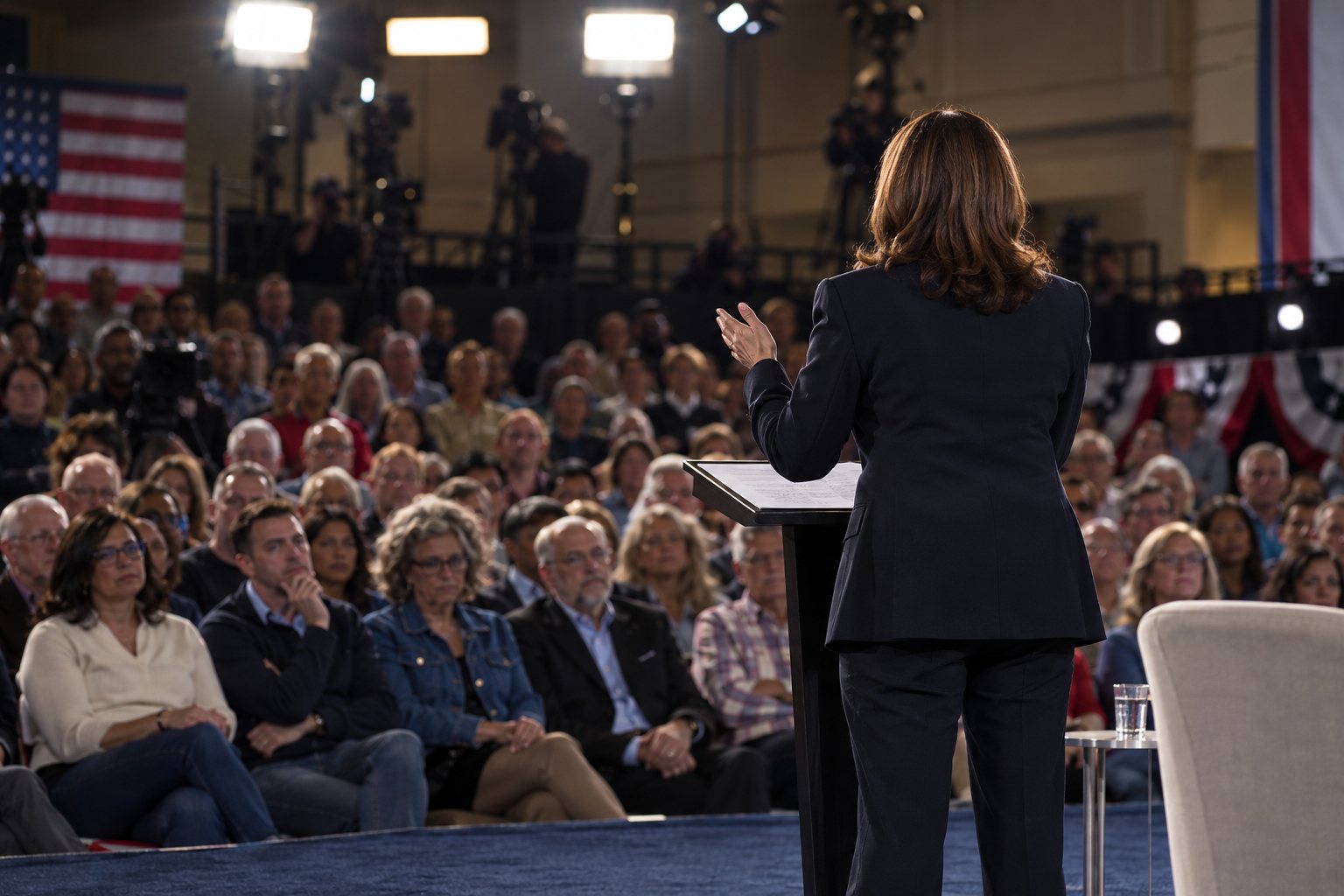
Vice President Kamala Harris publicly described former President Donald Trump as a fascist Wednesday evening, citing extraordinary warnings from senior military and national security officials who served in his administration.
During a televised CNN town hall in Pennsylvania, moderator Anderson Cooper asked Harris directly whether she believed Trump was a fascist.
"Yes, I do. Yes, I do," Harris responded.
Her remarks followed explosive allegations from retired Marine Corps General John Kelly, Trump's former White House chief of staff, who said the former president admired Adolf Hitler's generals and sought military commanders who would demonstrate personal loyalty to him.
With the presidential election less than two weeks away, the warnings from Trump's former advisers have become a major issue in the campaign.
John Kelly's Extraordinary Warning
Kelly, a retired four-star Marine general who served as Trump's chief of staff from July 2017 until January 2019, spoke publicly this week about his former boss's approach to power.
In interviews with The New York Times and The Atlantic, Kelly described Trump as an authoritarian who admired dictators and expressed frustration with military commanders who would not provide unquestioning loyalty.
Kelly said Trump had spoken favorably about Hitler and expressed a desire for generals resembling those who served Nazi Germany.
The retired general also said Trump's behavior fit the general definition of fascism.
Trump has denied Kelly's allegations and accused his former chief of staff of lying.
The dispute is particularly significant because Kelly worked closely with Trump inside the White House and held one of the administration's most powerful positions.
Harris Says Americans Should Listen to Trump's Former Advisers
During Wednesday's town hall, Harris argued that warnings from Trump's former senior officials deserve serious attention.
She emphasized that many of the people criticizing Trump are career military officers and national security professionals rather than Democratic politicians.
Harris pointed to their decades of government service and their firsthand experience working with the former president.
She also warned that Trump could enter a second administration with fewer senior officials willing to challenge his decisions.
Earlier Wednesday, Harris characterized Kelly's public statements as an urgent warning about the consequences of returning Trump to the White House.
Her argument centers on whether the former president would respect the constitutional limits of executive authority.
General Mark Milley Issues Similar Warning
Kelly is not the only former senior military commander to raise concerns about Trump.
Retired Army General Mark Milley, who served as chairman of the Joint Chiefs of Staff under Trump, has also issued unusually severe criticism.
In journalist Bob Woodward's recently published book War, Milley is quoted describing Trump as fascist to the core.
Milley served as the nation's highest-ranking military officer during the final portion of Trump's presidency.
His criticism adds to an extraordinary public disagreement between the former president and senior military leaders he appointed.
American military officers swear an oath to the Constitution rather than to an individual president.
The distinction is central to the warnings being raised by Kelly and Milley.
Former Defense Secretary Mark Esper Weighs In
Former Defense Secretary Mark Esper also addressed the controversy Wednesday.
During an interview with CNN, Esper was asked whether he agreed with Kelly's description of Trump as a fascist.
Esper declined to adopt the label outright but said it was difficult to argue that Trump did not fit elements of the definition.
He also expressed concern about Trump's authoritarian inclinations.
Esper emphasized that military officers and civilian officials swear their oaths to the Constitution, not to a president or political party.
The former defense secretary has previously criticized Trump's conduct and described concerns about the potential use of military forces for domestic political purposes.
His remarks add another former Cabinet-level official to the discussion surrounding Trump's approach to presidential power.
Trump Rejects the Accusations
Trump and his campaign have forcefully rejected the allegations.
The former president has attacked Kelly's credibility, portraying him as a disgruntled former employee and denying that he admired Hitler or wanted Nazi-style military leadership.
Trump's supporters argue that the accusations are politically motivated and intended to damage his campaign in the final days before the election.
Some Republican officials have also questioned the significance of Kelly's statements.
The former president continues to campaign on immigration, economic policy, and his record in office.
The disagreement over the fascist label remains a political and historical assessment, not a legal determination.
Military Leaders Enter an Unusual Political Debate
Senior American military officers traditionally avoid direct involvement in partisan presidential campaigns.
That makes the public criticism from Kelly and Milley particularly unusual.
Both men served in positions requiring close interaction with Trump.
Both have expressed concerns about his approach to presidential authority.
Esper, a former defense secretary, has raised related questions about the limits of executive power and the military's constitutional responsibilities.
Their statements differ in wording and emphasis, but they share a concern about the relationship between the presidency, military leadership, and the Constitution.
A Defining Issue in the Campaign's Final Days
Harris used Wednesday's town hall to discuss several issues, including the economy, immigration, abortion rights, and the war in Gaza.
But her comments about Trump and his former military advisers produced one of the evening's most consequential exchanges.
The Democratic nominee is arguing that voters should consider the warnings of people who worked directly with Trump when evaluating his promises for a second term.
Trump rejects those warnings and maintains that his former officials are misrepresenting his conduct.
The public is now hearing sharply conflicting accounts from the former president and some of the highest-ranking national security officials who served under him.
With Election Day approaching on November 5, the controversy has brought a fundamental constitutional question into the presidential campaign.
How should a president exercise power over the military, and what happens when senior officials believe that power is being sought without sufficient regard for constitutional limits?
For Harris, Kelly's revelations are a warning about Trump's possible return to office.
For Trump, they are allegations he insists are false.
For Americans watching the final days of the campaign, the dispute offers an unusually public examination of what former senior military leaders say they witnessed inside the Trump administration.