President Donald Trump's attempt to punish The Wall Street Journal over its reporting about a sexually suggestive birthday letter allegedly sent to convicted sex offender Jeffrey Epstein has suffered a major legal defeat.
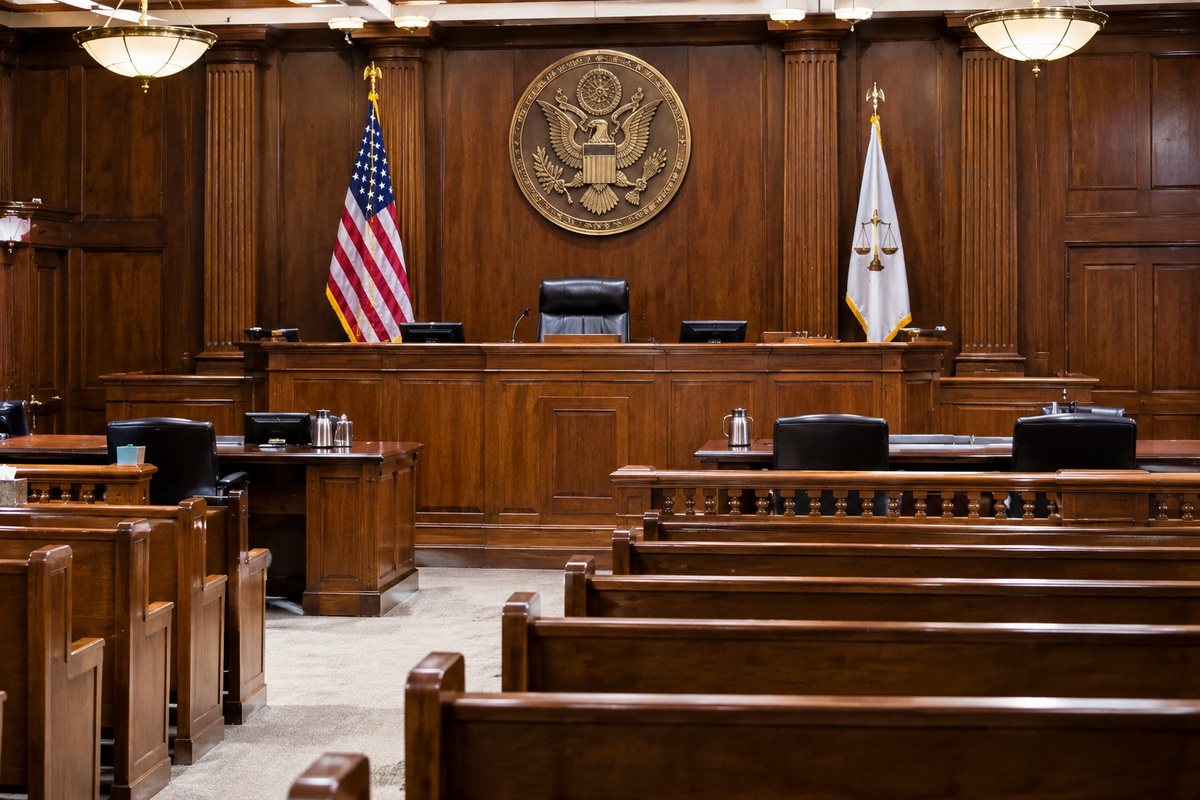
On October 31, U.S. District Judge Darrin Gayles dismissed Trump's $10 billion defamation lawsuit against the newspaper, its parent companies, and media billionaire Rupert Murdoch, ruling that the president failed to establish the legal basis for his claims.
The judge dismissed the case with prejudice, meaning Trump cannot simply rewrite his complaint and file it again in the same court.
It was the second time the federal judge had rejected the lawsuit.
The controversy began in July 2025, when The Wall Street Journal reported that a birthday album assembled for Epstein's 50th birthday in 2003 contained a sexually suggestive letter bearing Trump's name.
The letter reportedly included a drawing of a naked woman, with a signature resembling Trump's positioned near the bottom.
Trump immediately denied writing the letter or creating the drawing, accusing the newspaper of publishing fabricated information.
He responded by filing a massive defamation lawsuit against the Journal, its reporters, Dow Jones, News Corp, Rupert Murdoch, and other defendants.
But the lawsuit encountered a fundamental legal obstacle.
Under longstanding Supreme Court precedent, public officials pursuing defamation claims must establish that defendants published false information knowingly or with reckless disregard for the truth, a legal standard known as actual malice.
Judge Gayles concluded that Trump's attorneys failed to plausibly establish that standard.
In his ruling, the judge described the president's arguments as "grasping at straws" and criticized the lawsuit's attempts to manufacture deficiencies in the newspaper's reporting.
The court also emphasized that Journal reporters had sought Trump's response before publication and included his denials in their original article.
Trump's lawyers argued that the newspaper should not have published the allegations after the president denied their authenticity.
Gayles rejected that reasoning, explaining that allowing public figures to block unfavorable reporting simply by denying allegations would undermine constitutional protections for the press.
The ruling followed an earlier dismissal in April 2026, when the judge gave Trump's attorneys an opportunity to amend their complaint.
Their revised filing failed to resolve the deficiencies identified by the court.
The controversy gained additional attention in September 2025 when congressional investigators obtained documents from Epstein's estate, including the birthday album containing the disputed letter.
The document's existence did not establish that Trump personally created or signed it. The president has continued to deny doing so.
The case also highlighted an unusual confrontation between Trump and Murdoch, whose media companies include Fox News and The Wall Street Journal.
Despite their longstanding political connections, Trump named Murdoch personally among the defendants.
Following the dismissal, a Dow Jones spokesperson welcomed the court's decision.
Trump's legal team, meanwhile, indicated that the president intends to appeal, maintaining that the newspaper published false and defamatory allegations.
Importantly, the ruling did not determine whether Trump authored the birthday letter. It addressed whether his lawsuit adequately alleged that the newspaper acted with actual malice.
Nevertheless, the decision represents a significant legal setback for the president's effort to challenge reporting about his past relationship with Epstein.
Trump has repeatedly denied wrongdoing connected to Epstein, and authorities have not accused him of participating in Epstein's criminal conduct.
For now, the disputed birthday letter remains part of the public record, the president's denials remain unchanged, and his $10 billion defamation case has been dismissed.
The court's message was clear: a president's denial of an embarrassing story does not, by itself, make publishing that story an act of defamation.