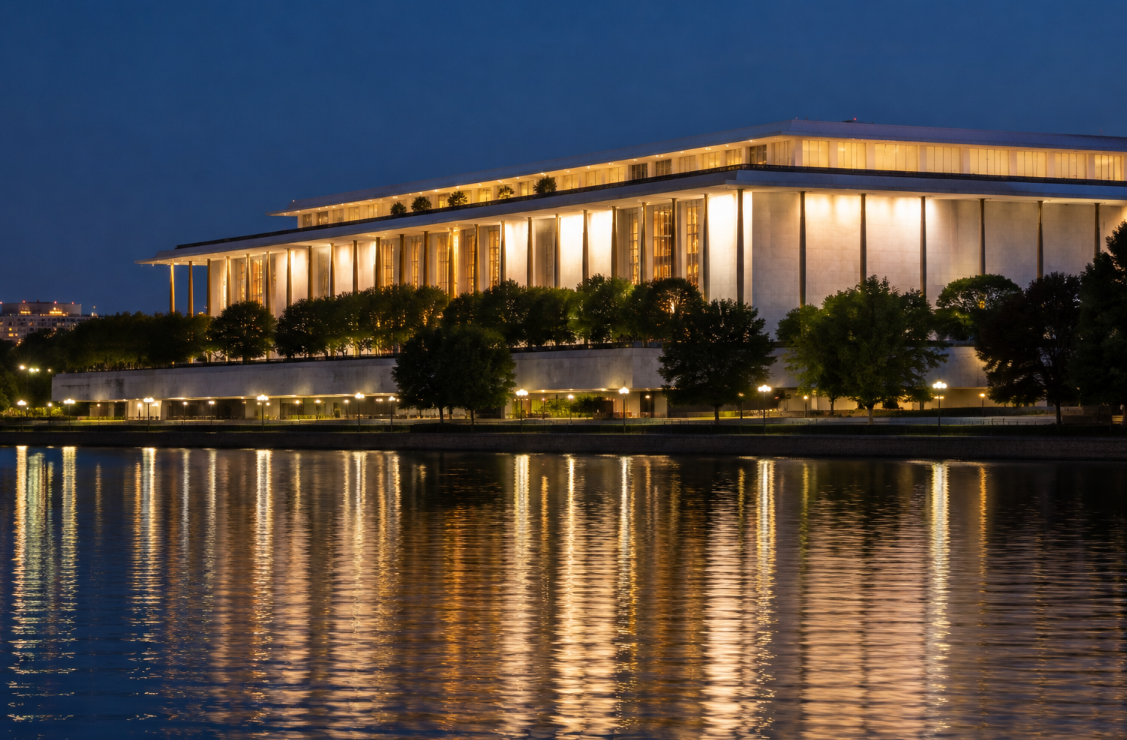
The effort to put President Donald Trump's name on Washington's Kennedy Center has hit another legal roadblock.
Again.
On September 15, U.S. District Judge Christopher Cooper blocked key parts of a new plan that would have placed Trump's name prominently at the performing arts complex, ruling that the Kennedy Center board could not sidestep federal law or an earlier court order simply by changing how Trump's name would be displayed.
It is the latest chapter in an extraordinary dispute over the identity of one of America's most prominent cultural institutions.
And it comes only months after Cooper ordered Trump's name removed from the Kennedy Center in the first place.
The First Renaming Was Already Blocked
The Kennedy Center was established by Congress as a living memorial to President John F. Kennedy.
But after Trump returned to office, the Kennedy Center underwent a dramatic transformation.
Trump removed members of its board of trustees and replaced them with his own selections. The newly constituted board then elected Trump as its chairman.
Eventually, the board moved to rename the institution in Trump's honor.
That resulted in a legal fight over whether the board actually possessed the authority to do so.
In May, Cooper ruled that it did not.
Federal law, he concluded, establishes the institution as the John F. Kennedy Center for the Performing Arts. Changing that name requires congressional action.
Trump's name was ordered removed.
The administration appealed, but the U.S. Court of Appeals for the D.C. Circuit declined to suspend the injunction while the litigation continued.
Then Came Another Plan
With the original renaming blocked, Kennedy Center officials pursued another approach.
Instead of simply changing the institution's official name, the board considered several ways of permanently recognizing Trump at the complex.
Among them was a proposal to designate the grounds as the President Donald J. Trump Plaza.
Another proposal involved installing an inscription recognizing Trump for the restoration and renovation of the Kennedy Center.
A further inscription was contemplated if fundraising connected with the project reached $100 million.
But Cooper concluded that portions of the new plan ran directly into the same legal problem as the first one.
Congress created the Kennedy Center as a memorial to John F. Kennedy and imposed restrictions on adding additional memorials or plaques honoring other people.
The board could not simply create a different label for essentially the same idea.
Cooper described some of the arguments attempting to distinguish the new proposals from the prohibited naming effort as “linguistic gymnastics.”
Congress Still Matters
At the center of the dispute is a relatively simple question:
Who gets to decide what happens to a national memorial created by Congress?
The administration and Kennedy Center board have argued that they possess considerable authority over the institution and its property.
The challengers argue that Congress established specific legal restrictions governing the Kennedy Center precisely because it is a national memorial.
Cooper has repeatedly sided with the latter interpretation.
His latest ruling does not mean Trump's name could never appear anywhere connected with the Kennedy Center.
It means the board cannot unilaterally make certain permanent changes that federal law reserves for Congress.
If Congress wants to change those laws, Congress can do so.
Until then, the Kennedy Center board remains bound by them.
Then the Board Voted to Close the Center
Hours after the latest ruling, the controversy took another dramatic turn.
The Kennedy Center board voted to close most of the performing arts complex for extensive renovations that could last as long as two years.
Trump has argued that major renovations are necessary to restore the aging facility.
But the timing of the closure immediately added another dimension to the dispute.
Trump also linked the renovation project to plans for recognizing him at the Kennedy Center, saying that moving forward with the work depended on the board being able to honor him at the complex.
That means a dispute that began over the name on a building is now intertwined with the future operation of one of the nation's most recognizable performing arts institutions.
The Fight Isn't Over
The Trump administration has not accepted Cooper's ruling as the final word.
The Justice Department is appealing.
That means higher courts could ultimately decide how much authority the Kennedy Center board has over naming, memorials and alterations to the institution.
But for now, the legal situation is clear.
Trump's allies took control of the Kennedy Center board.
The board attempted to put Trump's name on the institution.
A federal judge blocked it.
After that ruling, officials developed another plan that could have placed Trump's name on the plaza and elsewhere at the complex.
The same federal judge has now blocked key portions of that plan as well.
The Kennedy Center remains, legally, what Congress designated it to be:
A national memorial to President John F. Kennedy.