Sen. John Kennedy of Louisiana has apparently put a timetable on America’s war with Iran: about six more months.
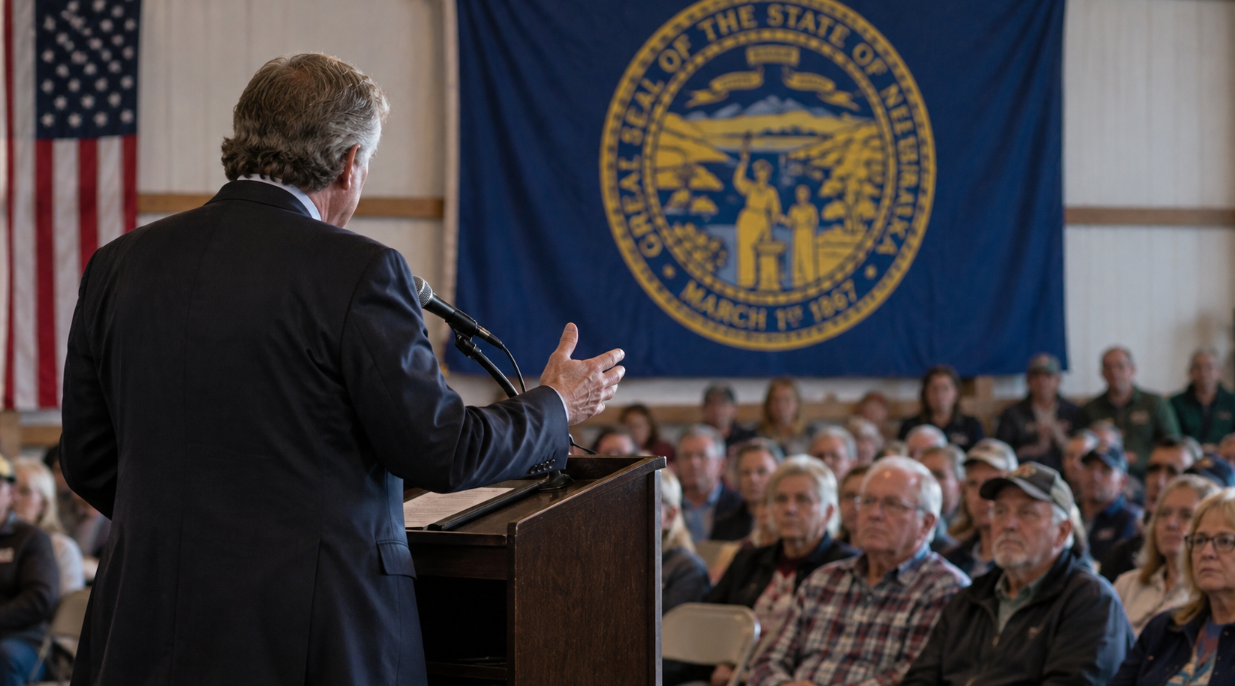
Speaking to Republican audiences in Iowa and Nebraska over the weekend, Kennedy acknowledged something Americans are already feeling in their wallets — the war has helped drive up oil prices and contributed to higher costs throughout the economy.
But Kennedy also offered voters a remarkably specific reason to remain optimistic.
He said he believes the United States will be “out of there in about six months.”
What he didn’t provide was much of an explanation for why.
Kennedy told the audience that the United States was “achieving our objectives in Iran,” but declined to go into details about those objectives or what would need to happen before American involvement could end.
That leaves an obvious question: Where did the six-month timetable come from?
A War With a Convenient Expiration Date
Kennedy’s prediction comes at an awkward moment for Republicans.
The Iran war has now dragged on for months, while oil prices have climbed substantially from where they stood before the conflict began. Kennedy himself acknowledged the connection.
“It’s cuz of the war in Iran, that’s just the simple fact,” Kennedy told voters in Nebraska, according to Mediaite. “The price of oil’s gone up. And oil’s in everything.”
That part of Kennedy’s argument is straightforward.
Higher oil and energy prices can ripple through transportation, agriculture, manufacturing and ultimately consumer prices.
But Kennedy then made a much more speculative leap: once the United States exits the conflict — something he believes will happen in roughly six months — oil prices will fall and inflation will decline.
That is a political promise built on several assumptions.
It assumes the war ends on Kennedy’s timetable. It assumes the end of American involvement produces enough stability to bring oil prices down. And it assumes other economic forces cooperate as well.
Kennedy offered voters confidence.
He offered considerably less evidence.
Trump Is Sending a Different Message
The prediction is even more striking because President Donald Trump has publicly continued discussing the possibility of escalating pressure on Iran.
According to reporting on Trump’s comments Sunday, the president said he remained in a “deciding mode” over what comes next and suggested that major developments could still be ahead.
That hardly sounds like an administration publicly laying out a six-month path toward withdrawal.
There may, of course, be diplomatic or military planning occurring behind closed doors that Kennedy does not want to discuss publicly.
But without that information, his six-month prediction remains exactly that: a prediction.
And Americans have heard confident predictions about wars before.
Americans Are Paying the Bill Now
For families worried about gasoline, groceries, transportation and other expenses, the important issue isn't whether Kennedy can produce a reassuring applause line at a Republican fundraiser.
It's whether the administration has a realistic strategy for ending the conflict.
Kennedy acknowledged that Americans are hurting.
He acknowledged that the Iran war is contributing to the problem.
Then he essentially told them to wait another six months because things should get better.
Maybe they will.
But when a United States senator publicly attaches a timetable to an ongoing war, Americans deserve more than optimism.
They deserve to know what the objective is, what victory is supposed to look like, what conditions would allow American forces to leave — and why anyone should believe that all of it will happen within six months.
Until those questions are answered, John Kennedy hasn't announced an exit strategy.
He's announced a guess.