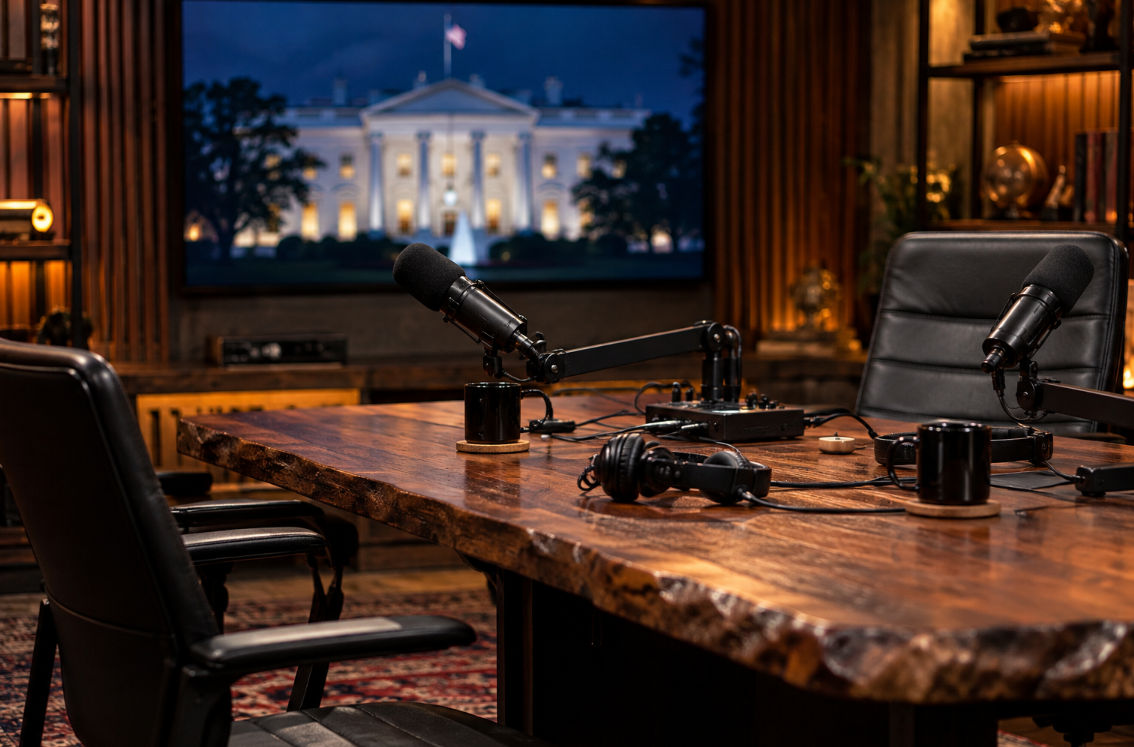
Joe Rogan isn't pretending he had nothing to do with Donald Trump's return to the White House.
In fact, he's acknowledging it.
During a recent episode of The Joe Rogan Experience with comedian Ron White, Rogan reflected on his political reputation, his support for Trump and the promises that helped persuade him to back Trump's campaign.
And his assessment of how those promises have worked out was remarkably simple:
“Obviously, it's not been ideal.”
That's a notable admission from one of the most influential media personalities who supported Trump's return to power.
Rogan wasn't merely another voter watching the 2024 election from the sidelines. Trump appeared on Rogan's enormously popular podcast for a nearly three-hour conversation shortly before Election Day, giving him access to an audience numbering in the tens of millions.
Rogan subsequently endorsed Trump.
Now, nearly two years later, Rogan is openly questioning whether the political transformation he believed Trump was promising ever materialized.
During his conversation with White, Rogan pushed back against the assumption that he is simply a conventional conservative.
He acknowledged that people associate him with the political right partly because he helped Trump, while describing many of his own views as left-leaning.
Then he explained what attracted him to Trump's campaign.
Rogan said he believed the administration would reduce government's intrusion into people's lives and deliver on Trump's familiar promise to “drain the swamp.”
That, Rogan suggested, isn't what happened.
The significance isn't simply that Joe Rogan criticized Donald Trump.
Rogan has criticized Trump administration policies before, and his politics have never fit neatly into a traditional Republican or Democratic box.
What's significant is what Rogan is now saying about the promises themselves.
He bought into them.
He used his enormous platform during an election in which those promises mattered.
He endorsed the candidate making them.
And now he's publicly acknowledging that the results haven't matched what he expected.
The comments also follow other moments in which Rogan has expressed frustration with the Trump administration, particularly over foreign policy and war.
That makes this harder to dismiss as a single disagreement over one policy.
Rogan appears increasingly willing to separate what Trump promised during the campaign from what his administration has actually delivered.
That distinction matters because Rogan's influence extends far beyond traditional political media.
His audience includes millions of Americans—particularly younger men—who don't necessarily consume cable news, read political newspapers or identify strongly with either political party.
Trump clearly understood the importance of that audience in 2024.
That's why his marathon appearance on Rogan's podcast mattered.
Rogan's endorsement mattered too.
None of this means Rogan has suddenly become a Trump opponent. He didn't say that, and his comments shouldn't be stretched into something they weren't.
But he did something politically significant in its own right.
He acknowledged his role.
He acknowledged what he believed he was supporting.
And he acknowledged that what followed hasn't lived up to it.
For someone who helped sell Trump's candidacy to one of the largest audiences in American media, that's a very different message than the one voters heard in 2024.