Americans staring at another painful number on the gas pump are getting an explanation from Vice President JD Vance: blame Iran.
During a White House briefing this month, Vance was asked when Americans might finally see gasoline return to around $3 a gallon — a level Treasury Secretary Scott Bessent had previously suggested might be possible by Labor Day.
That prediction didn't happen.
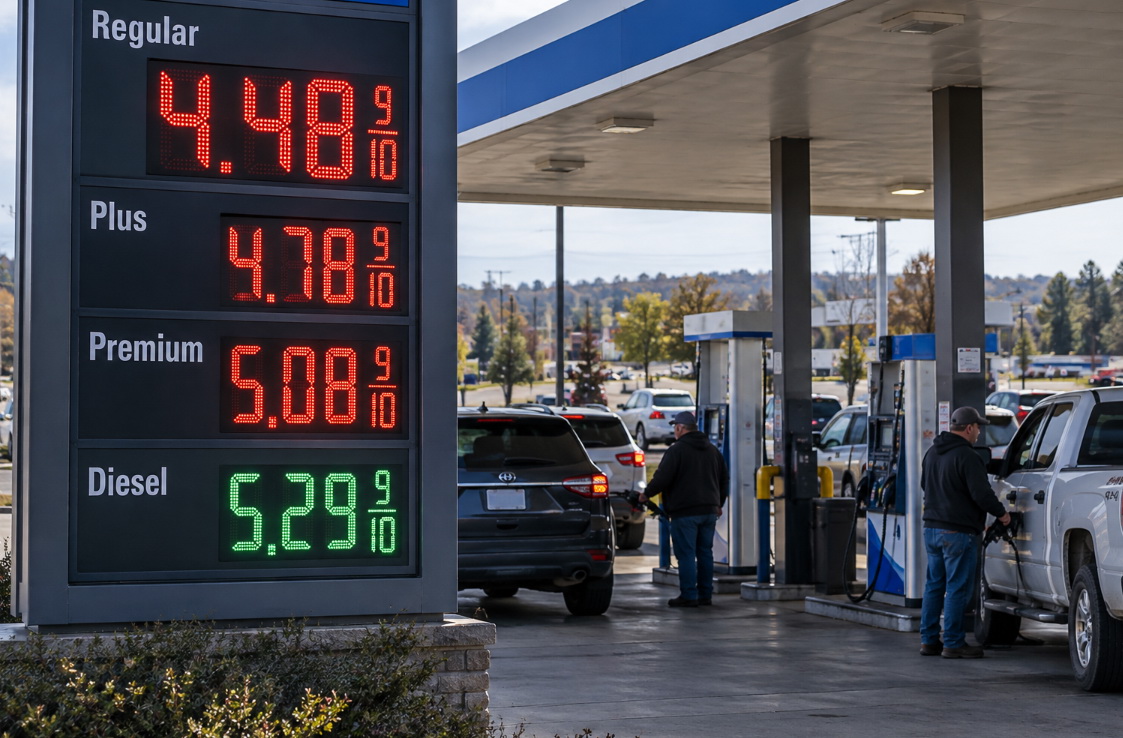
Instead, the national average has climbed to roughly $4.48 a gallon, according to AAA. That's more than a dollar higher than it was a year ago, and prices have continued climbing during September.
Vance's explanation was direct.
He said the “fundamental reality” behind high gasoline prices is Iranian attacks on commercial shipping, arguing that instability around the Strait of Hormuz has disrupted the movement of oil and made some ships reluctant to pass through the region.
There is real economic evidence behind part of that argument.
The Strait of Hormuz remains one of the world's most important energy corridors, and AAA says continued volatility there has helped push crude oil back toward roughly $100 per barrel. Higher crude prices eventually work their way down to American motorists.
But Vance's explanation has also drawn criticism because it leaves out a rather important part of the story:
The United States is itself a participant in the conflict with Iran.
The fighting did not simply materialize out of nowhere and suddenly land on America's gas pumps. The Trump administration has been deeply involved in a conflict that has stretched on for months, disrupted shipping, rattled energy markets and complicated efforts to restore stability in the region.
Now the economic consequences are showing up in one of the places Americans notice them most — the giant illuminated numbers hanging over their neighborhood gas station.
And the administration's earlier optimism about gasoline prices hasn't aged particularly well.
When Vance was asked whether Americans should still expect $3 gasoline anytime soon, he declined to make another prediction.
That's understandable.
The previous predictions haven't exactly worked out.
AAA reported that the national average reached $4.14 on September 3, climbed to $4.27 by September 10, reached $4.43 by September 17, and now sits near $4.48.
That's not a theoretical economic debate.
It's money coming directly out of Americans' wallets every time they fill their tanks.
The situation is even more dramatic in some parts of the country. In California, AAA currently puts the average price of regular gasoline at more than $6.18 per gallon.
Meanwhile, criticism of Vance's explanation has spread online, with detractors arguing that the administration is trying to separate rising fuel costs from its own decisions surrounding the Iran conflict.
Vance, for his part, argues that the administration's energy policies have actually prevented the situation from becoming worse. He has pointed to increased American energy production and other international oil arrangements as evidence that prices could have climbed even higher.
That may be the administration's defense.
But motorists don't buy hypothetical gasoline.
They buy the gasoline coming out of the pump today.
And today, it's expensive.
For an administration that repeatedly promised Americans cheaper energy, explaining why gasoline could have been even more expensive is a much harder political message than simply delivering the lower prices voters were promised.