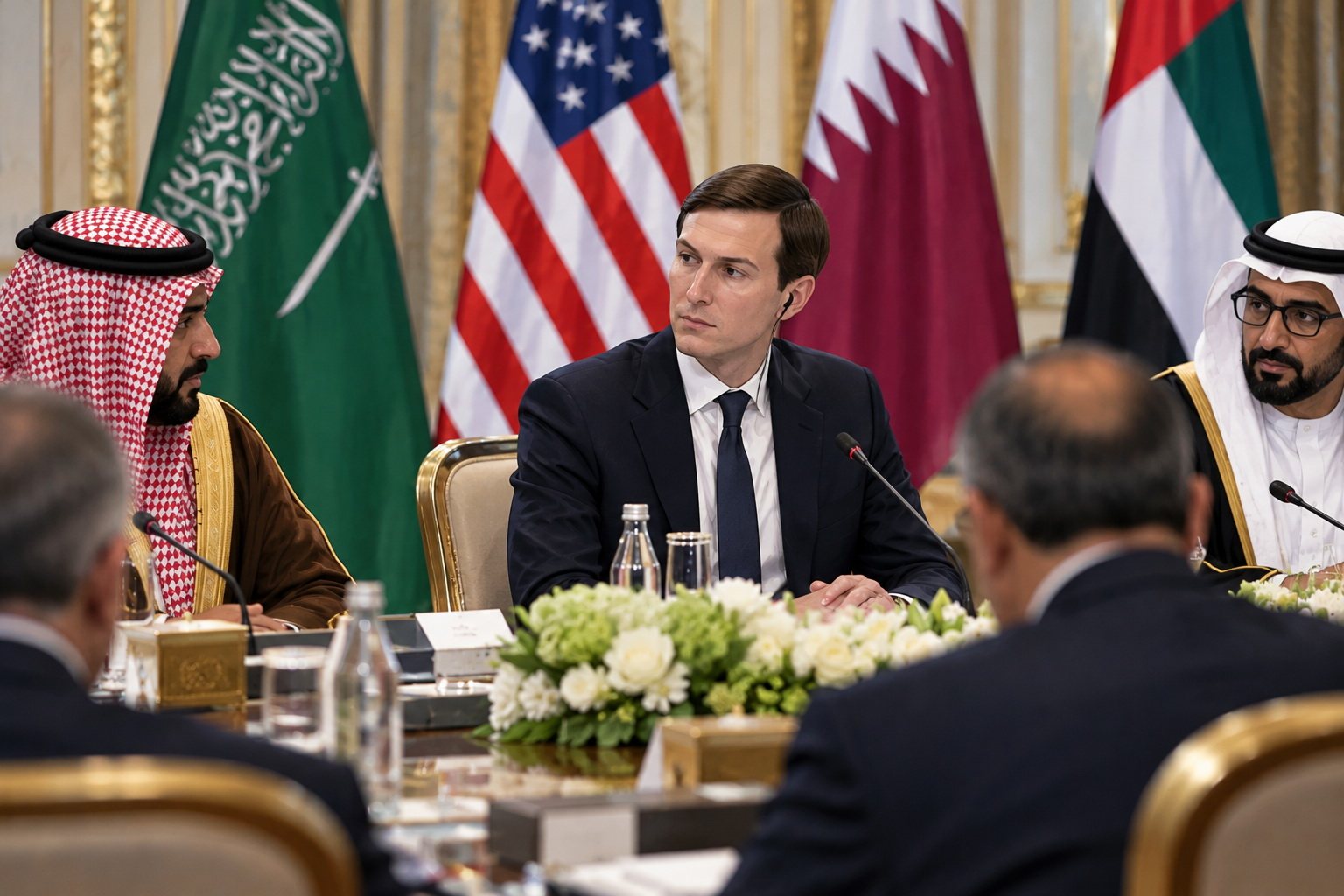
Trump's son-in-law is negotiating American foreign policy while managing billions in investments backed by foreign governments, raising serious questions about conflicts of interest and government transparency.*
President Donald Trump's son-in-law Jared Kushner is facing a federal lawsuit challenging his powerful diplomatic role and his financial relationships with foreign governments.
On October 14, government watchdog Citizens for Responsibility and Ethics in Washington (CREW) filed a lawsuit alleging that Kushner is exercising significant government authority without Senate confirmation or the financial disclosures required of federal officials.
At the center of the controversy is Kushner's investment firm, Affinity Partners, which manages more than $6 billion in assets. According to the lawsuit, approximately 99% of that money comes from foreign investors, including sovereign wealth funds connected to Saudi Arabia, Qatar, and the United Arab Emirates.
Saudi Arabia alone invested $2 billion in Kushner's firm shortly after he left the White House in 2021, despite reported objections from advisers to the Saudi investment fund.
Now Kushner is back at the center of American foreign policy, participating in sensitive negotiations involving Israel, Iran, Russia, and Ukraine — while maintaining substantial business relationships with foreign governments.
The concern is straightforward: How can Americans know whether Kushner is representing the interests of the United States or protecting his own multibillion-dollar business relationships?
CREW argues that Kushner's diplomatic responsibilities require constitutional oversight, including Senate confirmation and public financial disclosures. The organization wants a federal judge to prevent him from exercising government authority without complying with those requirements.
The financial concerns are not new. Congressional Democrats previously investigated whether Kushner's firm was benefiting from his political connections. In March 2026, lawmakers again demanded answers about his efforts to attract Middle Eastern investments while participating in American diplomatic negotiations.
The Trump administration rejects the lawsuit's allegations. White House officials maintain that Kushner is serving voluntarily as a private citizen and that his business activities are separate from his diplomatic work. His attorney has called the lawsuit meritless.
No court has determined that Kushner violated federal ethics laws or improperly influenced foreign policy.
Nevertheless, the lawsuit raises a fundamental question about accountability in the Trump administration.
Kushner is helping shape American relationships with governments that have invested billions in his private business, without the public financial transparency normally expected of senior government officials.
For a White House that repeatedly promises to put American interests first, those financial relationships deserve examination.