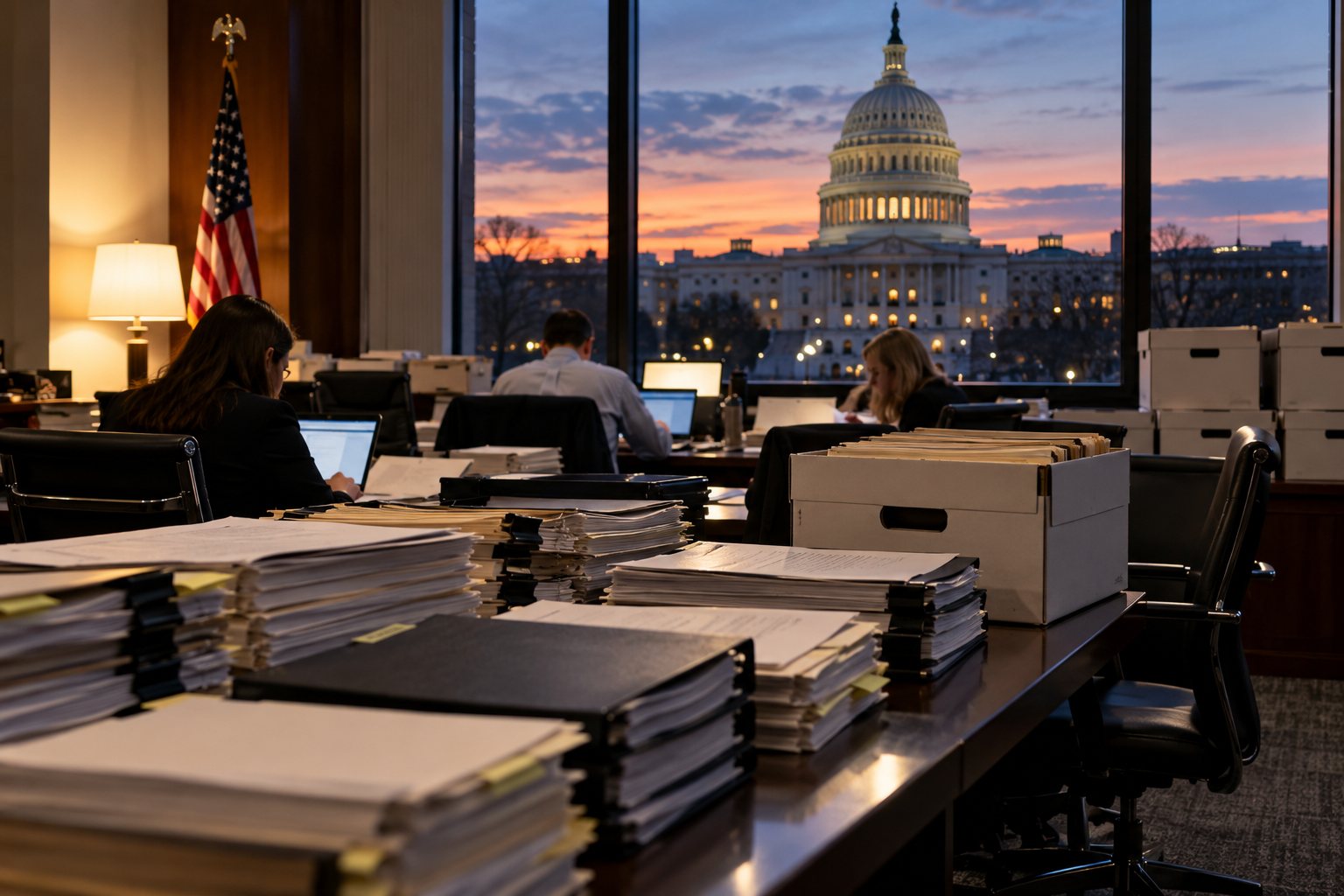
One day after the House January 6 Committee unanimously voted to subpoena former President Donald Trump, the investigation was entering its final phase. After months of hearings, more than 1,000 interviews and the collection of extensive documentary evidence, committee members were preparing their final report and considering whether their findings warranted criminal referrals to the Justice Department. Two months later, the committee would take that extraordinary step.**
The televised hearings were nearly over.
The investigation wasn't.
On October 13, 2022, the House Select Committee investigating the January 6 attack held what would become its final investigative hearing.
At its conclusion, the nine-member committee—seven Democrats and two Republicans—voted unanimously to subpoena Donald Trump.
But the committee was simultaneously approaching another major decision.
What should it do with everything it had uncovered?
For more than a year, investigators had interviewed witnesses, obtained documents, examined communications and reconstructed the effort to overturn the 2020 presidential election.
Now the committee had to turn that evidence into its final findings.
And one question carried particularly serious consequences:
Should the committee formally refer possible crimes to the Justice Department?
More Than a Congressional Report
The January 6 Committee wasn't a prosecutor.
It couldn't indict anyone.
It couldn't put anyone on trial.
Those powers belonged to the Justice Department and the courts.
But Congress could make a criminal referral—essentially telling federal prosecutors that lawmakers believed evidence uncovered during their investigation warranted examination for possible criminal prosecution.
Such a referral wouldn't require the Justice Department to bring charges.
DOJ could accept it, ignore it or conduct its own investigation and reach different conclusions.
Still, a referral involving a former president would be historically significant.
And by October 2022, the committee had accumulated an enormous evidentiary record.
The Committee's Case
Across a series of public hearings, the committee presented evidence concerning several interconnected efforts following Trump's 2020 election defeat.
Trump and his allies challenged election results in court.
Trump pressured state officials.
Allies organized alternate slates of electors in states Joe Biden had won.
Trump and his allies pressured Vice President Mike Pence to reject or delay electoral votes when Congress met on January 6.
Trump repeatedly told the public that the election had been stolen despite being told by members of his administration, campaign and other officials that specific fraud claims were unsupported.
And on January 6, Trump summoned supporters to Washington and urged them to march toward the Capitol.
The committee also focused on what Trump did—and did not do—while the Capitol was under attack.
Evidence From Trump's Own Administration
A substantial amount of the committee's evidence did not come from Democrats.
It came from Republicans and people who had worked for Trump.
Former Attorney General William Barr testified that he repeatedly told Trump that allegations of widespread election fraud lacked evidence.
Trump campaign officials described doubts about fraud claims.
White House lawyers described internal battles over efforts to overturn the election.
Former White House aide Cassidy Hutchinson provided testimony about events inside the administration before and during January 6.
Officials in several states described pressure from Trump and his allies.
Members of Vice President Pence's staff described the campaign to persuade Pence to interfere with the electoral count.
The committee argued that this evidence showed Trump continued pursuing efforts to remain in power even after being repeatedly told that the election-fraud claims supporting those efforts were false.
Trump disputed the committee's investigation and characterized it as politically motivated.
October 13 Changed the Focus
The October 13 hearing assembled much of the committee's case into a single narrative.
Then came the subpoena vote.
Vice Chair Liz Cheney introduced the resolution seeking Trump's testimony and documents.
The committee voted:
9–0.
But everyone involved understood that time was running out.
The congressional term would end in January.
Midterm elections were less than a month away.
If Republicans won control of the House, the committee was expected to be dissolved.
Investigators therefore had only weeks to complete their work.
That meant writing the final report.
Deciding what evidence should be released.
Determining whether additional witnesses could be interviewed.
And deciding whether anyone should be referred for possible criminal prosecution.
What Is a Criminal Referral?
A congressional criminal referral sounds more powerful than it legally is.
Congress can identify conduct it believes may violate federal law and send its findings to the Justice Department.
But DOJ retains prosecutorial authority.
Congress cannot order an indictment.
A referral does not establish guilt.
And prosecutors are not required to adopt Congress's interpretation of the evidence.
In Trump's case, another important fact made the situation even more unusual:
The Justice Department was already conducting its own investigation into efforts to overturn the 2020 election.
Federal prosecutors possessed investigative powers the committee did not, including grand juries, search warrants and other compulsory tools.
Whatever Congress ultimately recommended, DOJ would make its own decisions.
Two Months Later
The question hanging over the investigation in October was answered on December 19, 2022.
During its final public meeting, the January 6 Committee voted unanimously to send criminal referrals concerning Trump to the Justice Department.
The committee identified evidence it believed warranted consideration of four federal offenses:
Obstruction of an official proceeding.
Conspiracy to defraud the United States.
Conspiracy to make a false statement.
And:
Inciting, assisting or aiding or comforting an insurrection.
The committee also referred attorney John Eastman regarding alleged conduct connected with efforts to overturn the election.
It was the first time Congress had made such a criminal referral concerning a former American president.
The Committee Reaches Its Conclusion
The committee's final report was released on December 22.
It contained hundreds of pages detailing the investigation.
The report examined Trump's election-fraud claims, pressure on state officials, the alternate-elector effort, the campaign targeting Pence, the events leading to the January 6 rally, the Capitol attack and Trump's actions while the violence unfolded.
Its central conclusion was unequivocal.
The committee said:
“The central cause of January 6th was one man, former President Donald Trump, whom many others followed.”
That was the committee's finding—not a criminal conviction.
Whether Trump's conduct violated federal criminal law was ultimately a question for prosecutors and the courts.
DOJ Was Already Investigating
By the time the committee issued its referrals, the Justice Department investigation had advanced independently.
Attorney General Merrick Garland appointed Jack Smith as special counsel in November 2022.
Smith was assigned to oversee investigations involving Trump's efforts surrounding the 2020 election as well as Trump's handling of classified documents after leaving office.
The congressional committee's referrals therefore landed at a Justice Department already examining much of the same conduct.
Congress had finished gathering its evidence.
Federal prosecutors were continuing theirs.
The Investigation Would Eventually Produce Charges
In August 2023, a federal grand jury indicted Trump in the federal election-interference investigation.
The indictment charged him with four crimes connected to alleged efforts to overturn the 2020 election:
Conspiracy to defraud the United States.
Conspiracy against rights.
Obstruction of an official proceeding.
And conspiracy to obstruct an official proceeding.
Trump pleaded not guilty and denied wrongdoing.
The indictment was the product of the Justice Department's independent investigation—not the January 6 Committee's criminal referral.
That distinction matters.
The committee did not prosecute Trump.
It did not convict him.
And its referral did not force DOJ to charge him.
But Congress and federal prosecutors ultimately examined many of the same events and reached overlapping legal concerns.
October 14 Was a Transition Point
October 14, 2022 was not another dramatic televised hearing.
There was no historic vote that day comparable to the subpoena issued the previous afternoon.
Instead, it represented something quieter but consequential.
The public phase of the January 6 investigation was nearing its end.
The committee had spent months showing Americans what its investigators had uncovered.
Now members had to decide what those findings meant.
They had to determine what belonged in the historical record.
They had to decide what evidence should be turned over to prosecutors.
And they had to decide whether the conduct they had documented was serious enough to warrant formal criminal referrals.
Two months later, they gave their answer.
Yes.
The committee unanimously referred Donald Trump to the Justice Department for consideration of criminal prosecution on four potential offenses.
The hearings were ending.
The legal consequences of January 6 were still unfolding.