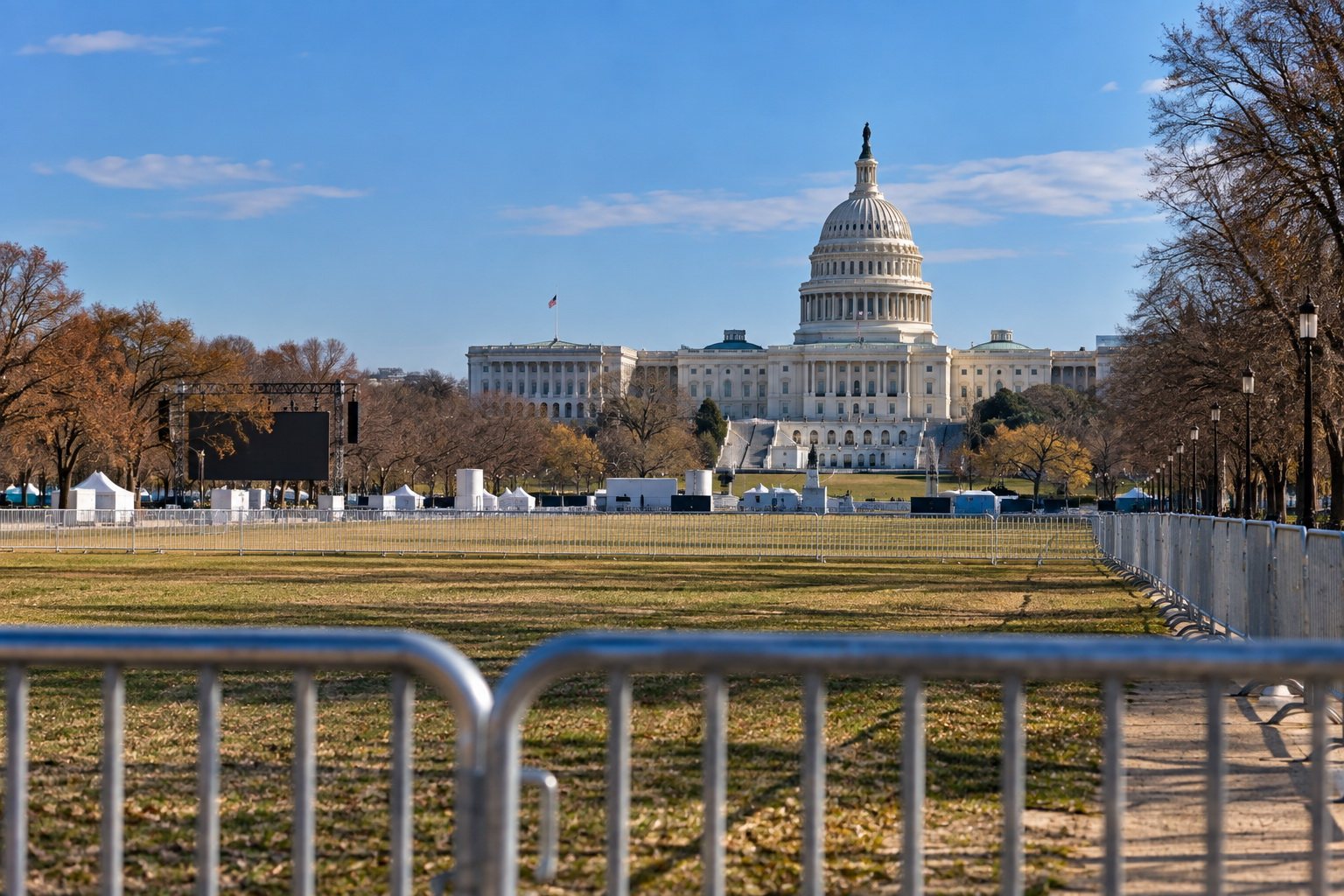
Nine months after the attack on the United States Capitol, congressional investigators were beginning to work backward.
Who organized the events that brought thousands of Donald Trump's supporters to Washington?
Who paid for them?
Who communicated with the White House?
Who coordinated with members of Congress?
And what did organizers know about plans to move demonstrators from rallies in Washington toward the Capitol as Congress met to certify Joe Biden's election victory?
On October 7, 2021, the House Select Committee investigating January 6 issued another round of subpoenas, this time focusing directly on organizers associated with the “Stop the Steal” movement.
Among those subpoenaed was Ali Alexander, one of the movement's most prominent organizers.
The committee also subpoenaed Nathan Martin, whose information appeared on a permit application for a January 6 rally on the Capitol grounds, and sought records from Stop the Steal LLC.
The investigation was expanding beyond the attack itself.
Congress wanted to understand how January 6 came together.
What Was “Stop the Steal”?
“Stop the Steal” became one of the most recognizable slogans of the movement attempting to overturn the results of the 2020 presidential election.
Trump had lost the election to Joe Biden.
States certified their results.
Biden won the Electoral College 306-232.
Courts repeatedly rejected or dismissed efforts challenging the outcome, and Trump's own Justice Department said it had not discovered fraud on a scale capable of changing the result.
Nevertheless, Trump and his allies continued telling supporters that the election had been stolen.
“Stop the Steal” rallies spread those claims and encouraged supporters to pressure government officials not to accept Biden's victory.
That effort eventually focused on January 6, when Congress was scheduled to formally count the electoral votes.
Ali Alexander
Ali Alexander emerged as one of the best-known organizers associated with Stop the Steal.
Before January 6, Alexander publicly described plans to put intense pressure on members of Congress as they met to certify the election.
In a since-deleted video, Alexander claimed that he had worked with Republican Representatives Paul Gosar, Mo Brooks and Andy Biggs on a strategy to put what he called “maximum pressure” on Congress.
Biggs and Brooks denied helping Alexander plan the January 6 rally.
The committee wanted to determine exactly what contacts had occurred and what role Alexander played in organizing the events.
Investigators were also interested in Alexander's rhetoric before January 6.
At a Washington event on January 5, Alexander led a crowd in a “victory or death” chant.
The following day, Congress would come under attack.
That did not by itself establish that Alexander planned or directed the violence at the Capitol. But it gave congressional investigators an obvious reason to examine his communications, planning and contacts with other organizers and political figures.
The Capitol Rally Permit
The committee was particularly interested in a rally planned for Capitol grounds.
Nathan Martin's phone number and email address appeared on a permit application submitted by an organization called “One Nation Under God.”
The event was described as concerning alleged election fraud in swing states.
According to information cited by the committee, a vendor associated with the event told Capitol Police that he was reporting to Martin and Alexander and that both men were affiliated with Stop the Steal.
Yet the permit application did not disclose a connection between the Capitol event and Stop the Steal.
After January 6, Alexander publicly acknowledged that Stop the Steal had obtained the permit for the One Nation Under God event.
That raised additional questions.
Congress wanted the records.
Who Planned January 6?
The subpoenas were part of a much larger investigation into the organization of the demonstrations surrounding January 6.
The committee had already subpoenaed 11 people associated with planning rallies preceding the Capitol attack.
Those subpoenas included individuals associated with Women for America First, the organization responsible for the large rally at the Ellipse where Trump spoke on the morning of January 6.
The committee had also subpoenaed several people from Trump's inner circle, including former White House Chief of Staff Mark Meadows, former White House Deputy Chief of Staff Dan Scavino, former Pentagon official Kash Patel and former Trump adviser Steve Bannon.
The pattern of subpoenas showed what investigators were attempting to reconstruct.
They weren't looking only at the people who physically entered the Capitol.
They were examining the network of political activists, rally organizers, White House officials, campaign figures and others involved in the events leading up to the attack.
Follow the Planning — And the Money
One question repeatedly appeared in the committee's investigation:
Who funded the events?
Large political rallies require money.
Stages must be constructed.
Sound systems must be rented.
Transportation must be arranged.
Security, permits, equipment, hotel rooms, advertising and organizational staff can all require funding.
The committee therefore wanted financial and organizational records from the groups involved.
Committee Chairman Bennie Thompson explained that investigators needed to understand who was involved in both planning and funding the events that preceded the attack.
That financial trail could help investigators determine whether organizations that appeared separate were actually coordinating with one another.
It could also reveal connections between rally organizers, political groups and individuals supporting Trump's effort to overturn the election.
The Ellipse Rally and the Capitol
On the morning of January 6, Trump addressed thousands of supporters gathered near the White House at the Ellipse.
He repeated false claims that the election had been stolen and urged supporters to march toward the Capitol.
Congress was meeting there to count the electoral votes.
The demonstrations then moved toward Capitol Hill.
By early afternoon, barriers were breached.
Police officers were attacked.
Rioters forced their way into the Capitol.
Members of Congress and Vice President Mike Pence were evacuated or moved to secure locations.
The electoral count stopped.
For several hours, the constitutional process for formally confirming the next president of the United States was interrupted by force.
Congress eventually reconvened that night and certified Biden's victory.
Were the Events Connected?
One of the most important questions facing investigators was how the different January 6 events related to one another.
There was the Ellipse rally.
There were events planned near the Capitol.
There were activities the night before.
There were online campaigns encouraging people to travel to Washington.
And there were organizations promoting January 6 as the moment when Trump's supporters could pressure Congress to reject the election results.
Investigators needed to determine whether these were independent political demonstrations that converged on the same day or whether there was significant coordination among organizers.
That required documents.
Emails.
Text messages.
Financial records.
Permit applications.
And testimony.
The subpoenas issued October 7 were designed to obtain precisely that information.
Congress Demands Answers
Alexander and Martin were ordered to produce records by October 21.
Martin was directed to appear for a deposition on October 28.
Alexander was scheduled for October 29.
The committee also sought records from Stop the Steal LLC through its registered agent.
The message from investigators was becoming increasingly clear.
January 6 would not be investigated solely as a riot that spontaneously erupted outside the Capitol.
Congress intended to examine the entire chain of events that preceded it.
What the Investigation Later Found
The January 6 Committee's investigation would eventually produce a much more detailed picture of the connections among rally organizers, Trump allies and the White House.
Its final report described internal discussions about which activists would appear at events surrounding January 6.
According to the committee's findings, Trump himself asked for information about Ali Alexander and requested that Alexander be given a speaking opportunity, although Alexander ultimately did not appear on the main Ellipse stage on January 6.
The committee also documented communications among White House and rally personnel concerning plans for supporters to move toward the Capitol.
Those later discoveries help explain why investigators considered Alexander and other organizers important witnesses in October 2021.
They occupied positions where political organizing, election challenges and the January 6 demonstrations intersected.
Reconstructing the Road to January 6
The October 7 subpoenas represented another step toward answering a question much larger than who broke windows or fought with police officers at the Capitol.
Congress wanted to know how the country reached that moment.
For weeks after losing the election, Trump falsely insisted that he had actually won.
Allies challenged results in court.
Pressure was placed on state officials.
Trump pressured the Justice Department.
Trump and his allies pressured Vice President Mike Pence.
Activists organized rallies around the claim that the election had been stolen.
And thousands of Trump supporters eventually converged on Washington as Congress prepared to certify Biden's victory.
The committee now wanted to know how those pieces connected.
Who organized the events?
Who communicated with whom?
Who provided the money?
Who knew demonstrators were being encouraged to move toward the Capitol?
And what contacts existed between Stop the Steal organizers, members of Congress and people around the president?
On October 7, 2021, Congress began demanding those answers directly from some of the people who had helped organize the movement.