James Comey Takes His Case Against Trump Before the American Public
June 8, 2017
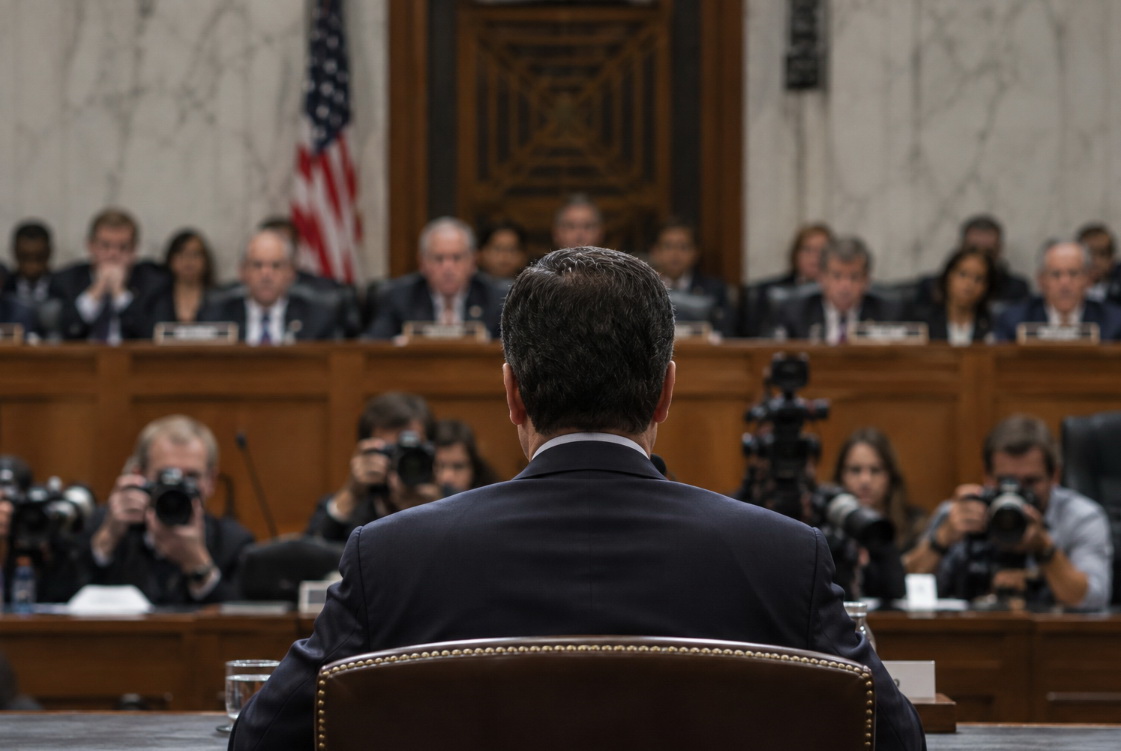
On June 8, 2017, former FBI Director James Comey sat alone before the Senate Intelligence Committee and delivered one of the most consequential pieces of testimony of Donald Trump's young presidency.
The hearing was carried live across the country. Americans heard Comey describe, under oath, a series of private conversations with Trump that he said made him uncomfortable enough that he began creating written records immediately after they occurred.
At the center of Comey's account were two extraordinary allegations.
Comey said Trump asked him for loyalty.
And Comey said the president told him that he hoped the FBI director could “let” the investigation involving former National Security Adviser Michael Flynn go.
The White House disputed significant portions of Comey's version of events.
But for several hours on national television, a recently fired FBI director publicly described a relationship with the president that he believed threatened the traditional independence of the FBI.
“I Need Loyalty”
One of Comey's most striking accounts involved a private dinner with Trump at the White House on January 27.
According to Comey, Trump repeatedly discussed whether he would remain as FBI director before eventually telling him:
“I need loyalty.”
Comey testified that he responded by promising Trump honesty rather than personal loyalty.
Trump eventually told him that he wanted “honest loyalty,” according to Comey's contemporaneous written statement. Comey said he replied that Trump would receive honesty from him.
The exchange troubled Comey because of the unusual relationship it appeared to suggest between a president and the nation's top federal law-enforcement official.
Comey told senators that the FBI director was supposed to operate independently rather than as a political subordinate expected to demonstrate personal allegiance to the president.
He said he had never received such a request from anyone else he had worked for in government.
“I Hope You Can Let This Go”
The more consequential conversation came on February 14.
Michael Flynn had resigned as Trump's national security adviser the previous day amid controversy surrounding his conversations with Russian Ambassador Sergey Kislyak and statements Flynn had made about those contacts.
Comey said Trump spoke with him privately in the Oval Office after other officials had left.
According to Comey's account, Trump defended Flynn as a “good guy” and then said:
“I hope you can see your way clear to letting this go, to letting Flynn go.”
Comey testified that he understood Trump to be requesting that the FBI abandon its investigation of Flynn concerning false statements about his conversations with the Russian ambassador.
Comey did not say Trump explicitly ordered him to end the investigation.
That distinction became an important part of the hearing.
Republican Senator James Risch emphasized that Trump had used the word “hope,” rather than directly ordering Comey to stop.
Comey acknowledged that Trump's words were not literally an order.
But he testified that, given that the request came from the president of the United States during a private Oval Office meeting, he interpreted it as a direction.
“I took it as a direction,” Comey told senators.
Comey also made an important distinction: he said he understood Trump's request as relating specifically to Flynn, not as an instruction to shut down the broader investigation into Russian interference in the 2016 election.
Comey Was Taking Notes
Perhaps one of the most important revelations involved what Comey did after his conversations with Trump.
He wrote them down.
Comey said he began documenting his interactions with Trump because of the circumstances surrounding the meetings, the subjects being discussed and his concern that an accurate record might eventually become important.
After the February conversation involving Flynn, Comey said he immediately prepared an unclassified memorandum describing what had happened and discussed the matter with senior FBI leadership.
Comey told senators that he had not routinely created comparable records of his interactions with previous presidents.
Asked why he did so with Trump, Comey described a combination of circumstances and instinct that convinced him it was necessary to protect both himself and the FBI.
Those memos would soon become central documents in the growing investigation surrounding Trump's presidency.
Comey Admits He Helped Get a Memo to the Press
The hearing also produced a revelation damaging to Comey's own position.
After Trump fired him on May 9, Comey provided the substance of one of his memos to a friend, whom he asked to share it with a reporter.
Comey openly acknowledged doing it.
And he explained why.
He hoped public disclosure of the conversation would lead to the appointment of a special counsel.
It did.
Deputy Attorney General Rod Rosenstein appointed former FBI Director Robert Mueller as special counsel on May 17.
Comey's admission immediately gave Trump's defenders another line of attack: the former FBI director had deliberately arranged for details of a private presidential conversation to reach the press.
Comey did not deny it.
He told senators exactly what he had done and why.
The White House Pushes Back
Trump and his representatives rejected important portions of Comey's account.
Trump denied asking Comey for personal loyalty and denied asking him to abandon the Flynn investigation.
That left the country confronting an extraordinary dispute.
A former FBI director had testified under oath that the president sought his loyalty and asked him to let the Flynn matter go.
The president said those events had not happened as Comey described them.
In several instances, the conversations had occurred with only Trump and Comey present.
Comey's contemporaneous memos provided documentation of what Comey said he remembered, but they were records written by Comey himself rather than independent recordings of the conversations.
Comey acknowledged that problem during his testimony.
At the time, he said, the FBI leadership viewed the Flynn conversation as essentially his word against the president's.
Comey Accuses the Administration of Lying
Comey's criticism extended beyond his private conversations with Trump.
He was furious about the way the administration portrayed the FBI after his dismissal.
Trump's administration had publicly suggested that the bureau was in turmoil and that Comey had lost the confidence of its workforce.
Comey rejected that characterization.
“Those were lies, plain and simple,” he told the committee.
He said he was concerned that the administration had chosen to “defame” both him and the FBI in explaining his dismissal.
The statement transformed the hearing from a disagreement over recollections into an open confrontation between the former head of the FBI and the sitting administration.
An Extraordinary Day in Washington
Comey's testimony did not resolve every dispute surrounding Trump, Flynn or Russia.
It created new questions.
Republicans highlighted Comey's acknowledgment that Trump had not ordered him to terminate the broader Russia investigation and that Comey had told Trump, during his tenure, that Trump personally was not then under FBI investigation.
Democrats focused on the loyalty request, the Flynn conversation, Comey's firing and whether Trump's conduct represented an effort to interfere with an investigation.
Comey himself repeatedly distinguished between what he knew, what he interpreted and what investigators would ultimately have to determine.
But the significance of June 8 went beyond any single exchange.
A former director of the Federal Bureau of Investigation had appeared before Congress and publicly accused the sitting president's administration of lying about him. He testified that Trump sought his loyalty, that Trump privately raised the Flynn investigation with him, and that those encounters concerned him enough to create contemporaneous written records.
Comey had already been fired.
Robert Mueller had already been appointed.
Now the dispute that had largely unfolded through anonymous reports, presidential statements and leaked accounts was playing out under oath, in front of television cameras.
For the first time, millions of Americans could hear James Comey's account directly from James Comey.
And the confrontation between Donald Trump and the FBI was no longer happening behind closed doors.