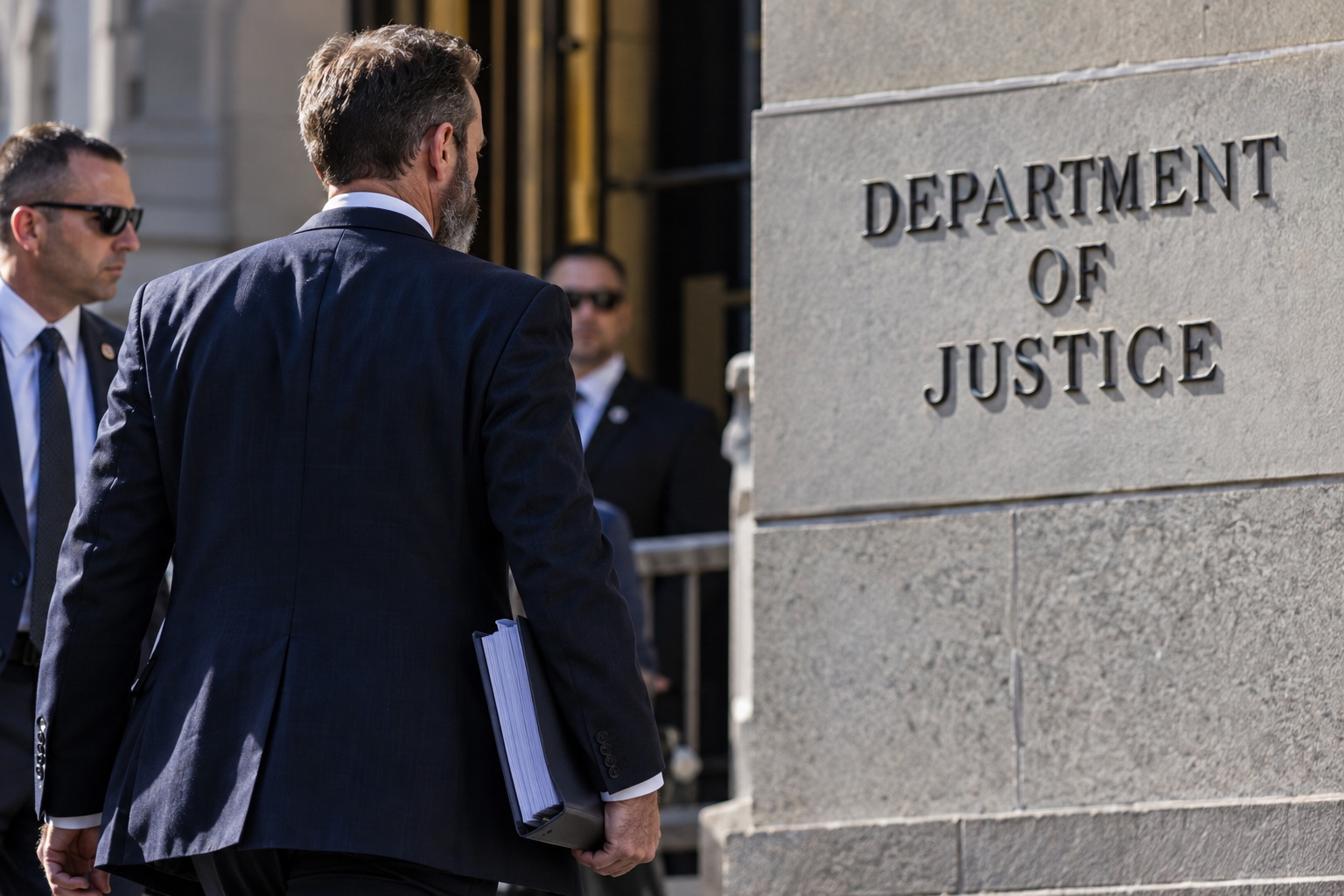
A federal judge on Wednesday unsealed a massive 165-page court filing from special counsel Jack Smith laying out the government's most detailed account yet of its election-subversion case against Donald Trump.
The partially redacted filing contains new allegations, witness accounts and descriptions of evidence prosecutors say demonstrate that Trump attempted to overturn the results of the 2020 presidential election after losing to Joe Biden.
But the document isn't simply a preview of the government's case.
It is also Smith's answer to one of the biggest legal questions hanging over Trump's prosecution:
How much of Trump's conduct is protected by presidential immunity?
Smith's answer is clear.
Prosecutors argue that Trump wasn't acting as president when he undertook much of the conduct described in the indictment.
He was acting as a candidate trying to remain in power.
“Although the defendant was the incumbent President during the charged conspiracies,” prosecutors wrote, “his scheme was fundamentally a private one.”
Trump denies wrongdoing, has pleaded not guilty and argues that the prosecution is politically motivated.
A Case Reshaped by the Supreme Court
Smith's filing comes after the Supreme Court dramatically changed the legal landscape surrounding the prosecution.
In July, the Supreme Court ruled that former presidents have immunity from criminal prosecution for official acts performed as president, while unofficial conduct receives no such protection.
The ruling sent Trump's federal election case back to U.S. District Judge Tanya Chutkan.
Her task now includes determining which portions of the government's case involve official presidential conduct and which involve Trump acting privately.
Smith's team subsequently obtained a revised indictment designed to comply with the Supreme Court's decision.
The newly unsealed filing explains why prosecutors believe the remaining allegations can still be prosecuted.
According to Smith, Trump's attempts to challenge the election involved campaign officials, private attorneys and political allies working toward his reelection rather than exercising presidential authority.
“The Executive Branch has no authority or function to choose the next President,” prosecutors wrote.
Prosecutors Say Trump Knew His Claims Were Unsupported
A central element of the filing is the government's contention that Trump continued making allegations about widespread election fraud despite repeatedly being told that many of the claims were false or unsupported.
According to prosecutors, Trump heard from campaign officials, attorneys, state officials and others who challenged various fraud allegations.
The filing describes instances in which members of Trump's own team investigated claims and concluded they could not substantiate them.
Prosecutors allege that those conclusions did not stop Trump from continuing to publicly claim the election had been stolen.
The government intends to use those conversations as evidence concerning Trump's knowledge and intent.
Trump has maintained that he genuinely believed the election was affected by fraud and that he had the right to challenge the results.
His attorneys argue that his actions involved protected political speech and legitimate efforts to contest an election.
Pressure on Mike Pence
The filing provides extensive details about Trump's interactions with Vice President Mike Pence.
Pence presided over the January 6 congressional session in which electoral votes were counted.
Trump and his allies argued that Pence had authority to reject or delay electoral votes from disputed states.
Pence disagreed.
According to the filing, Pence repeatedly told Trump that he did not believe he possessed the constitutional authority Trump wanted him to exercise.
Prosecutors describe a series of conversations in which Trump continued pressing Pence to intervene.
In one alleged exchange, prosecutors say Trump told Pence that people were “gonna hate your guts” and think he was “stupid” if he refused.
The relationship between the president and vice president became increasingly strained as January 6 approached.
Prosecutors argue that these interactions occurred in their private capacities as candidates and running mates rather than as part of Trump's official presidential responsibilities.
That distinction could become critical to whether the evidence survives the Supreme Court's immunity ruling.
“So What?”
One of the most striking new allegations concerns Trump's reaction to Pence's safety during the January 6 attack on the Capitol.
As rioters breached the building, Pence was inside overseeing the certification of the election.
According to Smith's filing, an aide informed Trump that Pence had been moved to a secure location.
The filing alleges that Trump's response was simply:
“So what?”
The allegation offers a new glimpse into what prosecutors say was happening inside the White House while violence unfolded at the Capitol.
Trump has repeatedly denied responsibility for the attack and has argued that he encouraged supporters to demonstrate peacefully.
His defense attorneys are expected to challenge the government's characterization of his actions and intentions that day.
“It Doesn't Matter if You Won or Lost”
The filing contains another previously undisclosed statement prosecutors say was overheard by a White House staff member.
According to the document, Trump was speaking with family members after the election when the staffer heard him say:
“It doesn't matter if you won or lost the election. You still have to fight like hell.”
Prosecutors appear likely to use the statement as evidence when arguing that Trump's efforts were motivated by remaining in power rather than determining the legitimate outcome of the election.
Trump's lawyers will have an opportunity to challenge both the evidence and the government's interpretation of it.
The Fight Moves Through the States
The filing also describes Trump's efforts to challenge election results in several battleground states.
Prosecutors detail contacts involving officials in Arizona, Georgia, Michigan and other states Biden won.
Trump and his allies publicly and privately raised allegations about fraudulent ballots, voting machines, improper counting procedures and other purported irregularities.
State officials investigated numerous claims and rejected many of them.
Prosecutors allege that Trump continued pushing state officials even after receiving information contradicting fraud allegations.
The government argues that these interactions were political activities undertaken by a presidential candidate rather than official actions of the president.
The Alternate Electors
Another major portion of Smith's case involves alternate slates of presidential electors.
Trump allies organized groups of Republican electors in states Biden had won.
Those individuals signed documents declaring Trump the winner or asserting that their votes should be considered under certain circumstances.
Prosecutors contend that the effort eventually became part of a broader attempt to provide Pence and Congress with a basis for refusing to certify Biden's victory.
Trump's defenders have argued that alternate electors have historical precedent in disputed elections and were intended to preserve legal options while election challenges continued.
Smith's filing argues that the circumstances here were fundamentally different and that false documents were used as part of an effort to disrupt the legitimate certification process.
Trouble Inside Trump’s Own Campaign
The filing also portrays significant disagreement within Trump's political operation.
According to prosecutors, some campaign officials and attorneys rejected claims being promoted by Trump and his allies.
In one episode involving vote counting in Detroit, prosecutors allege that a campaign associate reported that a batch of votes heavily favoring Biden appeared legitimate.
Rather than accepting that conclusion, prosecutors say another Trump ally pushed for additional grounds to challenge the votes.
The filing alleges that when someone warned the strategy could produce unrest similar to the controversial “Brooks Brothers riot” during the 2000 Florida recount, a campaign figure responded:
“Make them riot.”
Prosecutors argue that episodes like this demonstrate that portions of the effort were focused on disrupting the electoral process rather than determining whether fraud had actually occurred.
Trump Fought to Keep the Filing Sealed
Trump's attorneys opposed releasing Smith's filing before the presidential election.
They argued that making the document public only weeks before voters cast ballots would improperly inject prosecutors' allegations into the campaign.
Trump's legal team characterized the filing as politically motivated and argued that its release could interfere with the election.
Smith's office maintained that the document was necessary to resolve the immunity questions created by the Supreme Court's ruling.
Judge Chutkan ultimately allowed a redacted version to become public.
The identities of numerous witnesses and some other information remain concealed.
Trump Responds
Trump immediately attacked the filing and Smith.
He characterized its release as election interference and again argued that the prosecution was politically motivated.
Trump has pleaded not guilty to the four federal charges in the case.
He maintains that he had the right to question and challenge the 2020 election results and that his actions are protected by presidential immunity and other constitutional protections.
His attorneys will now have an opportunity to respond to Smith's arguments.
The Immunity Fight Is Now in Chutkan's Court
The 165-page document does not determine Trump's guilt.
It does not represent findings by Judge Chutkan that the allegations are true.
Instead, it lays out the evidence and legal arguments Smith's prosecutors say they intend to rely upon if the case reaches trial.
The immediate question before the court is whether the conduct described by prosecutors can legally be prosecuted after the Supreme Court's presidential-immunity decision.
Smith argues that it can.
His filing portrays Trump not primarily as a president exercising executive authority, but as a defeated candidate working with private political allies to reverse an election result.
Trump's attorneys emphatically disagree.
Judge Chutkan will ultimately have to decide which portions of the case survive the immunity test.
But on October 2, the public got its first look at the government's argument.
All 165 pages of it.