Newly disclosed records are revealing just how far former Special Counsel Jack Smith's investigation into Donald Trump's effort to overturn the 2020 election extended — reaching the financial information of thousands of political donors, communications involving journalists and records connected to members of Congress.
The disclosures have prompted Republican senators to accuse Smith of conducting an extraordinarily broad investigation that violated constitutional and privacy protections.
Smith strongly disputes that characterization.
He told senators that his office was conducting a legitimate criminal investigation and defended the subpoenas as necessary to determine what Trump and people around him were doing as Congress prepared to certify Joe Biden's victory on January 6, 2021.
But the sheer scope of the records collected is now becoming clearer.
Nearly 5,000 Donor Checks
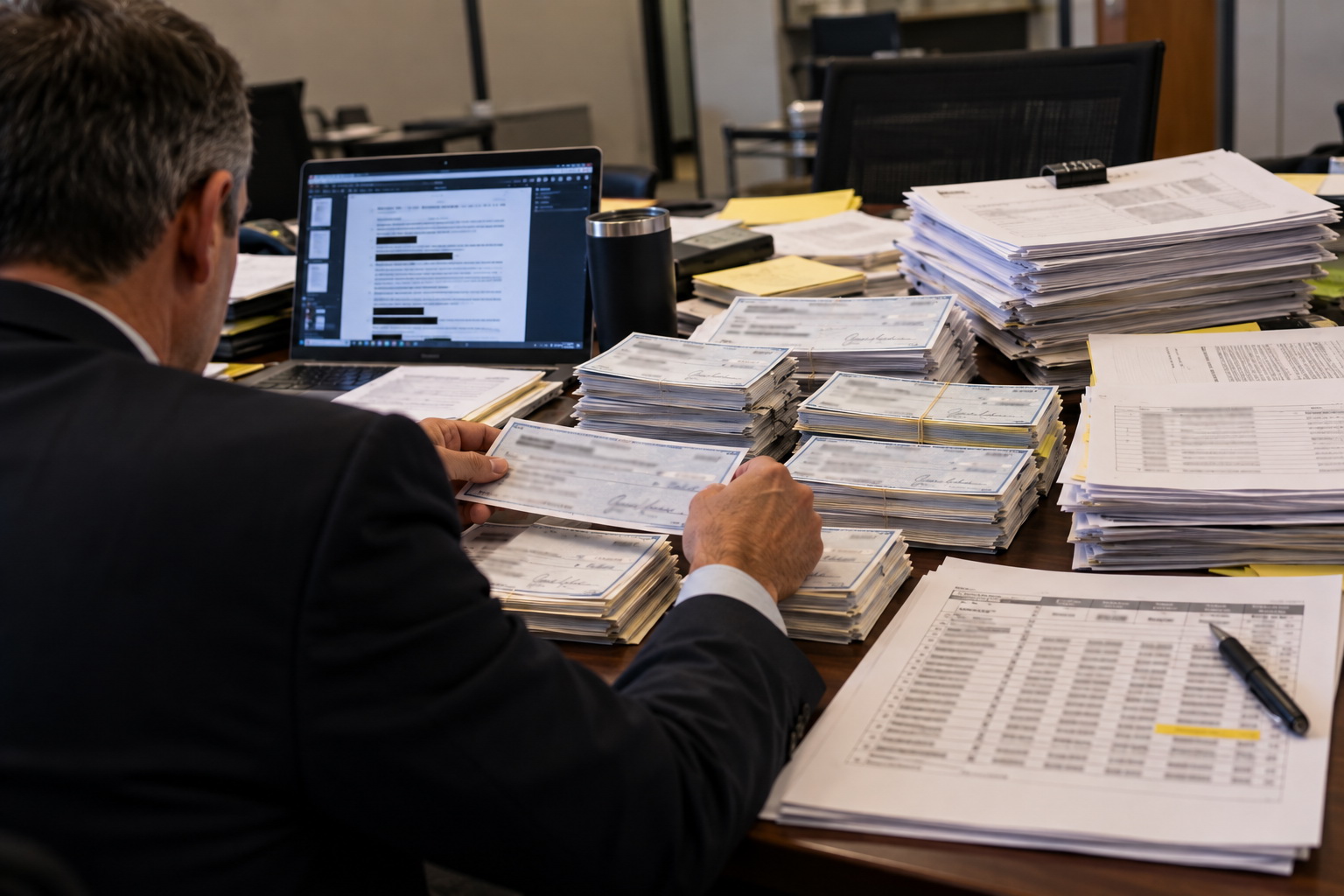
According to records released by Senate Judiciary Committee Chairman Chuck Grassley, Smith's investigative team obtained at least 4,782 checks written by Americans who donated to Trump or Trump-aligned Republican organizations.
Some donations were reportedly as small as $1.
The checks came from donors across all 50 states as well as Washington, D.C., and Puerto Rico.
More importantly, these weren't merely lists containing donors' names and contribution amounts.
The checks contained potentially sensitive personal information, including home addresses, signatures and bank account and routing numbers.
The records covered contributions dating from September 2019 through August 2023 — a period extending well beyond January 6 itself.
That has become a central argument for Republican senators questioning whether Smith's investigation expanded beyond what was reasonably necessary to investigate Trump's conduct surrounding the 2020 election.
Smith: It Was a Criminal Investigation
Smith didn't deny that investigators obtained financial information.
Pressed by Grassley during a Senate Judiciary Committee hearing, Smith acknowledged that his team acquired financial records but said he could not recall every individual subpoena issued during the sprawling investigation.
His explanation was straightforward: prosecutors were investigating potential crimes.
Smith has repeatedly maintained that his decisions were based on evidence rather than Trump's political affiliation.
Republicans aren't convinced.
Grassley argues that the breadth and time span of the subpoenas suggest prosecutors were collecting information about Republican political organizations and their supporters that had little or nothing to do with determining whether Trump committed crimes.
That disagreement is now at the center of congressional scrutiny of Smith's investigation.
Journalists Were Swept Up Too
The investigation also reached into communications involving the press.
According to Grassley's committee, communications involving nearly 50 journalists from more than a dozen news organizations were obtained as investigators sought records connected with former Trump administration officials.
The outlets included some of the largest news organizations in the country, among them CNN, CBS, NBC, CNBC, Bloomberg, The Associated Press, Reuters, NPR, The Washington Post, The Wall Street Journal and the Los Angeles Times.
Conservative outlets and personalities were included as well.
That doesn't necessarily mean Smith directly investigated those journalists.
The distinction is important.
Grassley's disclosures indicate that journalists' communications were swept up through a subpoena seeking information associated with government officials and Trump White House phones.
But even incidental collection involving journalists raises legitimate questions about how prosecutors handle communications between reporters and government sources.
Press-source confidentiality has long been considered an important safeguard for investigative journalism.
Members of Congress Were Caught in the Investigation
Congressional communications were another controversial part of Smith's investigation.
Investigators obtained phone records associated with Republican lawmakers as they attempted to reconstruct communications occurring around January 6.
Republicans have characterized the collection as surveillance of members of Congress.
Smith says that description is misleading.
During his Senate testimony, he emphasized that investigators obtained non-content telephone records showing information such as who called whom and how long calls lasted.
He said investigators did not wiretap members of Congress.
Smith argued that the records were necessary because investigators had evidence that Trump and people around him were attempting to contact members of Congress while certification of the presidential election was underway.
According to Smith, those communications helped investigators determine whether Trump and alleged co-conspirators were attempting to use the violence at the Capitol to further delay certification.
An Important Difference Between Surveillance and Subpoenas
The distinction matters.
Political rhetoric surrounding the disclosures has frequently described Smith's actions as “spying.”
The evidence released so far establishes something more specific: prosecutors used subpoenas and other investigative processes to obtain records during a federal criminal investigation.
That isn't the same thing as secretly wiretapping political opponents.
It also doesn't automatically mean every subpoena was appropriately narrow.
Those are two separate questions.
Federal prosecutors routinely subpoena financial, telephone and electronic records during criminal investigations.
The legitimate issue for congressional oversight is whether Smith's prosecutors sought information reasonably connected to their investigation — and whether appropriate safeguards were followed when those requests swept up constitutionally sensitive communications involving lawmakers, journalists and people who had simply donated money to a political campaign.
Grassley Says the Investigation Went Too Far
Grassley argues that it did.
He has accused Smith's team of using the Trump investigation to collect information about a much broader universe of Republican organizations and individuals than prosecutors could reasonably justify.
Republican Sen. Ted Cruz similarly confronted Smith over the scope of the subpoenas during the Judiciary Committee hearing.
Smith rejected the suggestion that Republicans were targeted because of their political beliefs.
Asked whether being a Republican was a crime, Smith responded:
“Absolutely not.”
Smith has consistently maintained that his investigation followed the evidence surrounding Trump's effort to remain in power after losing the 2020 election.
The Question Congress Now Has to Answer
There are two realities here that shouldn't be confused.
Smith's investigation produced serious criminal allegations against a former president concerning an unprecedented attempt to overturn an election.
At the same time, federal investigators wield enormous power.
Subpoenas can expose bank records, telephone information, private communications and other deeply personal information belonging to people who themselves may never be accused of committing a crime.
That makes scrutiny of how those powers were used entirely legitimate.
The disclosure that investigators obtained thousands of political donors' checks — including their banking information — deserves an explanation.
So does the collection of communications involving journalists.
So does the acquisition of records connected to members of Congress.
None of those facts, standing alone, establishes that Jack Smith illegally “spied” on thousands of Americans or conducted a partisan surveillance operation.
But they do establish that his investigation reached considerably further than the handful of defendants and alleged co-conspirators Americans heard about publicly.
Smith says that breadth was necessary to investigate an extraordinary alleged criminal scheme.
His Republican critics say it demonstrates that prosecutors crossed constitutional and investigative boundaries.
Congress now has the records, Smith has testified under oath, and both sides have put their arguments on the table.
The next step should be considerably less partisan and much more straightforward:
Determine exactly what investigators obtained, why they obtained it, what legal authority they relied upon — and whether the enormous investigative powers of the federal government were used appropriately.