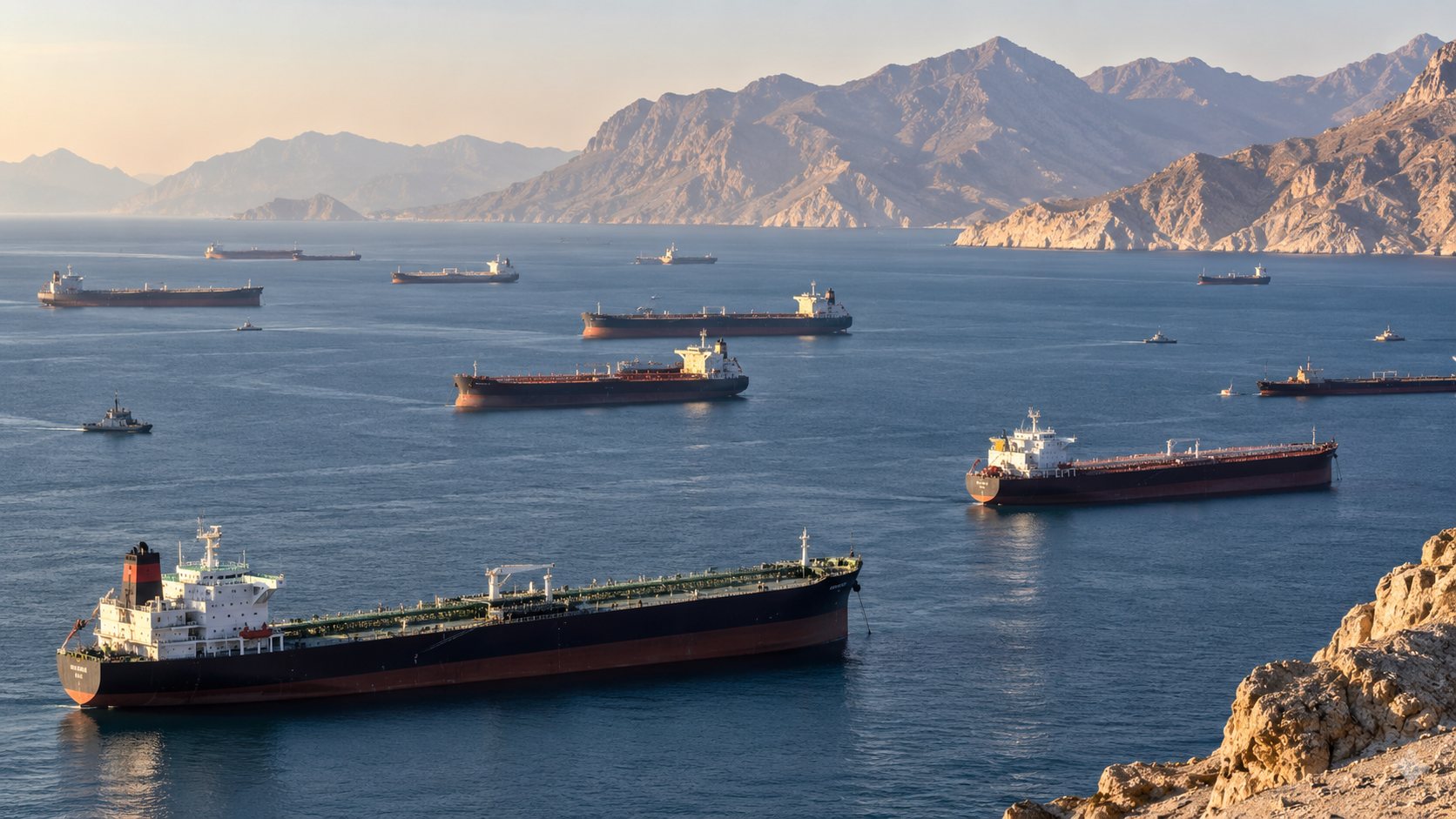
Iran said Sunday that it will not reopen the Strait of Hormuz until the United States meets a series of conditions demanded by Tehran, extending a confrontation over one of the world's most important energy corridors as fighting elsewhere in the Middle East continues to intensify.
Iranian Parliament Speaker Mohammad Baqer Qalibaf said Tehran's position was firm: the strategic waterway would remain effectively closed until seven conditions contained in an interim framework with Washington are satisfied.
At the same time, the conflict is expanding on another front.
Yemen's Saudi-backed government announced Sunday that it had begun a major military operation intended to retake territory controlled by the Iran-aligned Houthis.
The announcement followed escalating Saudi airstrikes and Houthi attacks, including a claimed missile-and-drone strike against a Saudi Aramco facility near Riyadh.
Together, the developments demonstrate how a war centered on Iran has increasingly become a regional conflict affecting shipping lanes, oil infrastructure and countries across the Middle East.
Iran Draws a Line at Hormuz
The Strait of Hormuz has become one of Tehran's most powerful sources of leverage in its confrontation with Washington.
The narrow waterway connecting the Persian Gulf with the Gulf of Oman is one of the world's most important shipping routes for oil and liquefied natural gas.
Iran has severely restricted maritime traffic through the strait during the war, disrupting energy exports and contributing to higher global fuel prices.
Tehran recently presented a proposal under which normal passage could potentially resume within seven days if an agreement is reached.
But Iran says Washington must first satisfy seven conditions contained in what Iranian officials describe as the Islamabad Memorandum of Understanding.
Those conditions reportedly include economic sanctions relief and an end to hostilities.
Qalibaf accused the United States of attempting to delay negotiations while imposing additional demands.
“The position of the Islamic Republic of Iran is completely clear and firm,” he said Sunday.
Iranian Foreign Minister Abbas Araghchi separately said Tehran remains prepared to reopen the waterway if an agreement is reached.
But Iran is making clear that reopening Hormuz will not come first.
Washington must make concessions before normal shipping resumes.
Oil Remains a Weapon in the Conflict
The prolonged disruption has transformed Hormuz into more than a battlefield issue.
It is now one of the most important economic fronts of the war.
Before the conflict, enormous quantities of oil and natural gas from Saudi Arabia, Iraq, Kuwait, Qatar, the United Arab Emirates and Iran passed through the strait.
Interruptions to that traffic have forced producers and shipping companies to adapt while pushing energy markets into uncertainty.
Even as some traffic has resumed, exports remain vulnerable.
A tanker traveling near the strait was reportedly struck by a projectile over the weekend, damaging its engine room. The crew was reported safe, and responsibility for the incident remained unclear.
Iraq, meanwhile, announced that its state-owned tanker company had transported approximately 2 million barrels of crude through Hormuz aboard a very large crude carrier.
The voyage demonstrates that the waterway is not completely impassable.
But normal commercial traffic remains far below the stability that existed before the war.
OPEC+ Holds Production Steady
The instability is also limiting the ability of oil-producing countries to respond.
OPEC+ agreed Sunday to keep its November production targets unchanged.
That decision comes despite a tight global oil market and months of disruption caused by the Iran war.
Several Gulf producers have been pumping below their official production targets because exporting additional crude is considerably more difficult when shipping routes remain threatened.
Brent crude remains above $100 per barrel, compared with roughly $73 before the war began in late February.
President Donald Trump has repeatedly sought ways to reduce energy prices, including pushing allies to release emergency fuel reserves.
But increasing production accomplishes little if additional oil cannot reliably reach international markets.
That makes the Strait of Hormuz central not only to the war but also to the economic consequences Americans and consumers around the world are experiencing.
Another Front Explodes in Yemen
While Washington and Tehran argue over Hormuz, Yemen's long-running civil war is again escalating dramatically.
Yemeni President Rashad al-Alimi announced Sunday that forces aligned with the internationally recognized government have begun a major military operation against the Houthis.
“Today, I announce the start of military operations to retake the remaining territory of the republic and extend the authority of the state and its institutions across the entire national territory,” al-Alimi said in a televised address.
Saudi Arabia is supporting the offensive.
Regional and Western officials have said Saudi forces are expected to conduct aerial operations while Yemeni government forces fight on the ground.
The objective is ambitious: reclaim territory controlled by the Houthis, including areas the movement has held for years.
Houthis Strike Back at Saudi Arabia
The Houthis are responding beyond Yemen's borders.
The group claimed responsibility for a coordinated missile-and-drone attack targeting a Saudi Aramco facility near Riyadh.
Witnesses reported seeing smoke and flames rising from an oil facility south of the Saudi capital.
The Houthis said the attack was retaliation for Saudi strikes against Sanaa and other areas of Yemen.
Saudi and Yemeni government forces have dramatically increased attacks against Houthi positions.
Yemeni government-aligned forces claimed Sunday that they had conducted 97 precision attacks using aircraft, drones, artillery, missiles and snipers.
Claims from the combatants about casualties and battlefield damage cannot always be independently verified.
But there is little doubt that the conflict has sharply intensified.
A War Spreading Across Strategic Waterways
The geography of the conflict is increasingly significant.
Iran controls the northern side of the Strait of Hormuz.
The Houthis have established control over much of Yemen's Red Sea coastline near another critical shipping route: the Bab al-Mandab Strait.
Together, those waterways sit at opposite ends of some of the world's most important Middle Eastern energy and commercial shipping routes.
That creates a potentially dangerous strategic situation.
Instability around Hormuz threatens Persian Gulf exports.
Instability around Bab al-Mandab threatens shipping between the Indian Ocean and the Red Sea, including traffic ultimately bound for the Suez Canal.
The economic consequences therefore extend far beyond Iran, Yemen or Saudi Arabia.
Trump's Options Narrow
The expanding conflict presents President Trump with an increasingly complicated decision.
His administration is attempting to pressure Tehran into accepting terms that would restore shipping through Hormuz while avoiding concessions the president considers unacceptable.
At the same time, Saudi Arabia — one of Washington's most important regional partners — is again engaged in major combat against the Houthis.
Trump's senior national-security officials met privately at Camp David on Friday to discuss both the Iran war and the deteriorating situation in Yemen.
Vice President JD Vance chaired the meeting, according to officials familiar with the discussions.
The gathering came as negotiations with Iran remained stalled and Trump considered whether to resume major U.S. combat operations against Tehran.
That decision now carries consequences beyond Iran itself.
Additional American strikes could trigger further Iranian retaliation.
Escalation in Yemen could produce more attacks against Saudi oil infrastructure.
And continued instability around Hormuz could keep global energy prices elevated.
Iran Says Diplomacy Is Still Possible
Despite the increasingly confrontational rhetoric, Tehran continues to insist that a negotiated settlement remains possible.
Iran says it submitted a proposal during the United Nations General Assembly that could lead to the Strait of Hormuz reopening within seven days.
The United States subsequently responded through Qatari intermediaries.
The disagreement now appears to involve not simply the terms of a possible agreement but the order in which each side would fulfill its commitments.
Iran wants its conditions met before reopening the strait.
Washington wants assurances from Tehran before providing major concessions.
Neither side appears willing to move first.
A Conflict With Global Consequences
The Iran war has already lasted for months.
What began as a direct military confrontation involving the United States, Israel and Iran is increasingly affecting conflicts and alliances across the region.
Saudi Arabia is again fighting the Houthis.
Yemen's civil war is intensifying.
Saudi oil infrastructure is under attack.
Tankers are being struck near Hormuz.
Oil producers are struggling to restore exports.
And Iran is using control over one of the world's most important maritime chokepoints as leverage in negotiations with Washington.
The result is a conflict whose consequences are no longer confined to the battlefield.
Every tanker delayed in the Persian Gulf, every missile launched toward Saudi oil infrastructure and every additional military operation in Yemen increases the possibility that the war will become harder — and more expensive — to contain.
For now, Tehran's message is straightforward.
The Strait of Hormuz will remain restricted until Washington accepts Iran's conditions.
And as negotiations stall, the fighting surrounding it continues to spread.
Source: Reuters, The Independent and contemporary reporting on the Iran war, Strait of Hormuz and renewed fighting in Yemen.