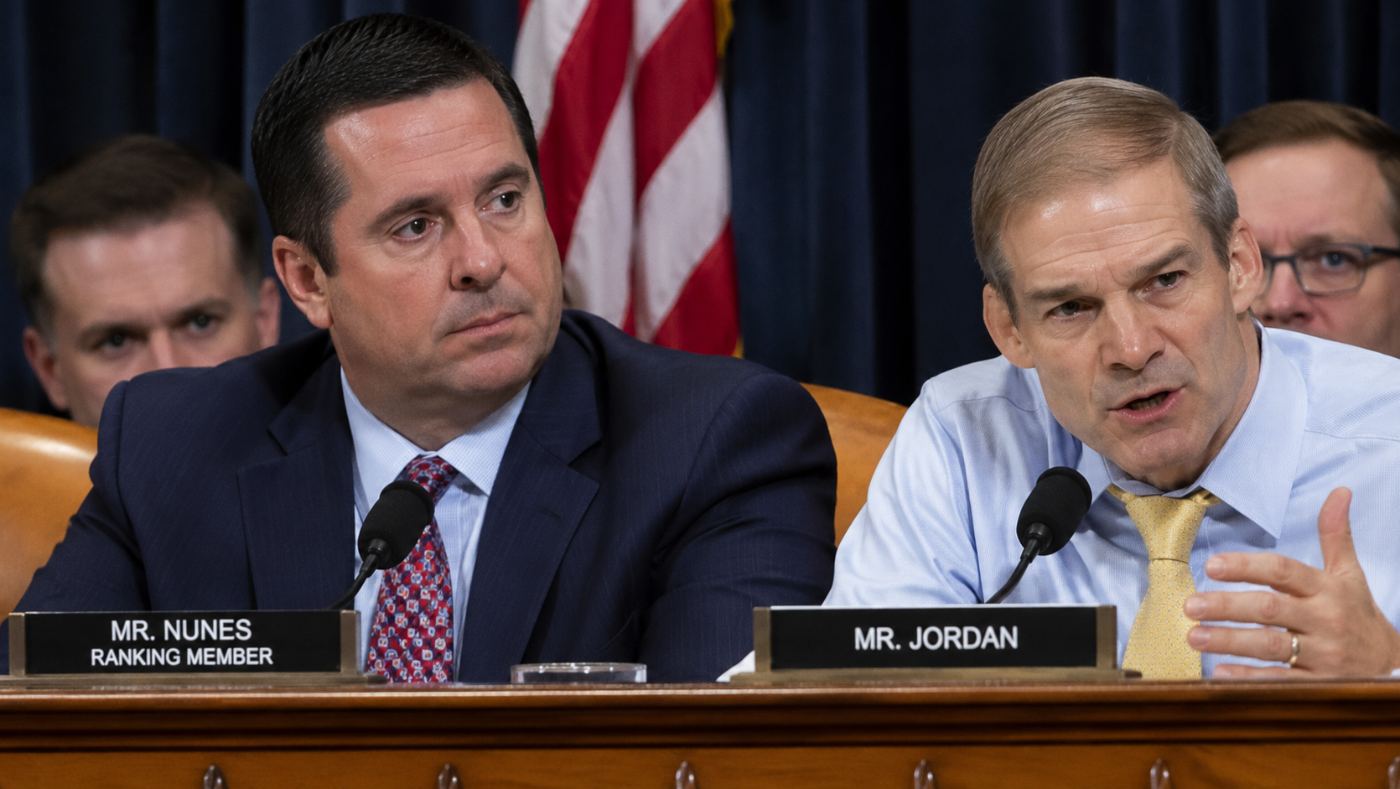
On December 2, 2019, Republican members of three House committees released a report defending President Donald Trump against allegations that he had abused his presidential authority by pressuring Ukraine to investigate a political rival.
The report, prepared by Republican staff on the House Intelligence, Oversight, and Foreign Affairs committees, rejected the central accusations emerging from weeks of impeachment testimony.
Its release came one day before House Democrats published their own findings, which reached substantially different conclusions.
The Ukraine Scandal
The impeachment investigation centered on Trump's July 25, 2019, telephone conversation with Ukrainian President Volodymyr Zelensky.
During the call, Trump asked Zelensky to investigate matters involving former Vice President Joe Biden, a potential opponent in the 2020 presidential election, and Biden's son Hunter.
At the same time, the Trump administration had temporarily withheld nearly $400 million in congressionally approved security assistance to Ukraine.
Investigators examined whether Trump had used military assistance and the prospect of a White House meeting to pressure Ukraine into announcing politically beneficial investigations.
Trump denied wrongdoing, maintaining that his actions reflected legitimate concerns about corruption.
Republicans Present Their Defense
The Republican report argued that investigators had failed to establish that Trump committed an impeachable offense.
Its authors maintained that Trump's skepticism toward Ukraine was justified by concerns about corruption and foreign assistance.
They also argued that Ukraine ultimately received the military aid without announcing investigations into the Bidens.
Republicans characterized the impeachment inquiry as a partisan attempt to undermine Trump's presidency.
The report disputed allegations of bribery, extortion, and abuse of power, while questioning the credibility and interpretations of several witnesses.
Testimony Challenged Republican Arguments
Despite those conclusions, testimony presented during the investigation raised significant questions about the administration's actions.
Gordon Sondland, Trump's ambassador to the European Union, testified that officials worked with Trump's personal attorney Rudy Giuliani on Ukraine matters at the president's direction.
Sondland also described a connection between a proposed White House meeting and Ukraine's announcement of investigations.
Other officials expressed concern that American foreign policy was being influenced by the president's domestic political interests.
The Republican report emphasized testimony favorable to Trump's defense while challenging or minimizing evidence supporting the impeachment allegations.
Subsequent fact-checking identified omissions and disputed interpretations in several of its arguments.
Democrats Reach a Different Conclusion
On December 3, House Democrats released their findings, concluding that Trump had used presidential powers to solicit foreign assistance benefiting his reelection campaign.
The Democratic report also accused the administration of obstructing congressional oversight.
Republicans rejected those conclusions, arguing that the evidence did not establish wrongdoing warranting impeachment.
The competing reports illustrated the sharp disagreement over the meaning of witness testimony, presidential authority, and the constitutional standard for impeachment.
Trump Is Impeached
On December 18, 2019, the House of Representatives approved two articles of impeachment against Trump.
The first charged abuse of power, while the second charged obstruction of Congress.
Trump became the third American president to be impeached.
In February 2020, the Republican-controlled Senate acquitted him on both charges.
Senator Mitt Romney of Utah was the only Republican to vote to convict Trump on the abuse-of-power charge.
A Defining Moment in the Impeachment Investigation
The December 2 Republican report represented an organized congressional defense of Trump as the impeachment inquiry approached its final stages.
It offered an interpretation of the evidence that differed sharply from the conclusions reached by Democratic investigators.
The underlying controversy involved a fundamental question: whether a president could use American diplomatic relationships and congressionally authorized assistance to seek investigations involving a domestic political opponent.
Although the Senate ultimately acquitted Trump, the testimony, congressional findings, and competing reports remain part of the historical record.
December 2, 2019, marked a significant moment when House Republicans formally presented their defense of the president ahead of his first impeachment.