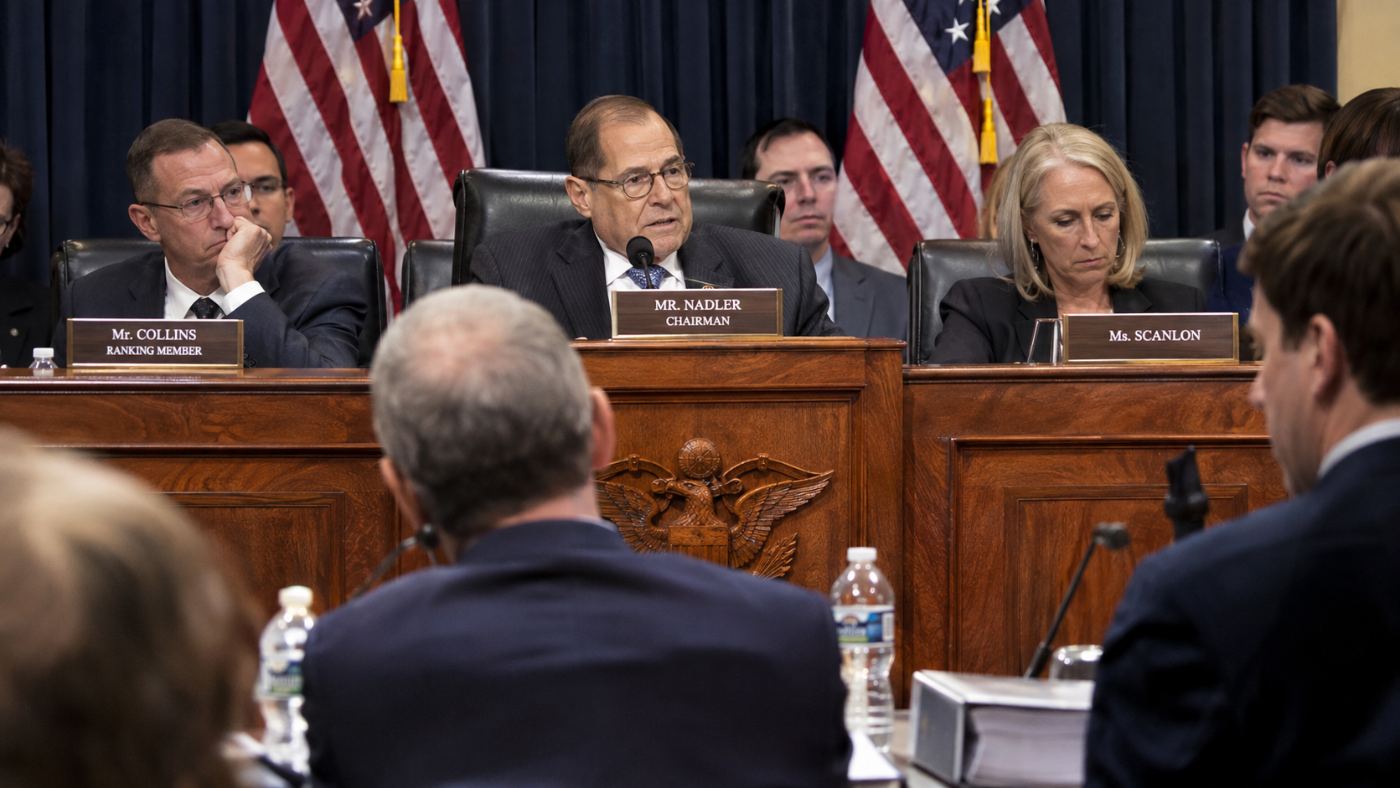
President Donald Trump faced a major escalation in the impeachment investigation on December 9, 2019, as House Judiciary Committee members heard evidence alleging that he used the powers of the presidency to pressure a foreign government into helping his reelection campaign.
During a contentious hearing on Capitol Hill, congressional investigators presented findings concerning Trump's efforts to persuade Ukrainian President Volodymyr Zelensky to announce investigations involving former Vice President Joe Biden, a potential opponent in the 2020 presidential election.
The proceedings came just one day before House Democrats announced formal articles of impeachment.
American Military Aid at the Center of the Scandal
The investigation centered on nearly $400 million in congressionally approved military assistance to Ukraine.
The funding was intended to help Ukraine defend itself against Russian aggression.
Trump's administration temporarily withheld the assistance while the president and his associates pressed Ukrainian officials to announce investigations involving Biden and a disputed theory about Ukrainian interference in the 2016 election.
Democratic investigators argued that Trump had used the military assistance and the prospect of a White House meeting as leverage to obtain politically beneficial announcements.
The allegations raised serious questions about whether the president had placed his personal electoral interests above American foreign-policy objectives.
Investigators Present Their Findings
Daniel Goldman, counsel for the House Intelligence Committee Democrats, presented evidence gathered through witness testimony, documents, and communications involving administration officials.
Goldman argued that Trump had directed a coordinated effort to pressure Ukraine and that senior administration officials were aware of the demands.
He described the president's conduct as a threat to American elections and national security.
Investigators also examined the involvement of Trump's personal attorney, Rudy Giuliani, who had pursued contacts with Ukrainian officials outside traditional diplomatic channels.
Testimony from American diplomats and national security officials formed a substantial part of the congressional case.
Trump Denies Wrongdoing
Trump repeatedly denied improperly pressuring Ukraine, describing his July 25 telephone conversation with Zelensky as appropriate.
Republican committee counsel Stephen Castor disputed the Democrats' interpretation of the evidence.
Republicans argued that Ukraine ultimately received the military assistance without announcing the requested investigations.
They also maintained that the impeachment inquiry relied on assumptions about Trump's intentions rather than proof of an improper exchange.
Democratic investigators countered that the aid was released only after the withholding became publicly known and congressional scrutiny intensified.
White House Refuses to Cooperate
The hearing also addressed the administration's refusal to comply with congressional subpoenas.
Trump directed executive branch officials not to participate in portions of the impeachment investigation and resisted demands for documents.
House Democrats argued that the president's blanket resistance obstructed Congress's constitutional oversight responsibilities.
Republicans challenged the fairness of the proceedings and criticized the committee's handling of witness requests.
The confrontation highlighted a broader dispute over the limits of presidential authority and Congress's power to investigate executive misconduct.
Impeachment Charges Follow
On December 10, House Democrats announced two articles of impeachment against Trump: abuse of power and obstruction of Congress.
The House approved both articles on December 18, making Trump the third American president to be impeached.
The Republican-controlled Senate subsequently acquitted him on both charges in February 2020.
The December 9 hearing nevertheless established a detailed public record of the allegations, evidence, and competing interpretations surrounding Trump's conduct toward Ukraine.
The central question was whether a president could use American military assistance and diplomatic access to seek political advantages from a foreign government. On December 9, 2019, congressional investigators presented their case that Trump had crossed that line, bringing the country closer to his first impeachment.