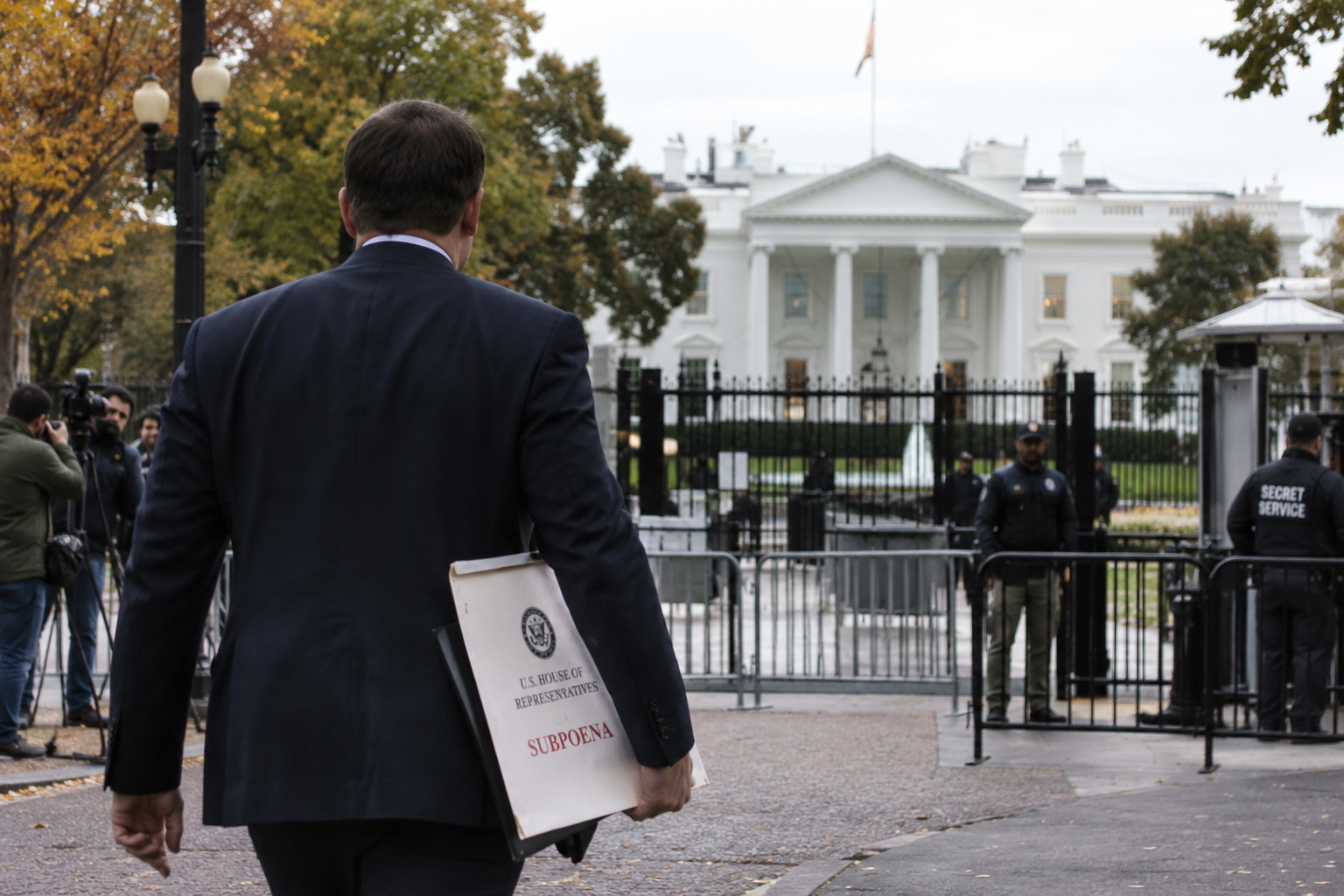
The confrontation between Congress and President Donald Trump escalated dramatically on October 4, 2019, when House impeachment investigators formally subpoenaed the White House for documents concerning Trump's dealings with Ukraine.
The subpoena demanded records involving Trump's communications with Ukrainian President Volodymyr Zelensky, the administration's decision to withhold security assistance from Ukraine, and other matters at the center of the rapidly expanding impeachment inquiry.
It was addressed to Acting White House Chief of Staff Mick Mulvaney.
The White House was given until October 18 to produce the requested documents.
The subpoena marked an important transition in the investigation.
House committees had previously asked the White House to provide the material voluntarily.
Now they were demanding it.
Three House Chairmen Escalate the Investigation
The subpoena came from House Oversight and Reform Committee Chairman Elijah Cummings, working in consultation with House Intelligence Committee Chairman Adam Schiff and House Foreign Affairs Committee Chairman Eliot Engel.
The three Democratic chairmen said they had repeatedly sought documents from the White House without receiving the requested material.
Their original request had been made on September 9, followed by another demand on September 24.
By October 4, investigators decided voluntary requests were no longer sufficient.
In their letter to Mulvaney, the chairmen accused the White House of refusing to cooperate with the inquiry.
They wrote:
"After nearly a month of stonewalling, it appears clear that the President has chosen the path of defiance, obstruction, and cover-up."
The White House disputed that characterization and maintained that the impeachment inquiry was politically motivated.
What Congress Wanted
Investigators were seeking a broad collection of documents related to Ukraine.
Central to the inquiry was Trump's July 25 telephone conversation with Zelensky.
During the call, Zelensky discussed purchasing additional American military equipment. Trump responded that he wanted Zelensky to "do us a favor though" and raised issues surrounding the 2016 election.
Trump later brought up former Vice President Joe Biden and his son Hunter and encouraged Zelensky to speak with Trump's personal attorney Rudy Giuliani and Attorney General William Barr.
Joe Biden was then seeking the Democratic presidential nomination and was a potential opponent for Trump in the 2020 election.
Trump maintained that his requests concerned corruption and denied that he had improperly pressured Ukraine.
House investigators were trying to determine what happened before and after the call—and whether American government resources or presidential authority had been used to encourage Ukraine to announce investigations that could benefit Trump politically.
The Frozen Ukraine Aid
Another major focus was approximately $400 million in congressionally approved military and security assistance to Ukraine.
The Trump administration had placed the assistance on hold during the summer of 2019.
That decision became increasingly significant as investigators examined whether the frozen aid had any connection to Trump's requests for Ukrainian investigations.
Ukraine was fighting Russian-backed forces and depended heavily upon Western military assistance.
The aid was eventually released on September 11.
But investigators wanted documents explaining why it had been withheld and who participated in the decision.
Explosive Text Messages Emerge
The subpoena came on the same day Washington was absorbing another major development.
Private text messages involving American diplomats had become public after former U.S. special envoy Kurt Volker provided documents to congressional investigators.
The messages showed diplomats discussing investigations, a potential White House meeting for Zelensky and the suspended security assistance.
One message was particularly damaging politically.
Acting U.S. Ambassador to Ukraine William Taylor had written to Ambassador Gordon Sondland:
"I think it's crazy to withhold security assistance for help with a political campaign."
Sondland disputed Taylor's interpretation, responding that Trump had been clear that there was "no quid pro quo."
The exchange demonstrated that senior American diplomats themselves were debating what Trump's Ukraine policy meant while events were unfolding.
Pence Also Receives a Document Request
The White House wasn't the only part of the administration facing congressional demands that day.
The same three House committees also formally requested Ukraine-related documents from Vice President Mike Pence.
Investigators sought records concerning Pence's interactions with Ukrainian officials and information about Trump's July 25 conversation with Zelensky.
Pence was given until October 15 to provide the requested material.
Unlike the White House demand, however, the Pence request on October 4 was not a subpoena.
White House Pushes Back
The Trump administration rejected the House committees' characterization of its conduct.
White House Press Secretary Stephanie Grisham said the subpoena changed nothing and argued that the investigation would ultimately demonstrate that Trump had done nothing wrong.
Republicans also challenged the procedures Democrats were using.
Some argued that Speaker Nancy Pelosi should hold a full House vote formally authorizing the impeachment inquiry before demanding cooperation from the executive branch.
Democrats maintained that no such vote was legally required for the House to conduct the investigation.
The procedural dispute would soon become part of a much larger confrontation over whether the administration would cooperate at all.
A Constitutional Confrontation Takes Shape
The October 4 subpoena was more than another request for paperwork.
It represented an escalating institutional confrontation between the legislative and executive branches.
Congress was asserting its authority to investigate presidential conduct and demanding evidence directly from the White House.
Trump's administration was increasingly challenging the legitimacy and procedures of that investigation.
Four days later, White House Counsel Pat Cipollone sent congressional leaders a letter declaring that the administration would not participate in what it characterized as an unconstitutional impeachment inquiry.
The battle over Ukraine was becoming a battle over congressional investigative authority as well.
The House ultimately impeached Trump on December 18, 2019, on two articles: abuse of power and obstruction of Congress.
The Senate acquitted him on both charges on February 5, 2020.
But on October 4, the outcome was still months away.
On that day, House investigators took one of their most consequential steps yet:
They subpoenaed the Trump White House.