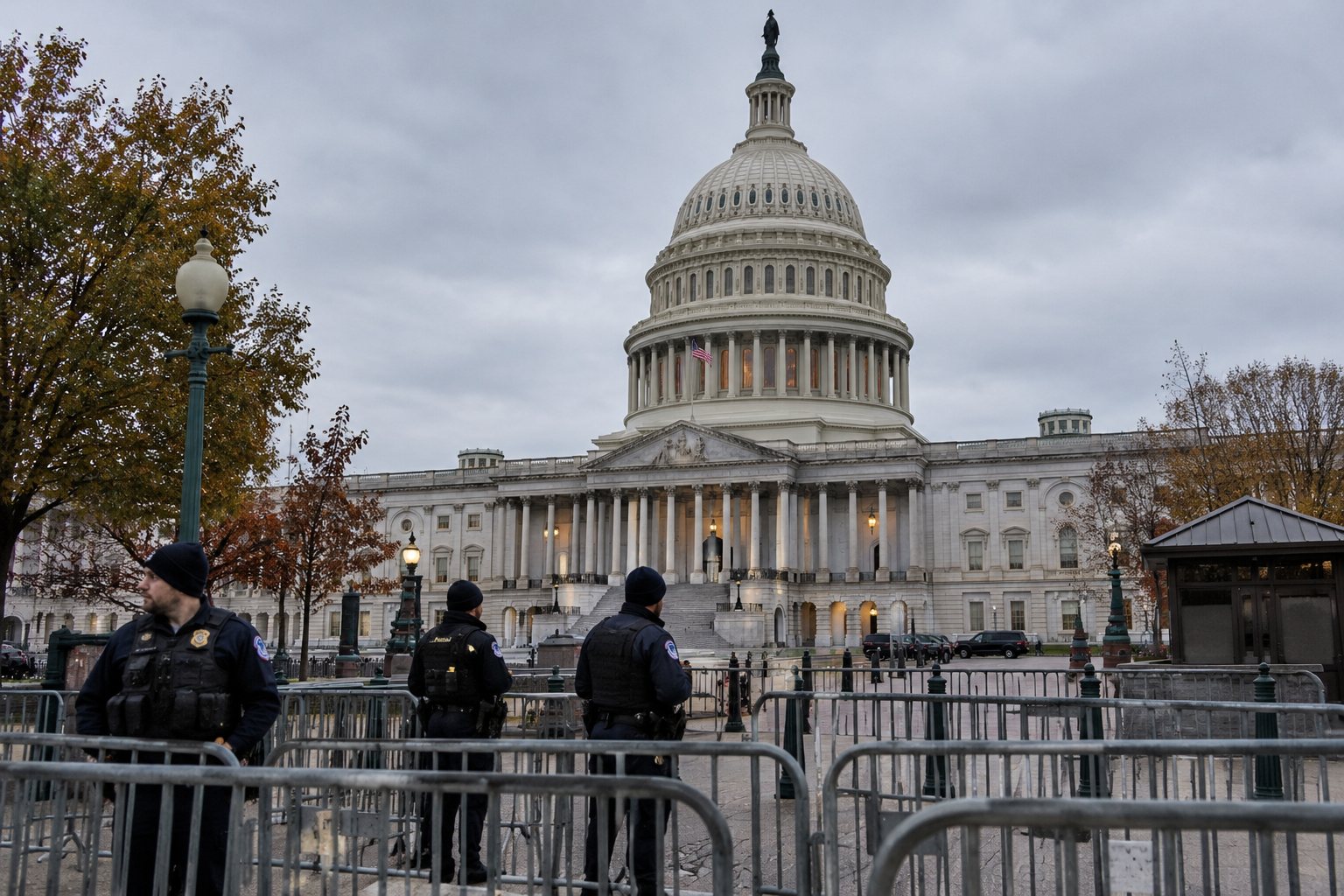
The House of Representatives voted Thursday to hold Steve Bannon, former President Donald Trump's longtime political adviser, in criminal contempt of Congress after he refused to cooperate with the investigation into the January 6 attack on the United States Capitol.
The resolution passed 229–202, with all 220 Democrats joining just nine Republicans in supporting the measure. The remaining 202 Republicans voted against holding Bannon accountable for ignoring a congressional subpoena.
The vote represents a major escalation in the investigation into the violent attempt to disrupt Congress's certification of Joe Biden's 2020 presidential election victory.
Bannon, who served as Trump's chief White House strategist before leaving the administration in 2017, has refused to provide documents or appear for questioning despite investigators' belief that he possesses important information about the events leading up to the Capitol attack.
What Did Steve Bannon Know?
The House Select Committee investigating January 6 is particularly interested in Bannon's communications with Trump and other political figures before the attack.
On January 5, just one day before thousands of Trump supporters descended on Washington, Bannon made a remarkable prediction during his podcast.
"All hell is going to break loose tomorrow," Bannon declared.
The following day, a mob of Trump supporters stormed the Capitol, assaulted police officers, vandalized the building, and forced lawmakers to evacuate or seek shelter as Congress attempted to certify the election results.
Investigators want to determine what Bannon knew about the plans for January 6, whom he communicated with, and whether he played any role in organizing activities that preceded the violence.
Bannon's refusal to testify has prevented lawmakers from obtaining answers to those questions.
Trump Claims Executive Privilege
Bannon's attorneys argue that he cannot comply with the subpoena because Trump has asserted executive privilege over certain communications.
But the committee disputes that justification.
Bannon was a private citizen at the time of the January 6 attack, having left his White House position more than three years earlier.
Investigators argue that executive privilege cannot provide blanket protection for a former political adviser discussing activities outside official government business.
Republican Representative Liz Cheney, vice chair of the committee, has also questioned whether the privilege claims are intended to prevent investigators from learning more about Trump's personal involvement in events surrounding January 6.
The committee voted unanimously Tuesday to recommend holding Bannon in contempt after he failed to appear for a scheduled deposition.
Nine Republicans Break With Their Party
Although most House Republicans opposed the contempt resolution, nine joined Democrats in supporting it.
Among them were Liz Cheney of Wyoming and Adam Kinzinger of Illinois, both members of the January 6 committee.
The other Republicans were Peter Meijer, Fred Upton, John Katko, Nancy Mace, Anthony Gonzalez, Brian Fitzpatrick, and Jaime Herrera Beutler.
Their votes underscored the disagreement within the Republican Party over whether Trump's allies should be compelled to cooperate with the investigation.
House Republican leaders have criticized the committee's work, while its members insist that congressional subpoenas must carry consequences when ignored.
The Investigation Moves to the Justice Department
The contempt referral now goes to the Department of Justice, which will determine whether criminal charges should be pursued against Bannon.
A conviction for contempt of Congress could carry a fine and up to one year in prison.
The House vote does not itself establish criminal guilt, but it sends a message that Congress intends to enforce its investigative authority.
For the January 6 committee, the stakes extend beyond Bannon.
Investigators are attempting to reconstruct the events surrounding an unprecedented assault on the Capitol and determine what role Trump and his associates played in the effort to challenge the election results.
Whether Bannon ultimately provides testimony remains uncertain.
What is clear is that Congress has now formally referred one of Trump's closest political allies for possible criminal prosecution after his refusal to answer questions about one of the most consequential attacks on American democracy in modern history.