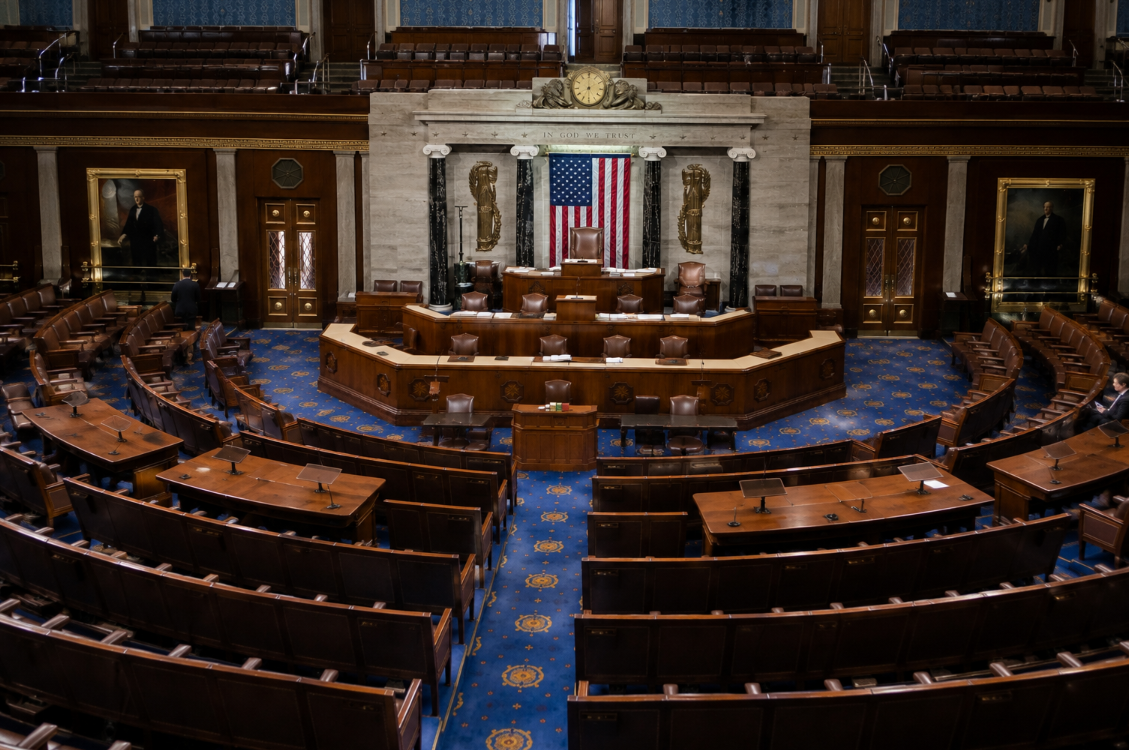
Members of the House of Representatives have gone home.
Not because Congress finished everything on its agenda.
Not because there was nothing left to debate.
And not because the country is facing a particularly quiet moment.
House Speaker Mike Johnson sent lawmakers home early on September 16, beginning a break that is expected to keep the House away from Washington until after the November midterm elections unless members are called back.
The decision leaves a remarkable amount of unfinished business behind — including an effort to impeach Defense Secretary Pete Hegseth, legislation involving the Iran war and a bipartisan push for the release of additional Jeffrey Epstein-related government files.
Johnson says the House has accomplished its work.
The numbers make that claim worth examining.
One of the Least Productive Congresses in Modern History
Johnson has described the current Congress as extraordinarily productive, even calling it one of the most productive in decades.
There is another way to measure that record: legislation that actually becomes law.
As of September 20, the 119th Congress has enacted just 108 laws since beginning in January 2025.
The previous Congress enacted 274 laws over its full two-year term.
The current Congress isn't finished, so its final total is not yet known. That makes comparisons with completed Congresses imperfect.
But with only months remaining, its pace places it among the least productive Congresses in modern American history by the traditional measure of laws enacted.
And the House has repeatedly canceled days it was supposed to be working in Washington.
Nearly a Quarter of This Year's Scheduled Days Have Disappeared
According to an Associated Press tally, the House has canceled 28 scheduled legislative days this year while adding four others.
That's a net reduction of 24 legislative days — approximately one-quarter of the days originally scheduled for the year.
The latest departure came even earlier than planned.
The House was originally supposed to vote Thursday.
Instead, Johnson wrapped up legislative business Wednesday and sent representatives back to their districts to campaign.
Members remain subject to being called back to Washington with 48 hours' notice.
But absent such a recall, the House has no more scheduled voting days before Americans go to the polls on November 3.
Johnson's explanation is simple.
“The House has done its job.”
Not everyone in his own party agrees.
A Republican Explodes on the House Floor
One of the fiercest criticisms came not from a Democrat but from Republican Rep. Thomas Massie of Kentucky.
Massie took to the House floor for an extraordinary hourlong speech condemning the decision to shut down legislative business.
“We're calling off Congress? And we're in the majority?” Massie asked.
He pointed to unfinished business ranging from the Iran war to the Epstein files.
“Why would we be canceling days when the country is burning?” Massie said. “We should stay here for every day that's on the calendar and we should debate.”
Massie had another reason to be angry.
He was preparing to force the House to confront something Republican leaders clearly did not want to deal with.
The possible impeachment of Defense Secretary Pete Hegseth.
The Hegseth Impeachment Vote That Didn't Happen
Massie introduced eight articles of impeachment against Hegseth.
Among his allegations are accusations involving Hegseth's role in U.S. military operations against Iran and American military strikes against suspected drug-trafficking boats in the Caribbean.
Massie argues that the administration has exercised military authority that belongs to Congress.
Johnson dismissed the impeachment effort as “a stunt” and defended Hegseth.
But by sending representatives home, the House avoided having to deal with Massie's effort before the election recess.
It is important to distinguish consequence from motive.
Massie has accused Johnson of using the congressional calendar to avoid politically uncomfortable votes.
Johnson disputes that characterization.
What isn't disputed is what happened:
The House went home, and the Hegseth impeachment effort was left behind without a vote.
The Iran War Is Still Going On
The timing is even more remarkable because just one day earlier, the House voted 220-204 to direct Trump to remove American forces from hostilities with Iran.
It was the third time the House had voted to end U.S. involvement in the conflict.
Seven Republicans joined Democrats in the latest vote.
The United States remains involved in the war.
Congress has not enacted a new authorization specifically approving the continuing hostilities.
And instead of remaining in Washington to debate one of the most fundamental powers given to Congress by the Constitution — the power over war — House members have gone home to campaign.
The Epstein Fight Was Left Behind Too
The departure also interrupted Massie's bipartisan effort to force the release of additional government records connected to Jeffrey Epstein.
Massie has been one of the Republicans working across party lines on the issue.
That effort now joins the list of unfinished congressional business waiting while lawmakers are away.
The House could be called back.
But as things currently stand, representatives aren't scheduled to return for votes until after Americans have already decided who will control the next Congress.
What Did They Do Before Leaving?
Johnson points to hundreds of measures passed by the House as evidence of productivity.
And Congress has enacted consequential legislation during this term.
That includes Trump's major tax-and-spending legislation, along with defense, appropriations and other measures.
On its final day before leaving Washington, the House also approved significant sanctions legislation targeting Russia.
But the day's agenda also included something considerably less urgent.
The House approved legislation designating the American mastodon as the national fossil mammal and Tyrannosaurus rex as the national fossil dinosaur.
There is nothing inherently wrong with Congress passing symbolic legislation.
But the contrast is difficult to miss.
The House found time to vote on America's official fossil dinosaur.
It left Washington with the United States involved in a war that a majority of the House has repeatedly voted to end.
Americans Aren't Impressed With Congress
Public opinion provides another measure of congressional performance.
A Pew Research Center survey conducted in July found that just 25 percent of Americans had a favorable view of Congress.
Another 72 percent viewed Congress unfavorably.
Those numbers were close to the lowest levels Pew has recorded in recent years.
Americans may disagree about why Congress isn't functioning effectively.
Republicans blame Democrats and the Senate for blocking legislation.
Democrats blame Republican leadership.
Republican dissenters such as Massie have increasingly blamed their own leadership.
But the dissatisfaction extends well beyond Washington.
Campaigning Instead of Legislating
Members of Congress obviously need to spend time in their districts.
They need to meet constituents.
And yes, they need to campaign for reelection.
But Congress also has a job.
Americans elected 435 representatives to legislate, conduct oversight, debate national policy and exercise the constitutional powers assigned to the House of Representatives.
Those responsibilities don't disappear because Election Day is approaching.
The country remains involved in a major war.
Americans continue to struggle with housing, groceries, energy prices and inflation.
Questions remain about executive power.
A Republican congressman is attempting to impeach the defense secretary.
Lawmakers are still fighting over the release of Epstein records.
And one of the least productive Congresses in modern American history has already eliminated roughly one-quarter of its scheduled House legislative days this year.
Mike Johnson says the House has done its job.
Now its members are going home.
The voters will decide in November what they think of the job they did.