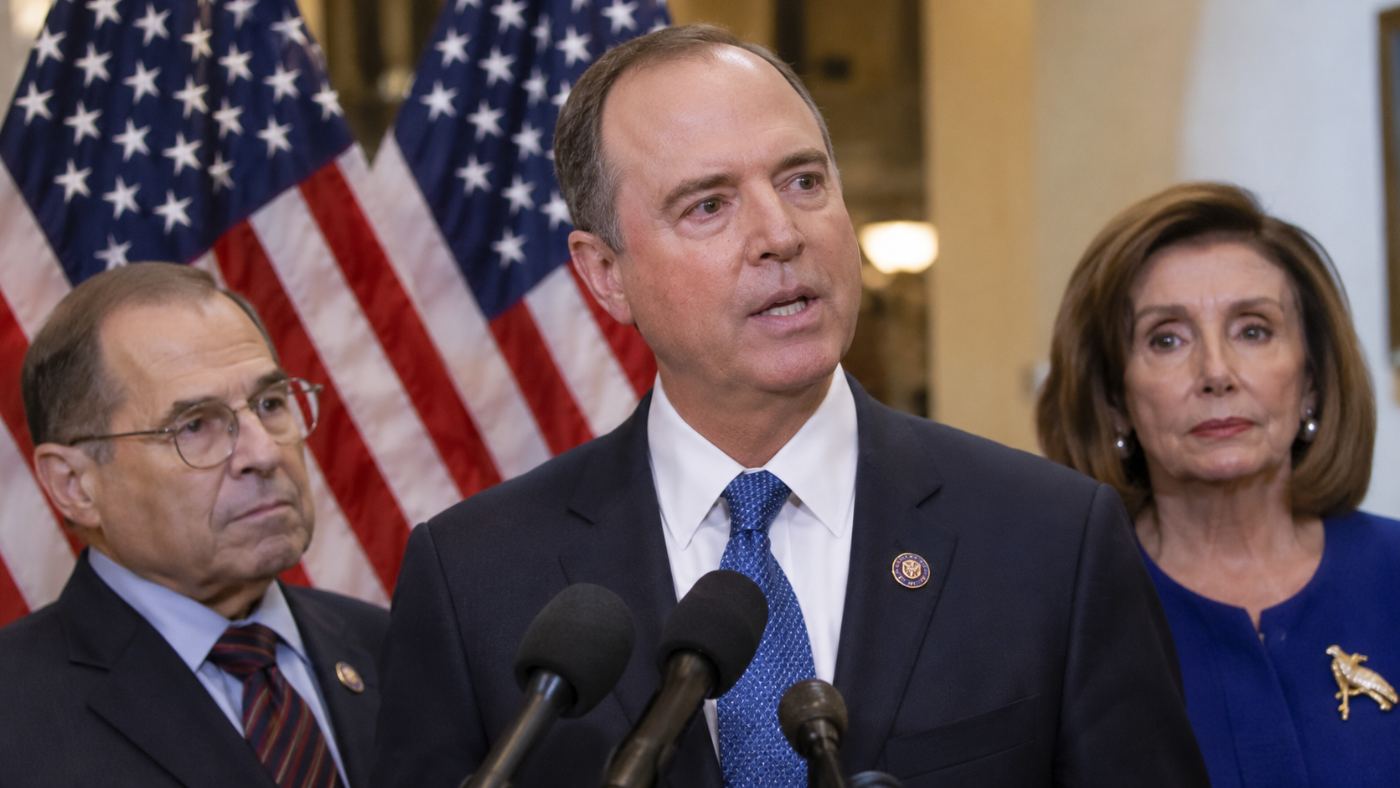
On December 3, 2019, House Democrats released a nearly 300-page impeachment report concluding that President Donald Trump had abused his office by pressuring Ukraine to announce investigations that could benefit his 2020 reelection campaign.
The report also accused Trump of obstructing Congress as lawmakers investigated his conduct.
Prepared by Democratic staff members of the House Intelligence, Oversight, and Foreign Affairs committees, the document represented a major step toward Trump's first impeachment.
A President Accused of Seeking Political Favors
The investigation centered on Trump's July 25, 2019, telephone conversation with Ukrainian President Volodymyr Zelensky.
During the call, Trump requested investigations involving former Vice President Joe Biden, a potential presidential opponent, and a discredited theory concerning Ukrainian interference in the 2016 election.
At the same time, the administration had suspended approximately $391 million in congressionally approved military assistance to Ukraine.
Democratic investigators concluded that Trump used the prospect of military assistance and a White House meeting to pressure Ukraine into publicly announcing politically beneficial investigations.
Trump denied wrongdoing and maintained that his concerns involved corruption.
Witnesses Describe Pressure on Ukraine
The report drew on more than 130 hours of testimony from 17 witnesses.
Among them was Gordon Sondland, the U.S. ambassador to the European Union, who testified that a White House meeting for Zelensky was conditioned on announcing investigations sought by Trump's representatives.
Other witnesses described concerns about Rudy Giuliani's involvement in American policy toward Ukraine.
Investigators concluded that the president had placed personal political interests ahead of established American foreign policy.
The report emphasized that Ukraine was confronting Russian aggression and depended on American security assistance.
Democrats Accuse Trump of Obstructing Congress
The report also examined the administration's response to congressional subpoenas and requests for testimony.
Democrats accused Trump of directing officials not to cooperate with the impeachment investigation.
Several senior administration officials declined to testify or provide requested documents.
Investigators argued that these refusals prevented Congress from obtaining important evidence and represented an effort to obstruct its constitutional oversight responsibilities.
Republicans Reject the Findings
Republicans disputed the Democratic report's conclusions.
Their own report, released December 2, argued that investigators had failed to establish that Trump improperly pressured Ukraine for personal political benefit.
Republicans also emphasized that Ukraine ultimately received the suspended military assistance without publicly announcing the requested investigations.
Democrats countered that the eventual release of assistance did not erase the conduct documented during the investigation.
The disagreement reflected sharply different interpretations of the testimony and the president's authority.
Committee Approves the Report
On December 3, the House Intelligence Committee voted 13–9 along party lines to adopt the report.
The findings were forwarded to the House Judiciary Committee, which would consider whether Trump's actions warranted formal articles of impeachment.
On December 18, the full House impeached Trump for abuse of power and obstruction of Congress.
The Senate subsequently acquitted him on both charges in February 2020.
A Defining Moment in Trump's First Impeachment
The December 3 report established the Democratic investigators' formal account of Trump's dealings with Ukraine.
It documented testimony, communications, and administration decisions that lawmakers argued demonstrated an abuse of presidential authority.
Although Republicans rejected those conclusions and the Senate ultimately acquitted Trump, the investigation produced a substantial public record of the events surrounding the Ukraine controversy.
December 3, 2019, remains a significant date in the history of presidential impeachment and congressional oversight.