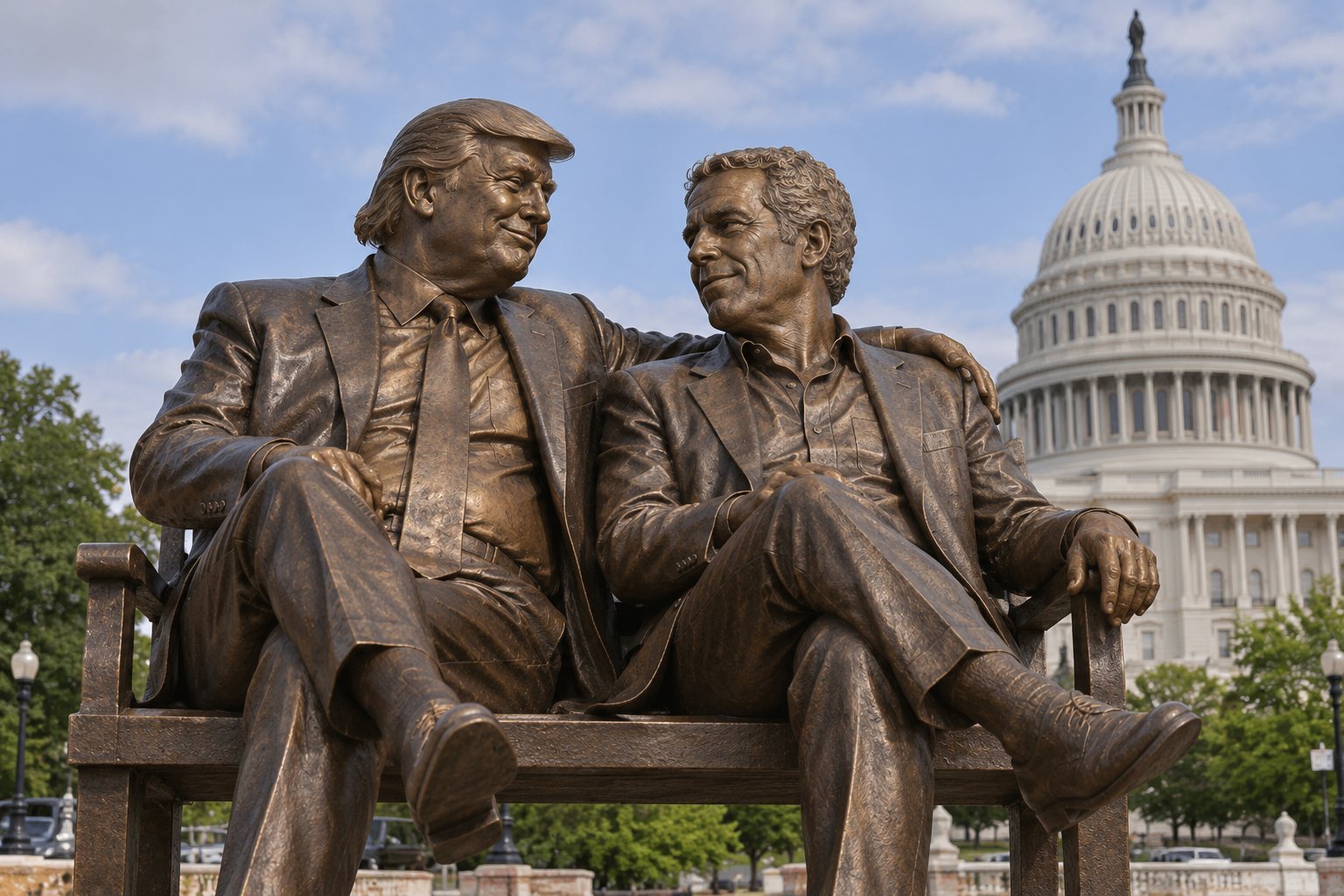
House Judiciary Committee Democrats have released a 53-page report detailing allegations involving President Donald Trump, convicted sex offender Jeffrey Epstein, and 11 women whose accounts raise questions about Trump's relationship with Epstein and the Justice Department's handling of evidence.
The report, released October 26 by Representative Jamie Raskin, the committee's ranking Democrat, alleges that five women accused Trump of rape or sexual assault in Epstein's presence or close company. Other accounts describe alleged attempts by Epstein or his associate Ghislaine Maxwell to introduce women to Trump for sexual purposes.
The Democratic staff report also accuses the Trump administration's Justice Department of withholding evidence and obstructing investigations that could implicate the president.
The allegations have not been established in court, and Trump has repeatedly denied wrongdoing involving Epstein.
Eleven Women, Multiple Allegations
The report draws on FBI records, survivor interviews, congressional investigations, and documents released under the Epstein Files Transparency Act.
Among the women discussed is Beatrice Keul, a former Swiss beauty pageant contestant who alleges Trump raped her at New York's Plaza Hotel in November 1993 after Epstein approached her at an event.
Another woman, Stacey Williams, has publicly alleged that Trump groped her at Trump Tower while Epstein stood nearby.
Jill Harth previously accused Trump of unwanted sexual contact, including an incident at Mar-a-Lago in which she says Epstein was present.
The report also examines allegations involving women who say they were minors when they encountered Epstein and Trump.
One woman told federal investigators that Epstein introduced her to Trump when she was approximately 14 years old. Other allegations describe sexual abuse during the 1980s and 1990s.
These accounts vary in their available supporting evidence, and some remain uncorroborated publicly.
Justice Department Accused of Withholding Evidence
Beyond the allegations against Trump, the report questions whether the Justice Department deliberately restricted access to information concerning Epstein's possible accomplices.
Democratic investigators specifically criticize Attorney General Todd Blanche's handling of a July 2025 interview with Maxwell.
According to the report, Blanche, then serving as deputy attorney general, repeatedly redirected Maxwell when discussion turned to a particular survivor whose account implicated Trump.
Committee Democrats argue that the exchanges warrant examination for possible witness interference.
The report also highlights disputes over FBI interview records that were initially missing from publicly released Epstein files.
Earlier this year, the Justice Department acknowledged that certain documents containing allegations against Trump had been incorrectly classified as duplicates and subsequently released additional records.
That acknowledgment established a disclosure error, but did not establish that documents were intentionally concealed to protect Trump.
Trump Administration Rejects Allegations
The White House strongly denied the accusations following the report's release.
White House spokesperson Lauren Bis said the allegations were untrue and characterized the Democratic investigation as politically motivated.
The administration maintains that Trump severed his relationship with Epstein years before Epstein's 2019 arrest on federal sex-trafficking charges.
Trump has denied participating in Epstein's criminal activities or knowing about his abuse of underage girls.
The report represents findings and allegations assembled by Democratic committee staff, not a bipartisan congressional determination or a criminal indictment.
Democrats Demand Independent Investigation
Raskin and other Judiciary Committee Democrats are calling for an independent special counsel to examine the allegations, investigate potential accomplices, and review the Justice Department's handling of Epstein-related evidence.
They also want federal authorities to provide relevant records to state and international prosecutors investigating Epstein's network.
The report raises two distinct questions: whether the allegations involving Trump warrant additional criminal investigation, and whether federal officials improperly withheld evidence or interfered with investigative efforts.
Neither question has been conclusively resolved by the report.
For Epstein's survivors, the continuing dispute underscores the importance of examining credible allegations, protecting witnesses, and making relevant evidence available through lawful investigative processes.
With the midterm elections approaching, the congressional report places renewed attention on Trump's past association with Epstein and the transparency of the federal government's response.