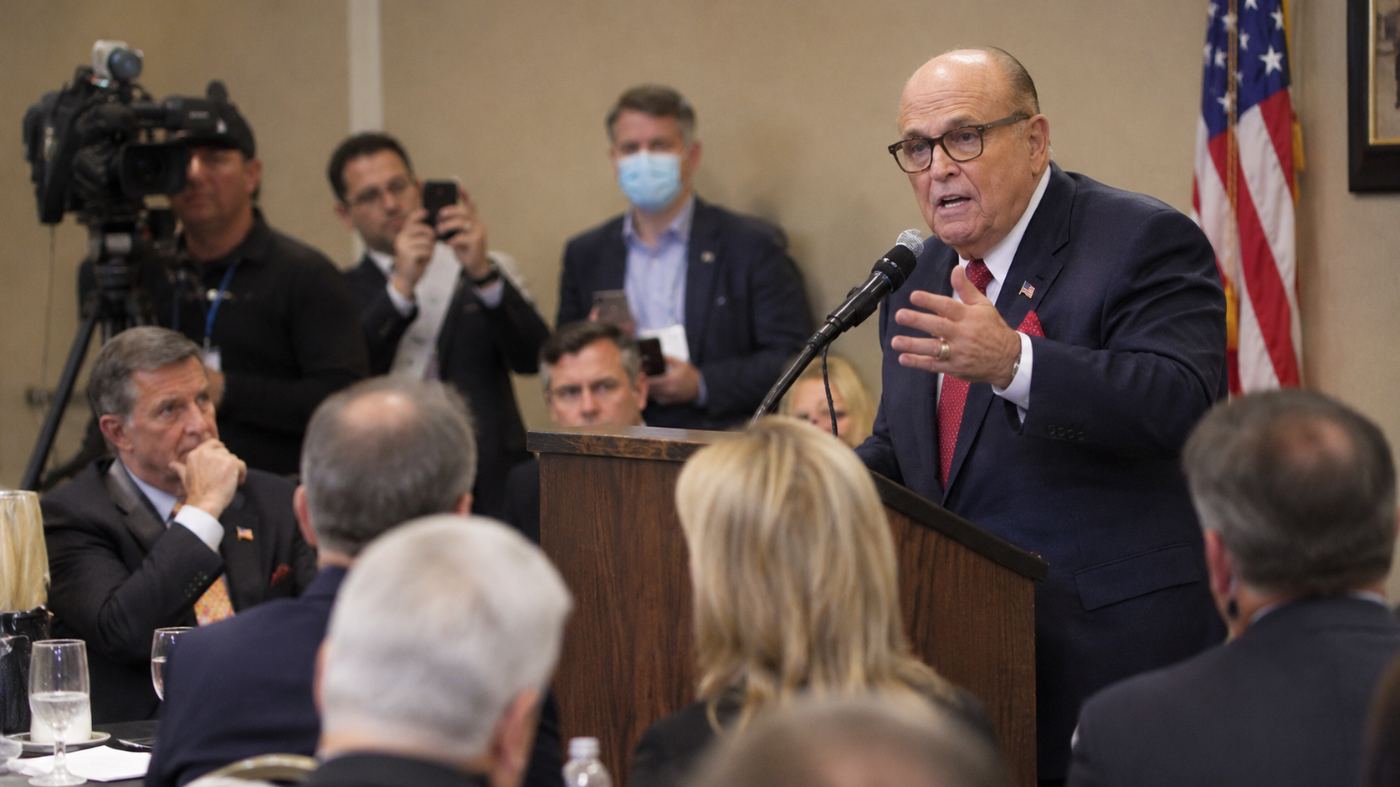
Donald Trump's legal campaign to overturn the 2020 presidential election had suffered repeated defeats in court. But on November 25, his personal attorney Rudy Giuliani took the fight to a hotel conference room in Gettysburg, Pennsylvania, where Republican lawmakers gathered to hear allegations that the election had been stolen.
The event came just one day after Pennsylvania officially certified Joe Biden's victory by 80,555 votes.
Giuliani presented witnesses, challenged election procedures, and promoted claims of widespread voting irregularities.
Among his most significant allegations was a claim that Pennsylvania had counted hundreds of thousands more mail-in ballots than it had issued.
The claim was false.
Rather than establishing election fraud, the Gettysburg presentation became another chapter in Trump's unsuccessful effort to challenge the results of an election he had lost.
From the Courtroom to a Hotel Ballroom
The meeting was organized through Pennsylvania's Republican-led Senate Majority Policy Committee and held at the Wyndham Gettysburg hotel.
Republican state Senator Doug Mastriano helped arrange the event, which featured Giuliani, Trump attorney Jenna Ellis, and witnesses who claimed to have observed irregularities.
Although the gathering resembled a legislative hearing, it was not a formally convened hearing of the full Pennsylvania Legislature.
That distinction mattered.
The meeting provided a public platform for allegations that had not been established through judicial proceedings.
Just four days earlier, federal Judge Matthew Brann had dismissed a major Trump campaign lawsuit seeking to prevent Pennsylvania from certifying its election results.
The campaign had failed to present the legal arguments and evidence necessary to justify such extraordinary relief.
Now Giuliani was presenting his case to a politically receptive audience.
Giuliani's False Mail-In Ballot Numbers
One of Giuliani's central allegations concerned Pennsylvania's mail-in ballots.
He claimed that approximately 1.8 million absentee ballots had been sent to voters but that roughly 2.5 million had been returned and counted.
The implication was that hundreds of thousands of ballots had appeared without legitimate origins.
But Giuliani was comparing figures from different elections.
The smaller number came from Pennsylvania's June 2020 primary election.
For the November general election, Pennsylvania had issued approximately 3.08 million absentee and mail-in ballots.
That figure was entirely consistent with the approximately 2.5 million mail ballots counted.
The supposed discrepancy did not exist.
Giuliani nevertheless used the misleading comparison to support allegations that the election had been manipulated.
Even Republican Lawyers Rejected the Claim
The inaccurate ballot figures were not merely challenged by Democrats or outside fact-checkers.
According to federal prosecutors' later court filings, the Republican National Committee's chief counsel publicly disputed Giuliani's allegation on November 25.
Internal communications subsequently showed Trump campaign personnel acknowledging that Giuliani's figures were incorrect.
One campaign official described the allegation as indefensible.
The episode illustrated a significant divide between the public claims being promoted by Trump's legal representatives and the information available to people working within Republican legal and campaign operations.
Despite those objections, Giuliani's allegations continued circulating among supporters who believed the election had been stolen.
Witnesses Present Unverified Allegations
Giuliani introduced witnesses who described alleged irregularities involving ballot processing, election observers, and voting equipment.
Some complained that Republican observers had been kept too far from ballot-counting operations.
Others raised suspicions about the movement or handling of ballots.
One witness, Gregory Stenstrom, alleged that tens of thousands of votes were associated with missing USB drives in Delaware County.
Those allegations attracted attention but did not establish that legitimate votes had been altered or that fraudulent ballots had changed the election.
Election officials disputed the claims, and subsequent fact-checking found no credible evidence supporting the assertion that 50,000 votes had disappeared.
The distinction between testimony describing suspicions and evidence establishing misconduct was central to the controversy.
Trump's Campaign Had Already Lost in Court
By November 25, Trump's legal challenges in Pennsylvania had encountered serious obstacles.
The campaign had attempted to challenge voting procedures and prevent certification.
But courts repeatedly found that the evidence and legal arguments presented did not justify the requested remedies.
Pennsylvania completed its certification on November 24.
The official results showed:
- Joe Biden: 3,458,229 votes
- Donald Trump: 3,377,674 votes
- Biden's margin: 80,555 votes
Giuliani's presentation did not change those numbers.
Nor did the meeting provide a legal basis for discarding the certified election results.
A Political Audience Instead of a Judicial Proceeding
The Gettysburg meeting differed significantly from a courtroom hearing.
Giuliani was speaking before Republican lawmakers and Trump supporters rather than a judge applying formal evidentiary standards.
Participants could present allegations without the same requirements governing admissible evidence and judicial findings.
That distinction helped explain why claims rejected or unsupported in court continued receiving attention at political gatherings.
Trump's supporters argued that lawmakers needed to investigate complaints about election administration.
Critics countered that the meetings amplified allegations without establishing their accuracy.
The event became part of a broader effort to persuade Republican-controlled state legislatures to question certified election results.
What Investigators Later Established
The Gettysburg meeting received renewed scrutiny during subsequent investigations into Trump's attempts to overturn the 2020 election.
The House committee investigating the January 6 attack examined the campaign's efforts to involve state lawmakers in replacing or challenging presidential electors.
In 2024, federal prosecutors also cited Giuliani's false Pennsylvania ballot figures in a court filing describing Trump's post-election activities.
The filing stated that the inaccurate comparison had been recognized and disputed by Republican legal officials.
Separately, a New York appellate court identified Giuliani's Pennsylvania ballot allegations among the false statements supporting its 2021 decision to suspend his law license.
These later findings reinforced the distinction between the claims Giuliani publicly promoted and the verified election records.
November 25: Allegations Without a Reversed Result
The Gettysburg meeting demonstrated how Trump's election challenge continued after Pennsylvania had certified Biden's victory.
Giuliani presented allegations, questioned election officials, and encouraged Republican lawmakers to challenge the outcome.
But the central claims did not establish widespread fraud.
One of his most prominent statistical allegations relied on comparing ballot figures from two different elections.
Other accusations remained unsubstantiated.
The meeting did not overturn Pennsylvania's results, invalidate its certification, or demonstrate that Biden's victory was fraudulent.
Instead, it illustrated how Trump's legal team continued advancing disputed election narratives outside the courtroom after failing to obtain the remedies it sought through litigation.
On November 25, 2020, Rudy Giuliani brought Trump's election allegations to Gettysburg.
Pennsylvania's certified result remained unchanged.