On December 6, 2020, Donald Trump's claims of widespread election fraud suffered another public rejection, this time from a fellow Republican responsible for overseeing Georgia's elections.
Georgia Secretary of State Brad Raffensperger appeared on ABC's This Week and directly contradicted Trump's repeated assertions that the state's presidential election had been stolen.
Raffensperger, a conservative Republican who had supported Trump's reelection, confirmed that investigators had uncovered no evidence of widespread fraud capable of changing the election results.
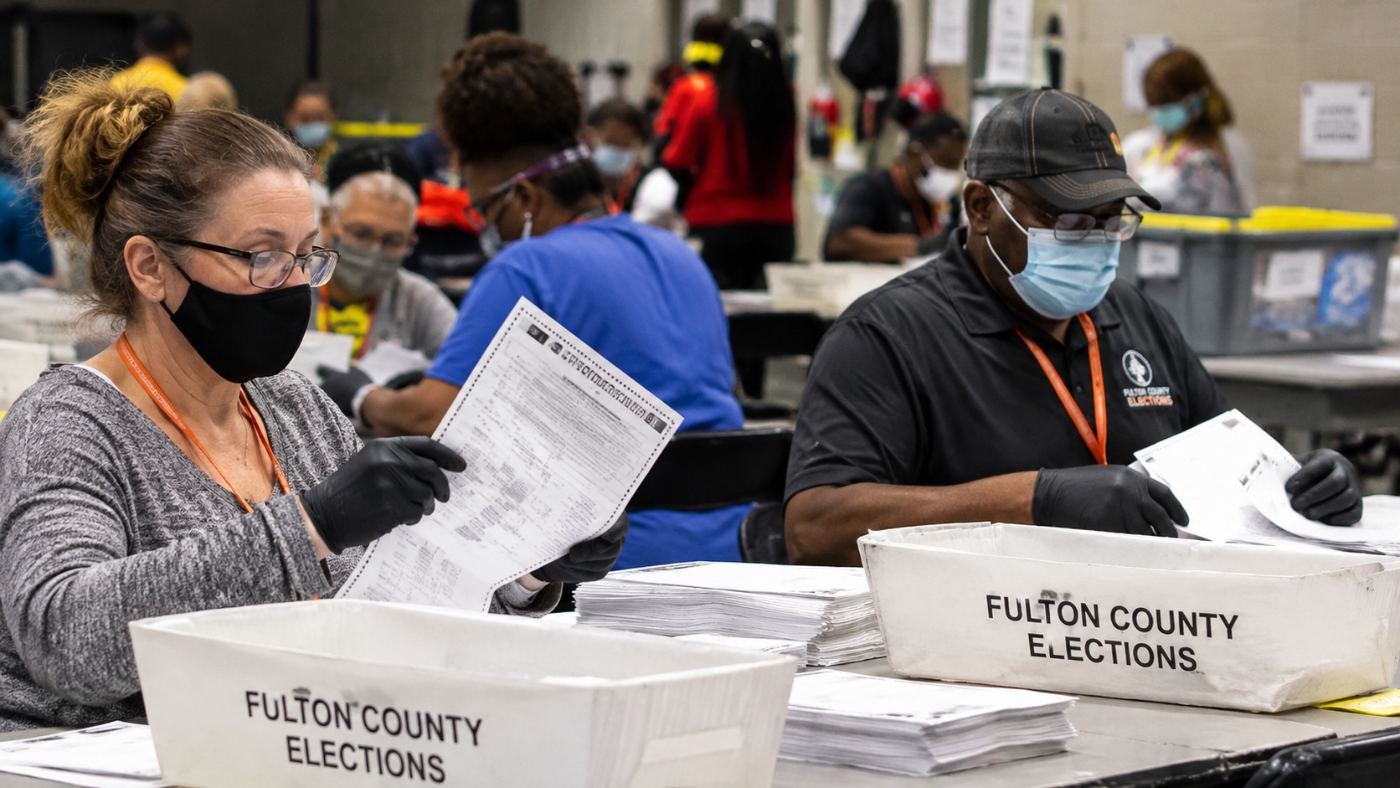
His assessment came after Georgia had already conducted an extensive statewide hand audit of nearly five million presidential ballots, confirming Joe Biden's victory.
Trump, however, continued insisting that he had won.
A Republican Rejects Trump's Claims
During his interview with George Stephanopoulos, Raffensperger explained that his office was investigating more than 250 election-related complaints but had discovered nothing that would overturn the outcome.
He acknowledged his personal disappointment with Trump's defeat but made clear that political preferences could not override the votes.
Asked whether Trump had lost Georgia, Raffensperger responded:
"Yeah ... sad but true. I wish he would have won."
The statement was particularly significant because it came from a Republican election official whose responsibilities included ensuring the accuracy of the state's results.
Raffensperger also rejected Trump's criticism of Georgia's absentee-ballot signature verification procedures, explaining that the state already required signature checks for paper applications and returned ballots.
Trump Continues Pressuring Georgia
The interview followed Trump's December 5 rally in Valdosta, Georgia, where he repeated unsupported allegations of election fraud while campaigning for Republican Senate candidates David Perdue and Kelly Loeffler.
Trump had also pressured Republican Governor Brian Kemp to convene a special legislative session that could potentially replace Biden's electors with a slate supporting Trump.
Kemp did not comply.
Meanwhile, Georgia election officials continued preparing to certify the results again following a machine recount requested by Trump's campaign.
That recount would confirm Biden's victory by 11,779 votes.
The Election Results Were Not Changing
Georgia's election process had already undergone extraordinary scrutiny.
The original count established Biden's victory. A statewide hand audit reaffirmed the outcome. A subsequent machine recount, completed in December, confirmed it again.
Despite these safeguards, Trump continued challenging the legitimacy of the election.
The dispute also created tensions within Georgia's Republican Party as officials faced pressure to support allegations their own investigations had not substantiated.
Raffensperger's December 6 interview demonstrated that accepting the election results was not simply a partisan Democratic position. Republican officials responsible for administering the election were reaching the same conclusion.
Less than a month later, on January 2, 2021, Trump would personally telephone Raffensperger and urge him to find enough votes to reverse Biden's victory.
That conversation became one of the most heavily scrutinized episodes of Trump's effort to overturn the 2020 election.
December 6, 2020, stands as a documented moment when a Republican election official publicly defended the voters' decision despite pressure from the president of his own party.